Nairobi’s Thika Road, a vital lifeline connecting the capital to its northern suburbs, became an unexpected stage for a remarkable scene of youthful defiance and unity. As Gen Z-led protests swept through the city to mark the first anniversary of the 2024 anti-Finance Bill uprising, dozens of young Kenyans seized the moment to turn the deserted highway into an impromptu football pitch. With traffic paralyzed by roadblocks and demonstrations, the youths kicked a worn soccer ball across the empty lanes, their laughter and cheers mingling with chants for justice. The scene, captured in viral videos shared widely on platforms like X, encapsulated the spirit of a generation refusing to be silenced, even as police and barricades loomed nearby.
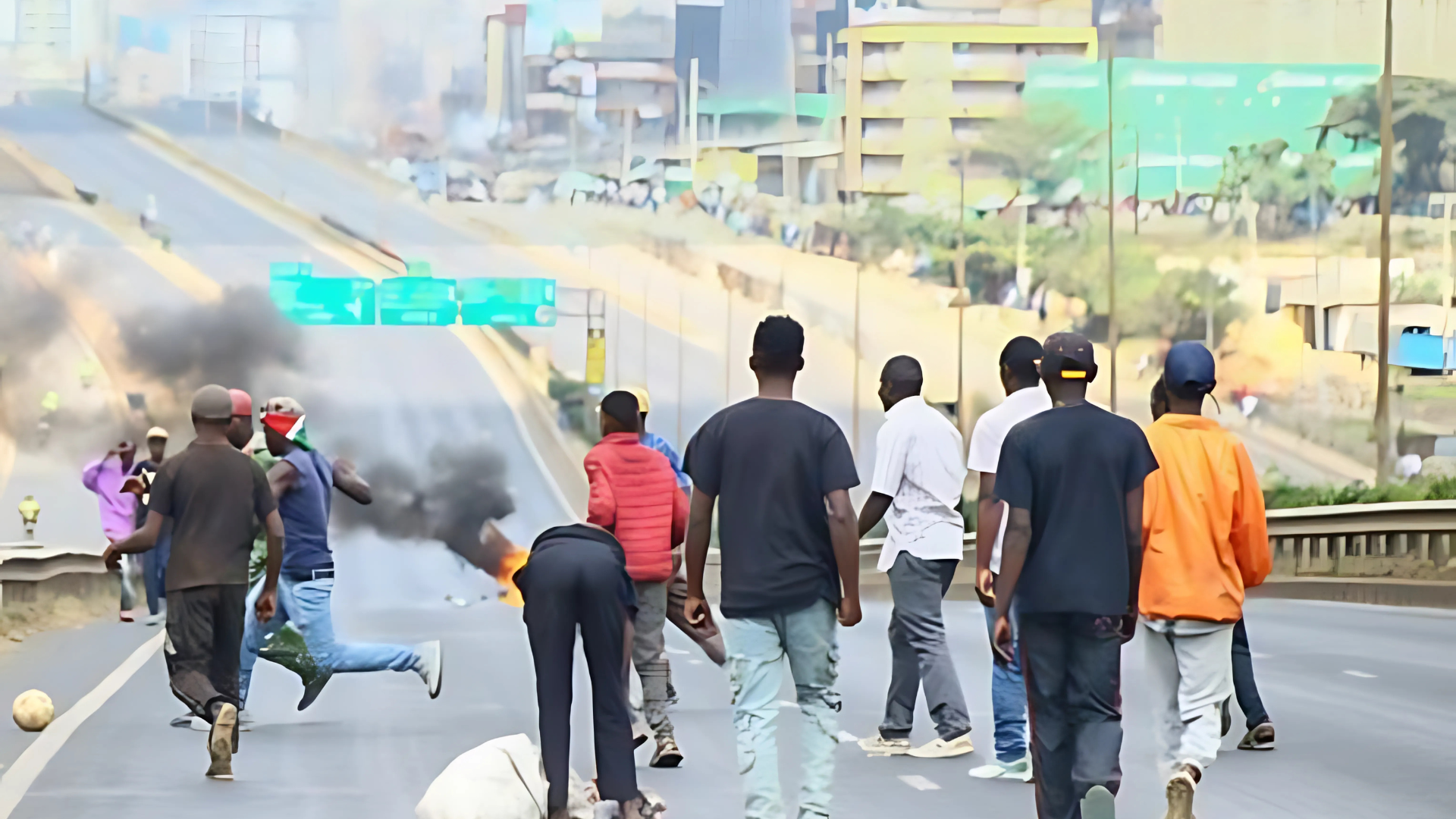
The protests, part of the nationwide “Gen Z Memorial March,” were a solemn tribute to the over 60 lives lost during the 2024 demonstrations, which erupted in response to a controversial Finance Bill proposing steep taxes on essentials like bread and sanitary products. That movement, driven by Kenya’s youth and fueled by social media campaigns under hashtags like #RejectFinanceBill2024, culminated in the dramatic storming of Parliament on June 25, 2024, forcing the government to withdraw the bill after widespread unrest. One year later, the anniversary marches renewed demands for accountability, economic reform, and an end to police brutality. On Thika Road, the protests disrupted daily life, halting public transport and stranding commuters, but the football session offered a powerful counter-narrative of resilience and community.
“This is our way of showing we’re still here,” said Kelvin Omondi, a 23-year-old mechanic from Kasarani, as he passed the ball to a teammate. “They can block the roads, fire tear gas, but we’ll still find a way to stand together and even have some fun.” The football game began around 10 a.m., after police deployed tear gas in Nairobi’s Central Business District, pushing some protesters toward Thika Road. With matatus and buses grounded and businesses along the highway shuttered, the eight-lane superhighway, usually teeming with traffic, stood empty. The youths, mostly from nearby estates like Githurai and Roysambu, set up makeshift goals using water bottles and jackets, turning the road into a vibrant pitch.
Social media captured the moment’s surreal beauty. Videos showed young men and women dribbling the ball, dodging imaginary defenders, and celebrating goals with high-fives, while others waved Kenyan flags or held placards reading “Justice for 2024” and “No More Killings.” One post on X, liked thousands of times, described the scene as “the most Kenyan thing ever—playing football in the middle of a protest.” Another user wrote, “They tried to stop us, but we made Thika Road our stadium. Gen Z forever.” The images struck a chord, blending defiance with the cultural significance of football, a sport that unites communities across Kenya’s urban and rural divides.
The protests were not without tension. By mid-morning, reports of clashes emerged from other parts of Nairobi, including Kitengela, where police fired tear gas to disperse crowds. On Thika Road, the football session remained peaceful, but police maintained a heavy presence, with anti-riot units and water cannon trucks stationed at key intersections. Inspector General of Police Douglas Kanja, speaking on June 24, had pledged to protect peaceful demonstrations but warned against actions disrupting public order. “We support the right to assemble, but it must be lawful,” he said. For the youths on Thika Road, the football game was a deliberate act of nonviolent resistance. “We’re not throwing stones,” said Aisha Mohamed, a 21-year-old university student watching the game. “We’re showing the world we can protest and still be human, still find joy.”
The paralysis of Thika Road, a critical infrastructure project completed in 2012 with funding from the African Development Bank, had far-reaching impacts. Commuters from Thika, Murang’a, and Nyeri faced hours-long delays, with many abandoning their vehicles to walk or join the protests. Public transport operators, wary of violence, suspended services, leaving thousands stranded. Local businesses, from roadside kiosks to major retailers like Quickmart in Roysambu, reported significant losses. “When the road is blocked, we don’t sell,” said Mary Wambui, a fruit vendor near Kahawa Sukari. “But I support these kids. They’re fighting for a future where we can all afford to live.” Wambui’s words reflected a sentiment shared by many residents, who saw the protests as a necessary stand against systemic issues.
The Gen Z movement is rooted in deep economic and social frustrations. With youth unemployment rates hovering around 20 percent and a cost-of-living crisis exacerbated by global inflation, many young Kenyans feel excluded from the nation’s economic progress. The 2024 Finance Bill was a flashpoint, but the protests have since evolved into a broader demand for systemic change, including independent investigations into police brutality and compensation for the families of those killed. “This football game isn’t just a game,” said Brian Otieno, a 25-year-old protester who scored a goal. “It’s us saying we deserve a Kenya where we can live, work, and dream without fear.”
Football holds a special place in Kenya’s cultural fabric, particularly in Nairobi’s estates along Thika Road, home to community clubs like Ligi Ndogo and Express Soccer Academy. The recent closure of Baba Dogo Grounds in Ruaraka, taken over by Kenafric Industries on June 13, 2025, had already sparked anger among local youth, who saw it as another loss of public space. The Thika Road football session was, in part, a reclamation of that space. “Football is how we connect,” said Otieno. “It’s our language, our way of showing we’re united, even when they try to divide us.”
The protests drew mixed responses from political and religious figures. Wiper Party leader Kalonzo Musyoka, who joined demonstrators at Holy Family Basilica in Nairobi on June 25, praised the youth but faced accusations of trying to co-opt their movement. The Thika Road footballers were clear about their independence. “This isn’t about politicians,” said Mohamed. “Kalonzo can join us, but he doesn’t speak for us. We speak for ourselves.” President William Ruto, hosting an Aga Khan envoy at State House on the same day, called for dialogue but maintained his stance against street protests, citing economic disruptions. “Kenya must move forward in peace,” he said, a message that felt out of touch to the youths playing football amid barricades.
Religious leaders also weighed in. The Catholic Church, criticized in 2024 for allegedly barring protesters from seeking refuge, has since expressed support for the Gen Z movement. A pastor from Roysambu joined the Thika Road crowd briefly, offering prayers for the fallen. “The youth are the future,” said Reverend John Mwaura. “Their fight is our fight, and we must stand with them.” His presence added a spiritual dimension to the protest, though the footballers remained focused on their game, undeterred by external voices.
As the afternoon progressed, the football session wound down, with players dispersing to join other protest groups or head home before dusk. Police intensified their presence, firing tear gas near the Central Business District to clear lingering crowds. By evening, Thika Road began to reopen, though the day’s events left a lasting impact. Social media continued to buzz with videos of the game, with one user calling it “a protest like no other—Gen Z turning pain into power.”
The Thika Road football session was a vivid illustration of the Gen Z movement’s creativity and resilience. As Kenya grapples with the legacy of 2024 and the aspirations of its youth, the image of young Kenyans playing football on a paralyzed highway will endure as a symbol of their refusal to be silenced. For Omondi, Mohamed, and their teammates, the game was more than a moment of levity—it was a bold statement that their voices, their dreams, and their unity would not be stopped by roadblocks or tear gas.