On the evening of June 26, 2025, a meticulously planned operation by officers from Oruba Police Station in Migori County culminated in the arrest of a 32-year-old suspected drug trafficker, Edwin Okondo Nyagaga, and the seizure of 457.6 kilograms of cannabis sativa, commonly known as bhang, valued at approximately Sh13.7 million. The dramatic bust, conducted along the busy Migori-Kisii highway, marks a significant victory in Kenya’s ongoing war against drug trafficking, particularly in a region notorious for serving as a transit point for narcotics smuggled from neighboring countries. The operation, driven by a tip-off from vigilant community members, has sparked renewed calls for public cooperation and stricter measures to dismantle drug networks, while raising questions about the broader challenges of curbing the illicit trade in rural Kenya.
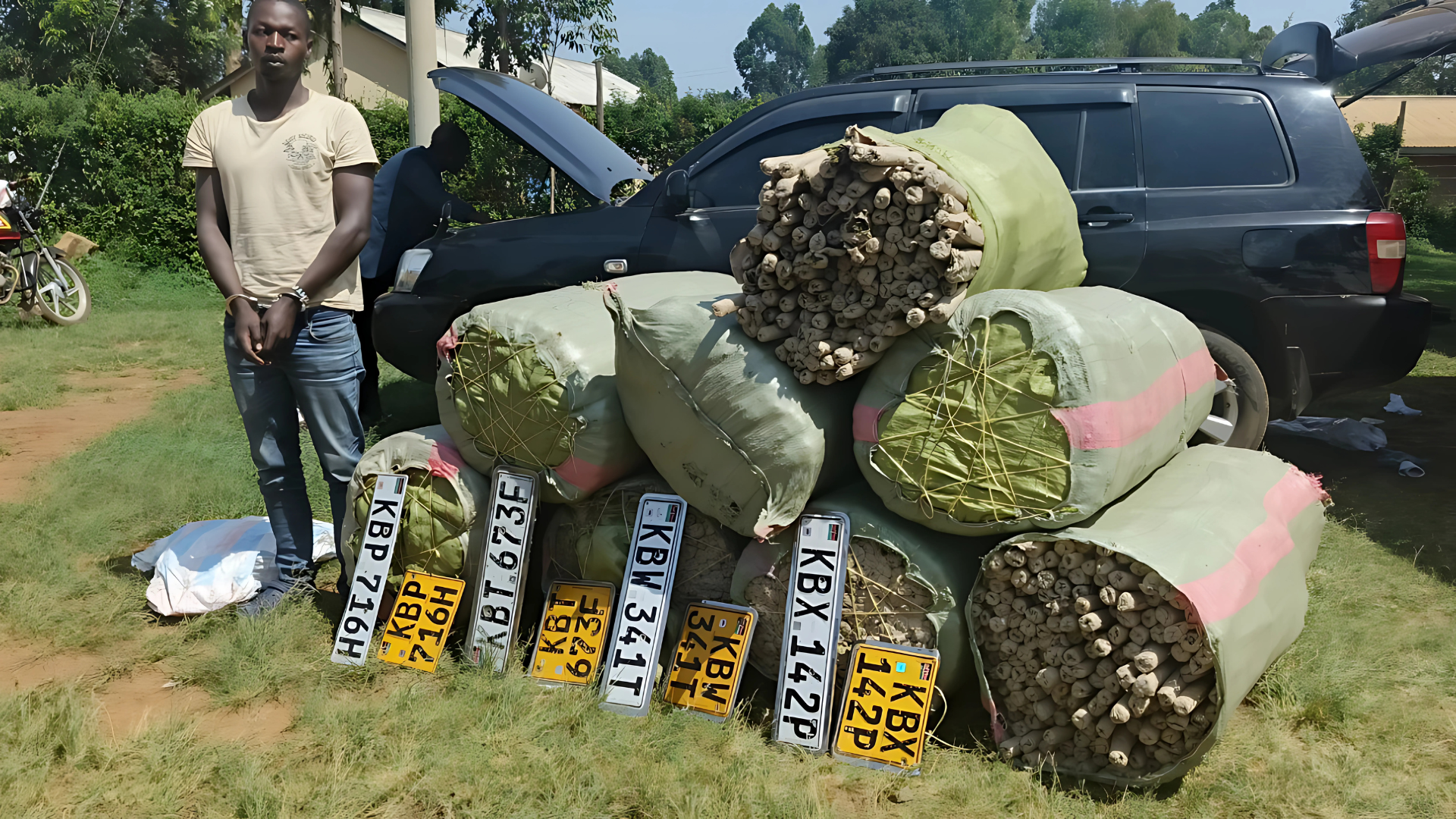
The operation began in the early hours when intelligence reached Oruba Police Station about a suspicious vehicle transporting a large consignment of bhang. Acting swiftly, a multi-agency team, including officers from the Directorate of Criminal Investigations (DCI) Anti-Narcotics Unit, set up a roadblock near the Oruba market, a known hotspot for illicit activities. At around 7 p.m., they intercepted a Toyota Noah, registration number KCF 832J, driven by Nyagaga. “We had precise information about the vehicle and its cargo,” said Migori County Police Commander James Kamau. “Our officers were ready, and we ensured the suspect had no chance to escape.” A search of the vehicle revealed 10 gunny sacks stuffed with tightly packed rolls of bhang, weighing a total of 457.6 kilograms, with an estimated street value of Sh13,728,000.
Nyagaga, a resident of Migori town, was apprehended on the spot, though a second occupant in the vehicle reportedly fled into nearby bushes during the chaos. The suspect, described by police as a seasoned trafficker with a history of evading arrests, was taken to Oruba Police Station, where he remains in custody pending arraignment. “This man has been on our radar for some time,” said a DCI officer, speaking anonymously. “He’s part of a larger network moving drugs through Migori to urban centers like Nairobi and Mombasa.” The impounded vehicle, now held at the station as evidence, was found to have multiple number plates, a tactic police believe Nyagaga used to evade detection during previous runs.
The seizure underscores the persistent challenge of drug trafficking in Migori, a county bordering Tanzania and close to Uganda, making it a strategic corridor for smuggling. Authorities suspect the bhang originated from Tanzania, smuggled through porous border points like Isebania, before being transported to markets in western and central Kenya. “The drugs were likely headed to a major distributor in Kisii or Nairobi,” said Kamau, noting that investigations are ongoing to identify Nyagaga’s accomplices and buyers. The operation’s success has been hailed as a testament to community vigilance, with residents praised for their role in providing the critical tip-off. “We rely on the public to be our eyes and ears,” Kamau added. “This bust shows what we can achieve when we work together.”
The arrest comes amid a surge in anti-narcotics operations across Kenya, with recent busts in Mombasa, Kilifi, and Kwale netting significant hauls of bhang and heroin. In April 2024, Mombasa police arrested a notorious trafficker with heroin worth over Sh500,000, while a July 2024 operation in Kwale seized bhang valued at Sh17 million. These efforts reflect the government’s intensified crackdown on drug cartels, driven by rising concerns about substance abuse among youth. In Migori, the impact of drugs is keenly felt, with community leaders reporting a spike in addiction among young people. “Bhang is destroying our children,” said Grace Atieno, a local women’s group leader. “We’re grateful for this arrest, but we need more action to stop these cartels.”
Nyagaga’s arrest has also spotlighted the tactics used by traffickers to evade law enforcement. The discovery of multiple number plates in his vehicle mirrors similar findings in a recent Machakos bust, where a suspect used interchangeable plates to dodge police dragnets. “These criminals are getting smarter,” said a DCI officer involved in the Oruba operation. “They use fake IDs, switch plates, and even bribe their way through checkpoints.” The officer revealed that Nyagaga had a pending court case in Kisii related to a prior drug trafficking charge, raising questions about the effectiveness of judicial processes in deterring repeat offenders. “We catch them, but they’re back on the streets too soon,” the officer lamented.
The operation has drawn praise from local leaders, who see it as a step toward curbing the drug menace. Migori Senator Jane Otieno commended the police for their swift action but urged for more resources to tackle smuggling routes. “Our borders are too porous, and we need better surveillance and more officers,” she said during a community meeting in Oruba. Governor Ochilo Ayacko echoed her sentiments, pledging county support for anti-narcotics initiatives. “We’ll work with the national government to ensure Migori is no longer a safe haven for traffickers,” he said. The county has allocated Sh50 million in its 2025/26 budget for community policing and youth rehabilitation programs to address the root causes of drug abuse.
Residents, however, expressed mixed emotions. While many celebrated the bust, others voiced frustration over the persistence of the drug trade. “We hear about these arrests, but the problem never goes away,” said Peter Omondi, a shopkeeper in Oruba market. “The big bosses behind these operations are never caught.” His concerns reflect a broader sentiment that small-scale traffickers like Nyagaga are often apprehended, while the masterminds remain at large. Social media platforms like X have amplified these views, with users praising the police but calling for tougher penalties. “Good job, but we need to go after the cartels, not just the drivers,” one user posted. Another wrote, “Sh13 million in bhang is huge. Who’s funding this?”
The economic impact of the drug trade in Migori is significant, with bhang and other narcotics fueling a shadow economy that undermines legitimate businesses. The Sh13.7 million haul, one of the largest in the county’s recent history, highlights the scale of the illicit market. “These drugs are sold in our schools, our estates, everywhere,” said Atieno. “It’s not just about the money—it’s about the lives being ruined.” The county has seen a rise in school dropouts and crime linked to drug addiction, prompting calls for rehabilitation centers and awareness campaigns. The National Authority for the Campaign Against Alcohol and Drug Abuse (NACADA) has promised to establish a treatment facility in Migori by 2026, but locals remain skeptical due to past unfulfilled promises.
The legal process for Nyagaga is expected to be closely watched. He faces charges of possession and trafficking of narcotic drugs under the Narcotic Drugs and Psychotropic Substances Control Act, which carries a potential life sentence. The DCI has vowed to pursue all leads to dismantle the network behind the consignment, with forensic analysis of the seized bhang underway to trace its origin. “We’re not stopping here,” said Kamau. “This arrest is just the beginning. We’re going after everyone involved.” The vehicle, impounded as evidence, will also be subjected to a thorough examination to uncover any additional clues about the trafficking operation.
The Oruba bust has also reignited debates about Kenya’s porous borders. Migori’s proximity to Tanzania makes it a prime route for smuggling, with Isebania border point frequently cited in drug trafficking cases. In 2024, a Kwale operation linked a Sh17 million bhang haul to suppliers in Tanzania, highlighting the regional nature of the trade. “We need stronger border controls and international cooperation,” said Otieno, who plans to raise the issue in the Senate. The East African Community has been working on joint strategies to combat cross-border crime, but progress remains slow, with traffickers exploiting lax enforcement.
Community members have called for more public involvement in anti-narcotics efforts. “People know who these traffickers are,” said Omondi. “If we keep reporting them, we can make a difference.” The Oruba operation’s success, driven by a tip-off, underscores the power of community-police collaboration. However, fears of retaliation have deterred some residents from coming forward. “We need protection for those who speak out,” said Atieno, urging the government to establish a whistleblower program. The police have promised to safeguard informants, with Kamau stating, “Your safety is our priority. Keep the information coming.”
As investigations continue, the Oruba bust stands as a beacon of hope in the fight against drug trafficking. Yet, it also highlights the daunting challenges ahead—porous borders, judicial loopholes, and the resilience of cartels. For now, Nyagaga’s arrest offers a moment of triumph for Oruba’s residents, who hope it signals a turning point in their community’s battle against the drug menace. “This is our home, and we won’t let it be a playground for criminals,” said Otieno, encapsulating the resolve of a community determined to reclaim its future.