By Brenda Wereh25 Jun, 202532 mins read 2,479 views
0 comments 0 likes
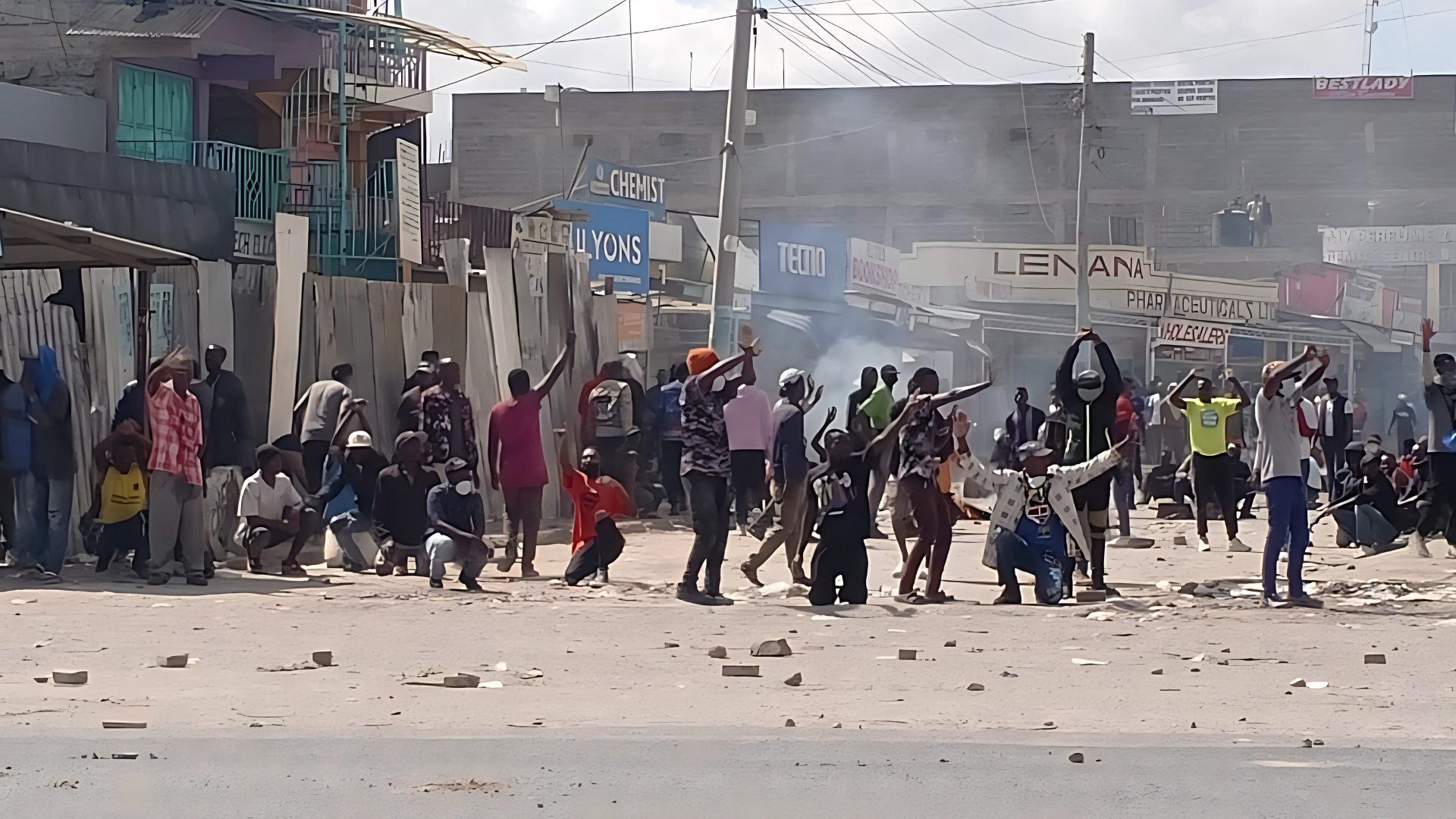
Police in Kitengela town fired tear gas to disperse Gen Z-led protesters marking the first anniversary of the 2024 anti-Finance Bill uprising, highlighting ongoing tensions and demands for justice.
The bustling town of Kitengela, located on the southern outskirts of Nairobi, became a flashpoint of tension as anti-riot police deployed tear gas to disperse hundreds of Gen Z-led protesters. The demonstrators had gathered to commemorate the first anniversary of the 2024 anti-Finance Bill uprising, a movement that shook Kenya’s political landscape with its youth-driven demands for economic reform and justice. The protests, part of a nationwide “Gen Z Memorial March,” aimed to honor the over 60 lives lost during last year’s unrest while renewing calls for accountability and an end to police brutality. However, the heavy-handed response from security forces underscored the ongoing friction between Kenya’s youth and the state, as clouds of tear gas and scattered crowds painted a chaotic scene in the town’s central streets.
Protesters in Kitengela Town
The 2024 anti-Finance Bill protests, sparked by a controversial tax bill proposing steep levies on essentials like bread and sanitary products, ignited a firestorm of dissent among Kenya’s youth. The movement, largely coordinated through social media platforms like X under hashtags such as #RejectFinanceBill2024, culminated in the dramatic storming of Parliament on June 25, 2024, an event that left Nairobi’s City Hall in flames and resulted in widespread injuries and deaths. In Kitengela, a town known for its vibrant community and proximity to the capital, the 2024 protests had been marked by both peaceful marches and violent clashes, with reports of looting by suspected infiltrators. One year later, the anniversary protests sought to reclaim the narrative, focusing on remembrance and reform, but the police response reignited familiar grievances.
As dawn broke on June 25, 2025, young protesters began assembling in Kitengela’s town center, waving Kenyan flags and holding placards with messages like “Justice for the Fallen” and “Stop Killing Us.” The mood was initially somber, with some demonstrators laying flowers at sites where protesters had been killed the previous year. “We’re here to honor our brothers and sisters who died for speaking out,” said Miriam Wanjiku, a 24-year-old shop assistant who joined the march. “This is not about causing chaos; it’s about demanding a Kenya where we can live without fear.” By mid-morning, however, the atmosphere shifted as police, backed by water cannon trucks and anti-riot units, moved to block key roads, including Namanga Road, a vital artery in the town.
Around 11 a.m., tensions escalated when a group of protesters, led by local activist James Mwangi, attempted to march toward the Kitengela Police Station, chanting freedom songs and blowing whistles. Police responded swiftly, lobbing tear gas canisters into the crowd, forcing demonstrators to scatter in all directions. Eyewitnesses described chaotic scenes as tear gas smoke billowed through the streets, with some protesters coughing and shielding their faces with handkerchiefs. “They didn’t even give us a chance to speak,” Mwangi said, wiping tears from his eyes as he regrouped with other protesters. “We were peaceful, but the police treated us like criminals. This is exactly why we’re here—to protest this kind of brutality.”
The use of tear gas in Kitengela was not an isolated incident. Similar scenes unfolded across Kenya, with protests reported in Nairobi, Mombasa, Kisumu, and Nakuru, all part of the coordinated Gen Z Memorial March. In Kitengela, however, the heavy police presence was particularly pronounced, with regular officers, anti-riot units, and plainclothes personnel deployed in large numbers. Local businesses along Namanga Road and adjacent streets shuttered their doors, fearing a repeat of the looting that marred some 2024 protests. “We can’t take chances,” said Peter Kamau, a shop owner who closed his electronics store early. “The protests are important, but when police start firing tear gas, it’s the small businesses that suffer.”
The government’s stance on the protests has been a point of contention. President William Ruto, whose administration faced its biggest crisis during the 2024 uprising, has called for dialogue but maintained a firm line against street demonstrations. Speaking at a public event in Eldoret on June 24, Ruto urged Kenyans to avoid actions that could disrupt the economy. “We are open to listening, but we cannot allow chaos to define us,” he said. His remarks, however, have done little to appease protesters, who view the government’s response as dismissive of their demands. Inspector General of Police Douglas Kanja, addressing the media on June 24, emphasized that security forces would protect peaceful demonstrators but warned against any attempts to breach public order. “We are here to ensure safety, not to fight our people,” Kanja said, though his assurances were met with skepticism given the day’s events in Kitengela.
Human rights groups have condemned the police response, citing a pattern of excessive force. The Kenya National Commission on Human Rights reported that over 50 people died during the 2024 protests, with hundreds injured and dozens abducted or detained arbitrarily. In Kitengela, reports surfaced of plainclothes officers arresting several protesters, with some allegedly taken to nearby police stations without clear charges. “The use of tear gas and arrests shows the government’s fear of the youth,” said Grace Njeri, a human rights advocate based in Kajiado County. “Instead of addressing the issues—unemployment, corruption, police violence—they’re trying to silence us.” Njeri’s organization has called for independent investigations into the 2024 deaths and the recent arrests, echoing demands from international bodies like Amnesty International Kenya.
The Gen Z movement’s demands are rooted in deep-seated frustrations. With youth unemployment rates near 20 percent and a cost-of-living crisis gripping the nation, many young Kenyans feel excluded from the economic progress promised by successive governments. The 2024 Finance Bill, which was eventually withdrawn after public pressure, was seen as a direct assault on their livelihoods, taxing essentials at a time when many struggled to afford basic needs. “We’re not just fighting for those who died,” said Brian Otieno, a 26-year-old protester in Kitengela. “We’re fighting for a future where we can afford to live, where we’re not killed for demanding better.” Otieno’s words reflect the broader sentiment driving the protests, which have evolved from a reaction to a single bill into a call for systemic change.
The protests in Kitengela also highlighted the movement’s decentralized nature. Unlike traditional demonstrations led by political figures, the Gen Z marches are largely leaderless, coordinated through social media. Posts on X captured the chaos in Kitengela, with videos showing police lobbing tear gas into buildings and protesters running for cover. One user described officers rushing into a building after deploying tear gas, raising concerns about excessive force. Despite the crackdown, protesters regrouped in smaller clusters, continuing their chants and vowing to return. “They can fire all the tear gas they want,” said Wanjiku. “We’re not going anywhere until justice is served.”
The involvement of political figures has added complexity to the protests. Wiper Party leader Kalonzo Musyoka, who joined demonstrators at Nairobi’s Holy Family Basilica on the same day, praised the youth for their courage but faced accusations of opportunism from some activists. In Kitengela, protesters were adamant about maintaining their independence. “This is not about Kalonzo or any politician,” said Mwangi. “This is about us, the people who are suffering. They can join us, but they don’t lead us.” The sentiment underscores the movement’s rejection of traditional political structures, a hallmark of its resilience.
Religious leaders, too, have been drawn into the fray. The Catholic Church, which faced criticism in 2024 for allegedly barring protesters from seeking refuge, has since expressed support for the Gen Z movement. In Kitengela, a local pastor joined the march briefly, offering prayers for the fallen before tear gas forced the crowd to disperse. “The church must stand with the people,” said Reverend John Mwaura. “We cannot ignore the cries of the youth.” His presence, however, did little to deter the police response, which protesters described as disproportionate.
As night fell in Kitengela, the protests wound down, with many demonstrators retreating to avoid further clashes. The streets, littered with tear gas canisters and debris, bore witness to the day’s intensity. For the residents of Kitengela, the events of June 25 were a stark reminder of the unresolved tensions from 2024. The Gen Z movement, undeterred by the crackdown, continues to demand accountability, with plans for further demonstrations in the coming weeks. “This is just the beginning,” said Otieno, clutching a placard as he left the town center. “We’ll keep coming back until they listen.”
The anniversary protests in Kitengela and beyond signal a new chapter in Kenya’s political struggle. The youth, empowered by their collective voice, are challenging a system they see as unresponsive to their needs. As the nation grapples with these demands, the events in Kitengela serve as a microcosm of a broader fight for justice, equity, and a future where no one is silenced by tear gas or fear.
Former Kiambu Governor Ferdinand Waititu has secured a major bail reprieve from the High Court, with Justice Winfrida Okwany reducing his bail from Sh53.5 million to Sh20 million cash pending appeal in his ongoing corruption case.
President Ruto and Governor Sakaja signed a cooperation agreement allocating funds for 50,000 new streetlights, water plants saving 50 million litres daily, 27 km Nairobi River sewer and ward road upgrades, with Ruto calling it a partnership to make the city livable while opposition senators warn of devolution threats.
A staff member at Moi Teaching and Referral Hospital allegedly stole Sh10 million by falsifying patient bills as paid in the eCitizen system while diverting the money to her personal account, prompting an ongoing police and hospital investigation.