By Brenda Wereh12 Feb, 202613 mins read 2,153 views
0 comments 0 likes
Kenya's Standard Gauge Railway revenue rose 18.6% to Sh21.4 billion in 2025, driven by higher cargo volumes and recovering passenger numbers.
Revenue collections on the Standard Gauge Railway (SGR) rose 18.6 percent to Sh21.4 billion in 2025, lifted by steady growth in cargo haulage and a rebound in passenger traffic.
The Kenya Railways Corporation (KRC) announced the figures on December 23, 2025, showing the highest annual revenue since the Mombasa–Nairobi line began commercial operations in 2017. Cargo revenue contributed the largest share, growing 22 percent to Sh16.8 billion, while passenger services recovered strongly to Sh4.6 billion, up 11 percent from 2024.
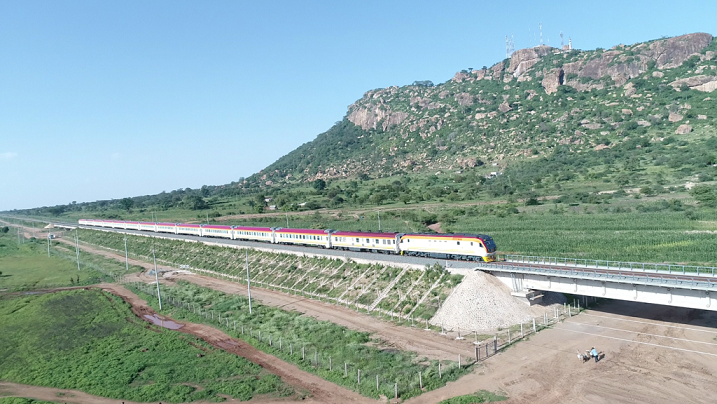
SGR train en route to Mombasa with passengers.
KRC Managing Director Phillip Mainga attributed the performance to improved efficiency and marketing. “We have seen a consistent increase in freight volumes, especially for cement, fertiliser, clinker and containerised cargo,” Mainga said. “On the passenger side, the introduction of more convenient schedules, online booking and promotional fares helped drive demand. Kenyans are returning to the train.”
Cargo haulage reached 6.8 million tonnes in 2025, a 19 percent increase from the previous year. The railway now handles about 40 percent of Mombasa port container traffic destined for Nairobi and the hinterland, up from 32 percent in 2024. Key importers such as Bamburi Cement, Tororo Cement, Devki Steel and fertiliser distributors have increased their reliance on the SGR, citing reliability and cost savings over road transport.
Passenger numbers climbed to 1.4 million in 2025, recovering from the post-pandemic dip. The flagship Madaraka Express service between Mombasa and Nairobi recorded occupancy rates averaging 78 percent during peak seasons, with holiday periods seeing sell-outs weeks in advance.
Transport Cabinet Secretary Kipchumba Murkomen hailed the results as evidence of the SGR’s growing economic value. “This railway is not just infrastructure; it is an economic artery,” Murkomen said. “Higher revenue means more funds for maintenance, expansion and new rolling stock. We are on track to make the SGR a self-sustaining operation.”
The 18.6 percent growth outpaced the 12 percent increase recorded in 2024, reflecting both volume growth and modest fare adjustments. The corporation said it had maintained competitive pricing while improving service quality, including Wi-Fi on trains, onboard catering and cleaner stations.
The SGR has now generated over Sh98 billion in cumulative revenue since inception, recovering a significant portion of its original Sh327 billion construction cost financed through a concessional loan from China Exim Bank. The line has also reduced road accidents, congestion on the Nairobi–Mombasa highway and carbon emissions by shifting heavy cargo from trucks to rail.
Despite the positive performance, challenges remain. Maintenance costs for the Chinese-built rolling stock and track have risen, and some importers still prefer road transport due to last-mile connectivity issues in Nairobi’s industrial area. KRC said it is addressing this through a planned dry port and inland container depot at Embakasi.
Passenger services face competition from improved road travel times and lower bus fares. Mainga said the corporation is exploring new routes and services to maintain momentum. “We are studying the viability of extending passenger services to Naivasha and Kisumu,” he said. “The freight business is solid, but we want to make the Madaraka Express the preferred mode for long-distance travel.”
The 2025 performance has boosted confidence in the railway’s long-term viability. Analysts project revenue could surpass Sh25 billion in 2026 if cargo volumes continue rising and passenger numbers grow with tourism recovery.
The SGR remains one of Kenya’s most significant infrastructure investments, and the 18.6 percent revenue increase in 2025 signals its growing contribution to the national economy.
Former Kiambu Governor Ferdinand Waititu has secured a major bail reprieve from the High Court, with Justice Winfrida Okwany reducing his bail from Sh53.5 million to Sh20 million cash pending appeal in his ongoing corruption case.
President Ruto and Governor Sakaja signed a cooperation agreement allocating funds for 50,000 new streetlights, water plants saving 50 million litres daily, 27 km Nairobi River sewer and ward road upgrades, with Ruto calling it a partnership to make the city livable while opposition senators warn of devolution threats.
A staff member at Moi Teaching and Referral Hospital allegedly stole Sh10 million by falsifying patient bills as paid in the eCitizen system while diverting the money to her personal account, prompting an ongoing police and hospital investigation.