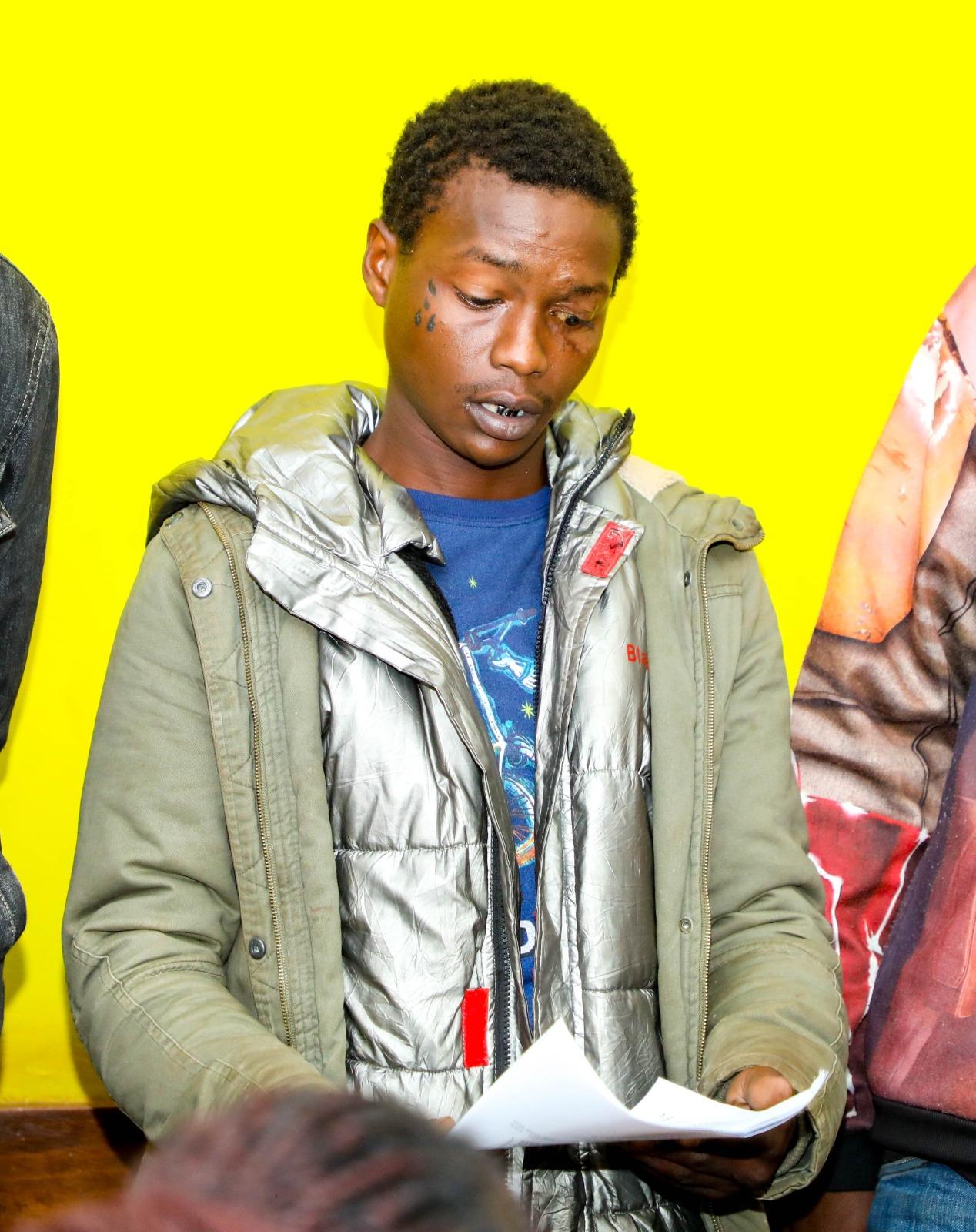
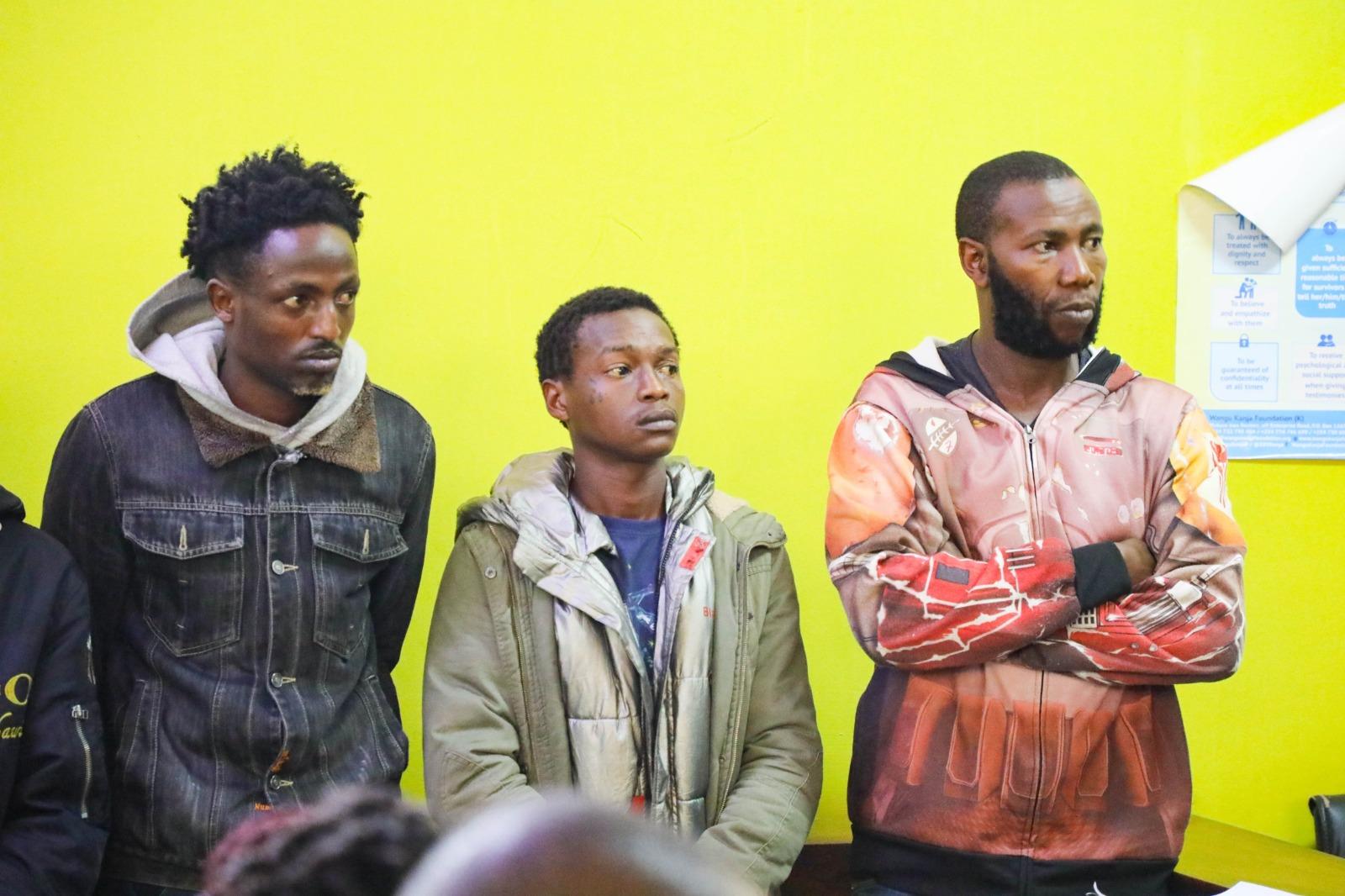
The Chief Magistrate’s Court at Ruiru Law Courts in Kiambu County, Kenya, arraigned seven suspects linked to the destruction of public and private property during violent protests in Kikuyu town on June 25. The demonstrations, which marked the first anniversary of the 2024 Gen Z-led anti-Finance Bill protests, saw significant unrest, with protesters setting fire to the Kikuyu Law Courts, Kikuyu Sub-County offices, and several government vehicles, including tractors and tuk-tuks. The court granted detectives a 14-day custodial order to complete their investigations, as authorities work to hold those responsible accountable amid growing concerns over recurring protest violence in Kenya.
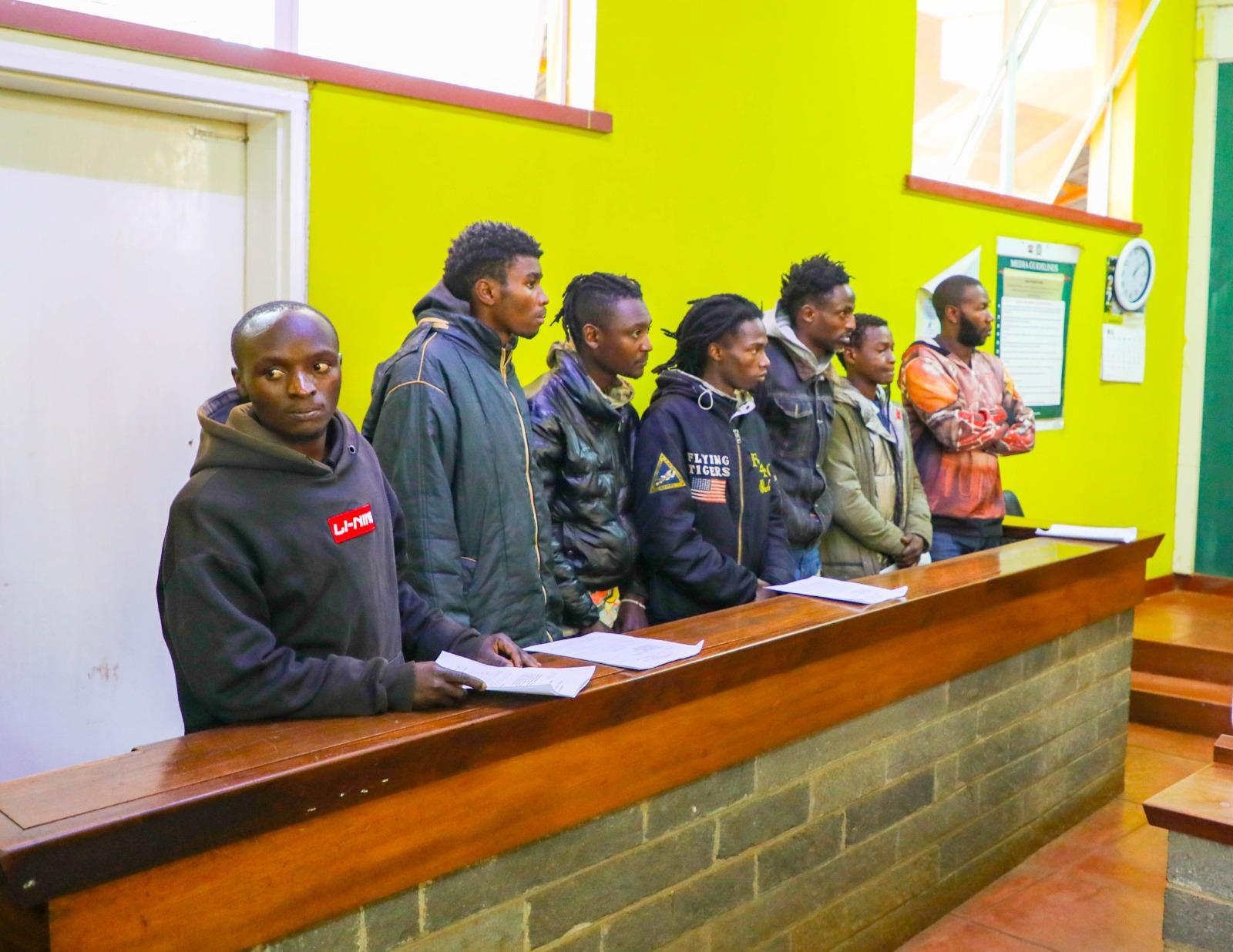
The protests on June 25 were part of a nationwide movement to commemorate the 2024 demonstrations, which had resulted in over 60 deaths due to clashes with security forces. In Kiambu, the unrest turned destructive as protesters torched key government installations and looted property, prompting a swift response from law enforcement. “We have recovered stolen items, including two steel windows, a steel door, and a water tank from the County Government’s physical planning offices,” said a spokesperson for the Directorate of Criminal Investigations (DCI) during a press briefing. The DCI emphasized that investigations are ongoing to identify additional suspects involved in the chaos.
The arraignment of the seven suspects comes amid heightened tensions in Kenya, driven by public frustration over issues such as police brutality, government corruption, and economic hardship. The June 25 protests, largely led by young Kenyans, were fueled by the memory of last year’s violence and the recent death of blogger Albert Ojwang in police custody. “We are here to honor those who lost their lives fighting for a better Kenya,” said Jane Wambui, a 22-year-old protester in Kikuyu. “But the destruction of property only hurts our cause.” Wambui’s sentiments reflect a divide among demonstrators, with some advocating for peaceful protests while others engaged in violent acts, including arson and vandalism.
The violence in Kikuyu was part of a broader wave of protests across Kenya, with clashes reported in Nairobi, Mombasa, Kisumu, and Nyeri. In Nairobi, police used teargas and water cannons to disperse crowds, while in Kikuyu, the burning of court facilities disrupted local judicial operations. “The attack on the Kikuyu Law Courts is an assault on the rule of law,” said Chief Magistrate Margaret Nanzushi during the arraignment. “Those responsible must face the consequences.” The court’s decision to detain the suspects for 14 days was based on the prosecution’s argument that additional time was needed to gather forensic evidence and witness statements.
The protests have reignited debates about police conduct and government accountability. Interior Cabinet Secretary Kipchumba Murkomen described the demonstrations as “terrorism disguised as dissent,” accusing protesters of attempting to destabilize the government. His remarks, made during a press conference on June 26, drew sharp criticism from civil society groups. “Labeling peaceful protesters as terrorists is a tactic to suppress dissent,” said Ann Wanjiku, a human rights activist with the Kenya Human Rights Network. “The government must address the root causes of these protests, not criminalize them.” Wanjiku’s organization has documented numerous cases of police violence, including the use of live bullets and the deployment of plain-clothed officers to disrupt protests.
The involvement of plain-clothed individuals, often referred to as “goons,” has been a recurring issue in Kenya’s protest landscape. Witnesses in Kikuyu reported seeing unidentified men armed with whips and clubs working alongside police to intimidate protesters. “They came on motorbikes, beating anyone in their path,” said Peter Mwangi, a shop owner in Kikuyu who witnessed the chaos. “The police did nothing to stop them.” A joint statement from Western embassies, including the United States and the United Kingdom, condemned the use of such groups, calling for respect for peaceful demonstrations and an end to excessive force.
The Kiambu protests also highlighted the economic toll of such unrest. Business owners in Kikuyu reported significant losses due to looting and arson. “My shop was ransacked, and I lost goods worth over Sh200,000,” said Grace Njeri, a local trader. “We support the call for justice, but destroying our livelihoods is not the answer.” The destruction of government property, including vehicles and infrastructure, has added to the financial burden on Kiambu County, which is already grappling with limited resources. County officials have estimated that repairs to the damaged facilities could cost millions of shillings.
The arraignment of the seven suspects has sparked mixed reactions. Some residents of Kiambu see it as a step toward accountability, while others view it as a distraction from addressing systemic issues. “The government is quick to arrest protesters but slow to investigate police brutality,” said John Kamau, a youth leader in Kikuyu. “We need justice for Albert Ojwang and the dozens killed last year.” Kamau was referring to the blogger whose death in custody on June 8, following his arrest for criticizing a senior police officer, became a rallying point for the protests. An autopsy revealed that Ojwang’s death was likely due to assault, contradicting initial police claims of suicide.
The protests have also drawn attention to the government’s handling of media coverage. On June 25, the Communications Authority of Kenya ordered television stations, including NTV and KTN, to halt live broadcasts of the demonstrations, a move that was later overturned by the High Court. “Censoring the media only fuels public anger,” said Faith Odhiambo, President of the Law Society of Kenya. “Kenyans have a right to know what’s happening in their country.” The restoration of TV signals allowed for broader coverage of the protests, which included images of burning buildings and clashes between police and demonstrators.
The unrest in Kiambu and other parts of Kenya has underscored the challenges facing President William Ruto’s administration. Elected in 2022 on a platform of economic empowerment for the poor, Ruto has faced growing criticism over rising taxes, corruption scandals, and a perceived heavy-handed response to dissent. “The youth are frustrated because promises of change have not materialized,” said political analyst Mary Wambui. “These protests are a wake-up call for the government to listen to its people.” Wambui noted that the 2024 protests, which forced the withdrawal of a controversial Finance Bill, demonstrated the power of Kenya’s youth in shaping policy.
The arraignment of the seven suspects is just one part of a broader effort to address the fallout from the June 25 protests. In Nyeri County, 21 individuals were also arraigned on charges related to shop breaking and stealing during similar demonstrations. Of those, 10 pleaded guilty, with their cases set for further hearing in July. The DCI has vowed to pursue additional leads to ensure all perpetrators are brought to justice. “We are committed to maintaining law and order,” said the DCI spokesperson. “No one is above the law, and those who destroy property will face consequences.”
As investigations continue, civil society groups are calling for a judicial inquiry into the protests to examine both the actions of demonstrators and the response of security forces. “We need a transparent process to address police brutality and protest-related violence,” said Wanjiku. “Without accountability, these cycles of unrest will persist.” The World Organisation Against Torture and the Independent Medico-Legal Unit have also urged the government to cease abductions and torture of protest leaders, citing documented cases of human rights violations.
The Kiambu protests have also sparked discussions about the role of social media in organizing demonstrations. Young Kenyans, often referred to as Gen Z, have used platforms like X to mobilize and share their grievances, with hashtags like #RutoMustGo trending during the unrest. “Social media has given us a voice,” said Brian Otieno, a 19-year-old student who participated in the Kikuyu protests. “We’re not just fighting for ourselves but for the future of Kenya.” However, some officials have accused social media of fueling misinformation and inciting violence, a claim activists dismiss as an attempt to justify censorship.
As the court prepares to review the case of the seven suspects on July 12, the focus remains on balancing accountability with the right to protest. For many in Kiambu, the destruction of public property is a painful reminder of the costs of unrest, but the underlying issues driving the demonstrations cannot be ignored. “We want a government that listens,” said Wambui, echoing the sentiments of many young Kenyans. “Until that happens, the streets will remain our platform.” The outcome of the investigations and the broader protest movement will likely shape Kenya’s political landscape as the country approaches its 2027 elections.