By Brenda Wereh07 Jul, 202535 mins read 2,330 views
0 comments 0 likes
Saba Saba protests turned chaotic as demonstrators engaged in running battles with police across major towns in Kenya. Teargas, arrests, and roadblocks marked the day as citizens demanded political reforms.
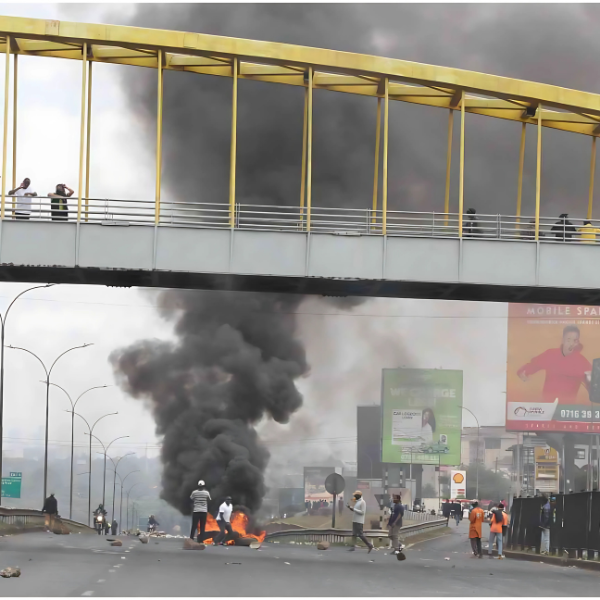
Kenya’s capital, Nairobi, was gripped by chaos as the 35th anniversary of the historic Saba Saba protests turned violent. Protesters, predominantly young Kenyans from Generation Z, clashed with police in running battles across key city routes, particularly along Thika Road, as they attempted to march to the Central Business District (CBD). The confrontations, marked by tear gas, stone-throwing, and road blockades, underscored deep-rooted grievances against the government of President William Ruto.
These protests, commemorating the 1990 Saba Saba movement for multiparty democracy, highlighted ongoing demands for accountability, economic justice, and an end to police brutality. This article explores the events of the day, the historical significance of Saba Saba, the causes of the unrest, the government’s response, and the broader implications for Kenya’s socio-political landscape.
Saba Saba, meaning “Seven Seven” in Swahili, marks the pivotal protests of July 7, 1990, when Kenyans, led by opposition figures like Kenneth Matiba and Charles Rubia, demanded an end to the one-party rule under President Daniel arap Moi. Those demonstrations, met with brutal suppression, were instrumental in ushering in multiparty elections in 1992. Over the decades, Saba Saba has evolved into a symbol of resistance against authoritarianism and a call for justice, dignity, and democratic freedoms. In 2025, the day carried added weight, coming on the heels of the deadly June 25, 2024, protests against the Finance Bill, which saw parliament stormed and over 60 lives lost. The 2025 protests were fueled by a new generation of activists, leveraging digital platforms to amplify their demands for systemic change.
The Unfolding Chaos on July 7, 2025
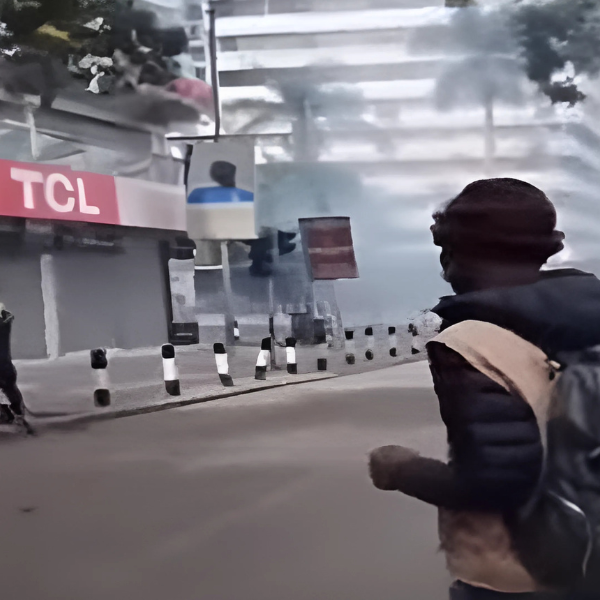
The morning of July 7, 2025, saw Nairobi under a near-total lockdown as police mounted roadblocks on major arteries, including Thika Road, Waiyaki Way, Mombasa Road, and Kenyatta Avenue, to prevent protesters from reaching the CBD. Specific choke points like Roysambu, Kasarani, and Guri Nanak on Thika Road became flashpoints for violent clashes. By 9 a.m., hundreds of protesters, waving Kenyan flags and chanting slogans, had gathered at Ruaraka Junction, only to be met with tear gas and warning shots from anti-riot police. Social media posts on X captured the intensity, with videos showing protesters hurling stones and police retreating briefly at Roysambu before regrouping with reinforcements.
The running battles spread beyond Thika Road. In Kitengela, protesters lit bonfires and blocked roads, while similar scenes unfolded in Karatina, Kisii, and Nakuru. In Nairobi’s CBD, small groups of demonstrators gathered near the National Archives, but heavy security, including razor wire around parliament and State House, limited their advance. At one point, protesters at Kangemi overwhelmed police, who responded with water cannons and live rounds fired into the air. The chaos paralyzed transport, with public service vehicles (PSVs) halted at roadblocks and commuters forced to walk long distances.
The violence was not limited to Nairobi. In Nyeri, protesters blocked the Nyeri-Nairobi Highway, while in Kisumu and Eldoret, businesses shut down preemptively, fearing looting. The Kenya Air Force was deployed to assist police at Juja Road, a rare move that heightened tensions. By mid-afternoon, the city resembled a ghost town, with deserted streets and closed businesses reflecting widespread fear of escalation.
Drivers of the Protests
The 2025 Saba Saba protests were driven by a potent mix of economic, political, and social grievances. At the core was anger over police brutality, exemplified by the deaths of over 80 protesters since June 2024 and allegations of extrajudicial killings. The case of Albert, a teacher and blogger allegedly killed in police custody, became a rallying cry, with activists demanding justice and accountability.
Economic challenges further fueled the unrest. Kenya’s youth, facing a 21% unemployment rate and a soaring cost of living, expressed frustration with the government’s failure to deliver on economic promises. The 2024 Finance Bill protests had highlighted discontent with tax hikes, and the sentiment persisted into 2025, with calls for President Ruto’s resignation. Protesters accused the administration of corruption and mismanagement, pointing to lavish government spending amid widespread poverty.
The protests also reflected a broader demand for dignity and democratic space. Gen Z activists, using platforms like X, TikTok, and WhatsApp, framed their movement as a continuation of the 1990 Saba Saba struggle, but with modern demands for digital rights, employment, and transparent governance. As activist Nerima Wako noted, “Each violent crackdown fuels further unrest,” highlighting a cycle of repression and resistance.
Government and Police Response
The government’s response was characterized by a heavy security crackdown. From 2 a.m., anti-riot police and armored trucks were deployed across Nairobi, with razor wire sealing off key government sites. Inspector General Douglas Kanja issued a statement warning that any armed protesters or those attempting to access protected areas, such as State House, would face immediate legal action under the Protected Areas Act. The National Police Service (NPS) emphasized its mandate to maintain order, but critics, including MP Robert Mbui, accused the police of intimidation and using excessive force to suppress dissent.
The government also attempted to control the narrative. The Communications Authority of Kenya ordered media outlets to halt live coverage of the protests, a move condemned by the Law Society of Kenya as “arbitrary and illegal.” While some stations, like Citizen TV, defied the ban, others, such as KTN, were temporarily taken off air. This sparked accusations of censorship and drew comparisons to the authoritarian tactics of the Moi era.
Opposition leader Raila Odinga, a veteran of the 1990 Saba Saba protests, called for demonstrations to be held at Kamukunji Grounds, urging Kenyans to honor the sacrifices of past struggles. However, his alignment with President Ruto’s administration drew criticism from some protesters, who viewed it as a betrayal of the movement’s ideals.
Economic and Social Fallout
The chaos had a profound impact on Nairobi’s economy and daily life. Thika Road Mall (TRM) announced a full-day closure on July 7, following a G4S security advisory warning of potential unrest. Businesses in the CBD, Mukuru slums, and other areas fortified their premises with metal grills, haunted by memories of the June 25, 2024, looting that cost billions of shillings. The Kenya Bankers Association advised remote work, and schools in Nairobi, Mombasa, and Kisumu sent students home, citing safety concerns.
Commuters bore the brunt of the disruptions. Thousands were stranded at roadblocks, with some, like Miriam Wanjiku from Kayole, walking over 10 kilometers only to find their workplaces closed. Kenya Railways’ cancellation of the Mombasa-Nairobi Madaraka Express, officially due to a “technical fault,” was widely seen as an attempt to prevent protesters from reaching the capital.
The economic toll was significant. Traders like Beatrice Mwangi described Nairobi as a “ghost town,” with no business activity. The government warned that continued protests could deter investors and cripple the economy, a concern echoed by small business owners like Josephat Mumo, who said, “We’ve lost too much already.”
Broader Implications
The Saba Saba chaos of 2025 underscores a growing generational divide in Kenya. The youth-led, tech-driven protests signal a shift from traditional political organizing, with Gen Z leveraging social media to mobilize and amplify their message. This decentralized movement poses a challenge to the government, which has struggled to engage with a digitally empowered generation.
The heavy-handed police response risks further alienating young Kenyans, fueling a cycle of unrest. As Gabrielle Lynch, an African politics expert, noted, the government’s tactics mirror those of the 1990s, raising questions about its commitment to democratic principles. The protests also highlight the fragility of Kenya’s democratic gains, with activists accusing the state of recycling authoritarian strategies to suppress dissent.
Internationally, the clashes drew attention to Kenya’s human rights record. The U.S. Embassy issued a demonstration alert, and reports of police violence, including the use of live rounds, prompted calls for accountability from groups like Amnesty International. The government’s ban on live media coverage further raised concerns about press freedom.
The running battles on July 7, 2025, during the Saba Saba protests were a stark reminder of Kenya’s unresolved challenges. The clashes along Thika Road and beyond reflected not just a commemoration of past struggles but a renewed fight for justice, accountability, and economic equity. While the government’s security measures limited the protests’ scale, they did little to address the underlying grievances driving Gen Z’s activism. As Kenya navigates this turbulent period, the voices of its youth, amplified by the chaos of Saba Saba, will continue to shape the nation’s future. The struggle, as one newspaper headline put it, “continues.”
Former Kiambu Governor Ferdinand Waititu has secured a major bail reprieve from the High Court, with Justice Winfrida Okwany reducing his bail from Sh53.5 million to Sh20 million cash pending appeal in his ongoing corruption case.
President Ruto and Governor Sakaja signed a cooperation agreement allocating funds for 50,000 new streetlights, water plants saving 50 million litres daily, 27 km Nairobi River sewer and ward road upgrades, with Ruto calling it a partnership to make the city livable while opposition senators warn of devolution threats.
A staff member at Moi Teaching and Referral Hospital allegedly stole Sh10 million by falsifying patient bills as paid in the eCitizen system while diverting the money to her personal account, prompting an ongoing police and hospital investigation.