By Brenda Wereh12 Aug, 202526 mins read 2,343 views
0 comments 0 likes
Broad-Based Government praises President Ruto’s achievements during their Malava visit, highlighting key developments and progress made so far.
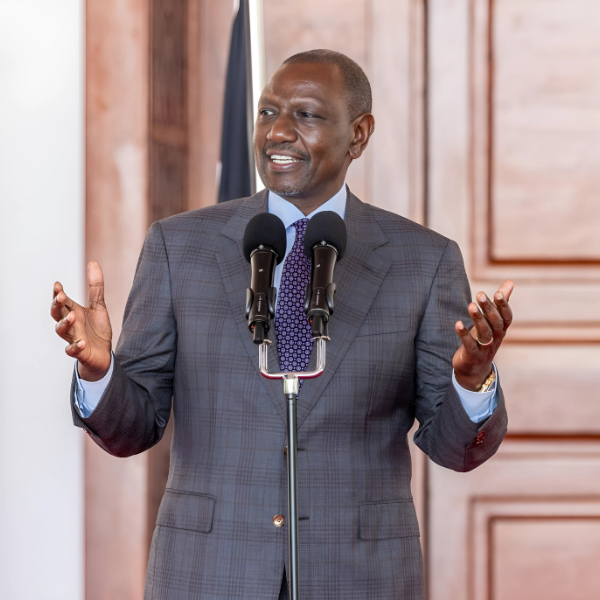
Political leaders from Kenya’s Western region, gathered in Malava, Kakamega County, declared that President William Ruto has delivered on his promises through the formation of a broad-based government.
This pronouncement, made during a public rally attended by thousands, highlighted the inclusion of opposition figures from the Orange Democratic Movement (ODM) in key government positions as a cornerstone of Ruto’s efforts to foster unity and drive development. The event, organized by the ruling United Democratic Alliance (UDA), comes amid a politically charged atmosphere in Kenya, with anti-government protests, economic challenges, and preparations for the 2027 general elections shaping the national discourse.
The Malava rally, held at Malava Stadium, was a significant show of political unity in a region traditionally aligned with the opposition ODM, led by Raila Odinga. Key figures present included Deputy President Kithure Kindiki, Kakamega Governor Fernandes Barasa, and several Members of Parliament from the Western region, alongside newly appointed Cabinet Secretaries from ODM, such as John Mbadi (Treasury) and Opiyo Wandayi (Energy). The rally was framed as a celebration of Ruto’s commitment to inclusive governance, with speakers emphasizing that the inclusion of ODM leaders in the Kenya Kwanza administration has strengthened national cohesion and accelerated development projects in the region.
Governor Barasa, a vocal supporter of the broad-based government, praised Ruto for honoring his campaign pledge to create an inclusive administration. “President Ruto has delivered by bringing all Kenyans together, regardless of political affiliation. The appointment of our brothers and sisters from ODM into the Cabinet shows his commitment to unity and development,” Barasa stated, as reported by local media. The rally also highlighted specific projects in Kakamega County, including road infrastructure, rural electrification, and agricultural initiatives, as evidence of Ruto’s focus on delivering tangible results.
The event was strategically timed to counter growing criticism of Ruto’s administration, particularly following deadly anti-government protests in June and July 2025, which claimed at least 31 lives, according to the Kenya National Commission on Human Rights. By showcasing a united front in Malava, the administration aimed to project stability and rally support in a key opposition stronghold ahead of the 2027 elections.
The formation of the broad-based government stems from a landmark agreement signed on March 7, 2025, between Ruto’s UDA and Odinga’s ODM. This pact, described as a historic move to bridge Kenya’s political divide, allows both parties to collaborate on critical government policy-making. The agreement followed months of political tension, including protests over high living costs, tax hikes, and allegations of government overreach. By appointing ODM leaders to key Cabinet positions, Ruto sought to neutralize opposition criticism and stabilize his administration amid economic and social challenges.
Key appointments include:
John Mbadi, a seasoned ODM politician, as Cabinet Secretary for the National Treasury and Economic Planning.
Opiyo Wandayi, ODM’s former Minority Leader, as Cabinet Secretary for Energy and Petroleum.
Ali Hassan Joho, ODM Deputy Party Leader, as Cabinet Secretary for Mining, Blue Economy, and Maritime Affairs.
Wycliffe Oparanya, former Kakamega Governor, as Cabinet Secretary for Cooperatives and Micro, Small, and Medium Enterprises.
These appointments have been hailed as a bold step toward inclusivity, particularly in Western Kenya, where ODM enjoys strong support. At the Malava rally, speakers argued that the inclusion of opposition figures ensures that the region’s interests are represented at the highest levels of government. However, critics, including some civil society groups, have accused Ruto of co-opting the opposition to weaken its ability to hold the government accountable. The March 7 agreement sparked protests in Nairobi, with demonstrators arguing that it compromises democratic checks and balances.
The Malava rally spotlighted several achievements attributed to Ruto’s administration, particularly in infrastructure, agriculture, and digital inclusion. These were presented as evidence of his commitment to the “Bottom-Up Economic Transformation Agenda” promised during the 2022 election campaign.
Despite the optimistic narrative at Malava, Ruto’s administration faces significant challenges. The anti-government protests in June and July 2025, sparked by economic grievances and allegations of extrajudicial killings, have dented public confidence. The Kenya National Commission on Human Rights reported 31 deaths and over 500 arrests during these protests, highlighting deep-seated frustrations with governance and economic policies. Critics argue that the broad-based government is a political maneuver to quell dissent rather than a genuine effort at inclusivity.
Economic challenges, including high inflation and unemployment, continue to fuel discontent. The Kenya Economic Survey 2025 noted that while affirmative action funds have supported marginalized groups, significant barriers to financial inclusion remain, particularly in rural areas. Additionally, the European Union’s decision to add Kenya to its list of high-risk jurisdictions for money laundering and terrorism financing in June 2025 has raised concerns about foreign investment and economic stability.
Digital freedoms also remain a contentious issue. While the judiciary has upheld the right to internet access, proposed amendments to the Cybercrime and Kenya Information and Communications Bills risk expanding surveillance and restricting online expression. These legislative proposals have sparked concerns among civil society groups, who fear they could undermine the gains made in digital inclusion.
The Malava rally underscores Ruto’s strategy to consolidate support in opposition strongholds ahead of the 2027 elections. By aligning with ODM leaders, Ruto aims to weaken the opposition’s cohesion and broaden his electoral base. However, this move risks alienating some UDA supporters who view the inclusion of ODM as a betrayal of the party’s core principles. The rally’s emphasis on development projects and inclusivity is an attempt to shift the narrative from protest-driven unrest to a focus on tangible achievements.
The Western region, with its significant voter base, will be a key battleground in 2027. The presence of ODM leaders in the Cabinet could sway voters in Kakamega and neighboring counties, but it also places pressure on these leaders to deliver results. The public feud between Ruto and Odinga’s factions, evident during the March protests, suggests that the broad-based government’s success will depend on its ability to address economic grievances and maintain political stability.
The Malava rally’s declaration that “Ruto has delivered” reflects the administration’s efforts to project unity and progress through a broad-based government. By including ODM leaders in key positions, Ruto has taken a bold step toward bridging Kenya’s political divide, but the move is not without risks. While infrastructure, agriculture, and digital inclusion initiatives show promise, economic challenges, protest-related tensions, and governance concerns loom large. As Kenya navigates the road to 2027, the success of the broad-based government will depend on its ability to deliver tangible results and address the grievances of a restive populace. The Malava rally may mark a turning point, but only time will tell if Ruto’s vision of a united, prosperous Kenya can withstand the pressures of a complex political and economic landscape.
Former Kiambu Governor Ferdinand Waititu has secured a major bail reprieve from the High Court, with Justice Winfrida Okwany reducing his bail from Sh53.5 million to Sh20 million cash pending appeal in his ongoing corruption case.
President Ruto and Governor Sakaja signed a cooperation agreement allocating funds for 50,000 new streetlights, water plants saving 50 million litres daily, 27 km Nairobi River sewer and ward road upgrades, with Ruto calling it a partnership to make the city livable while opposition senators warn of devolution threats.
A staff member at Moi Teaching and Referral Hospital allegedly stole Sh10 million by falsifying patient bills as paid in the eCitizen system while diverting the money to her personal account, prompting an ongoing police and hospital investigation.