By Brenda Wereh12 Jul, 202542 mins read 2,317 views
0 comments 0 likes
President Ruto has announced the completion of Etio Dam in Elgeyo Marakwet, a major water project set to transform livelihoods of over 8,000 households.
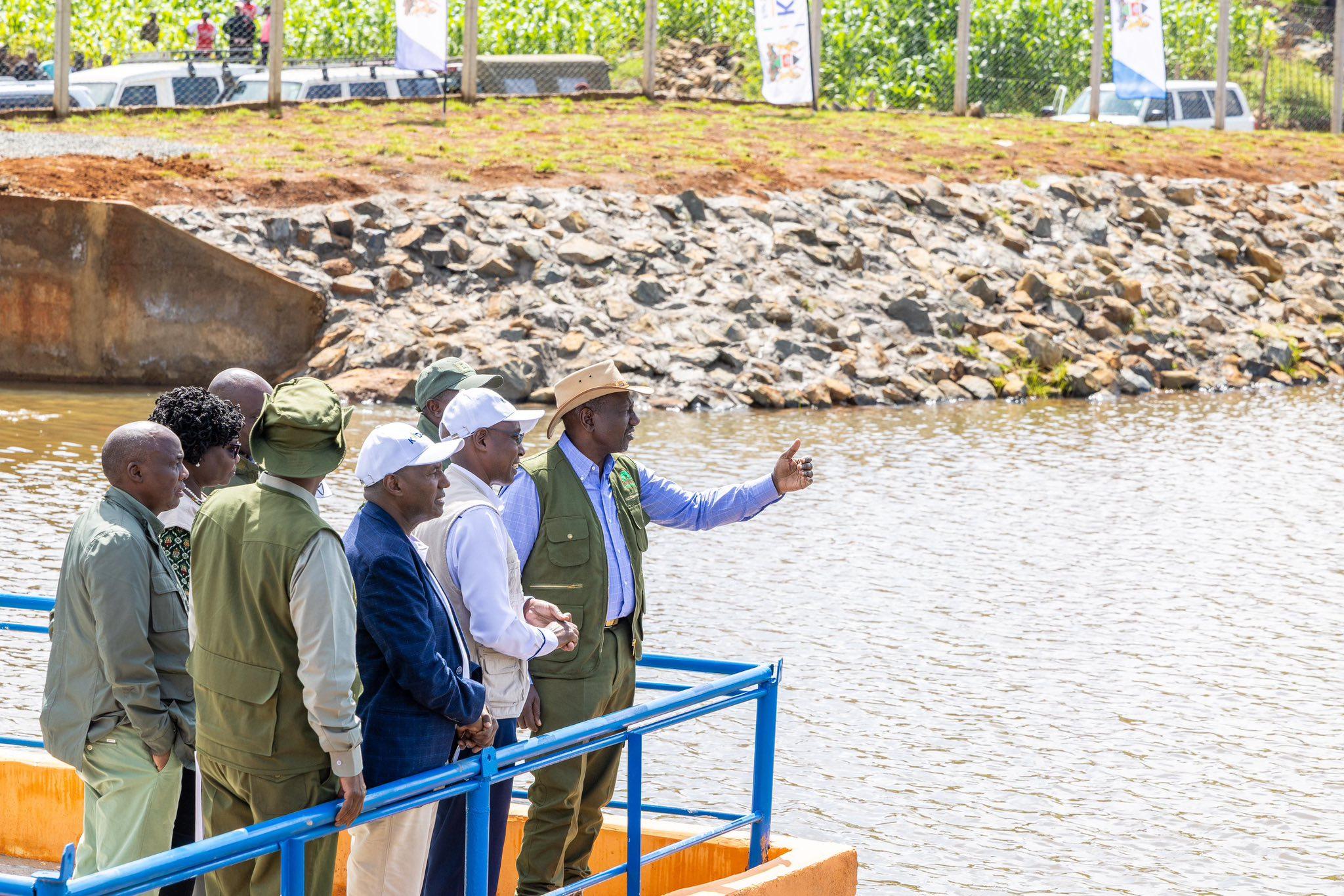
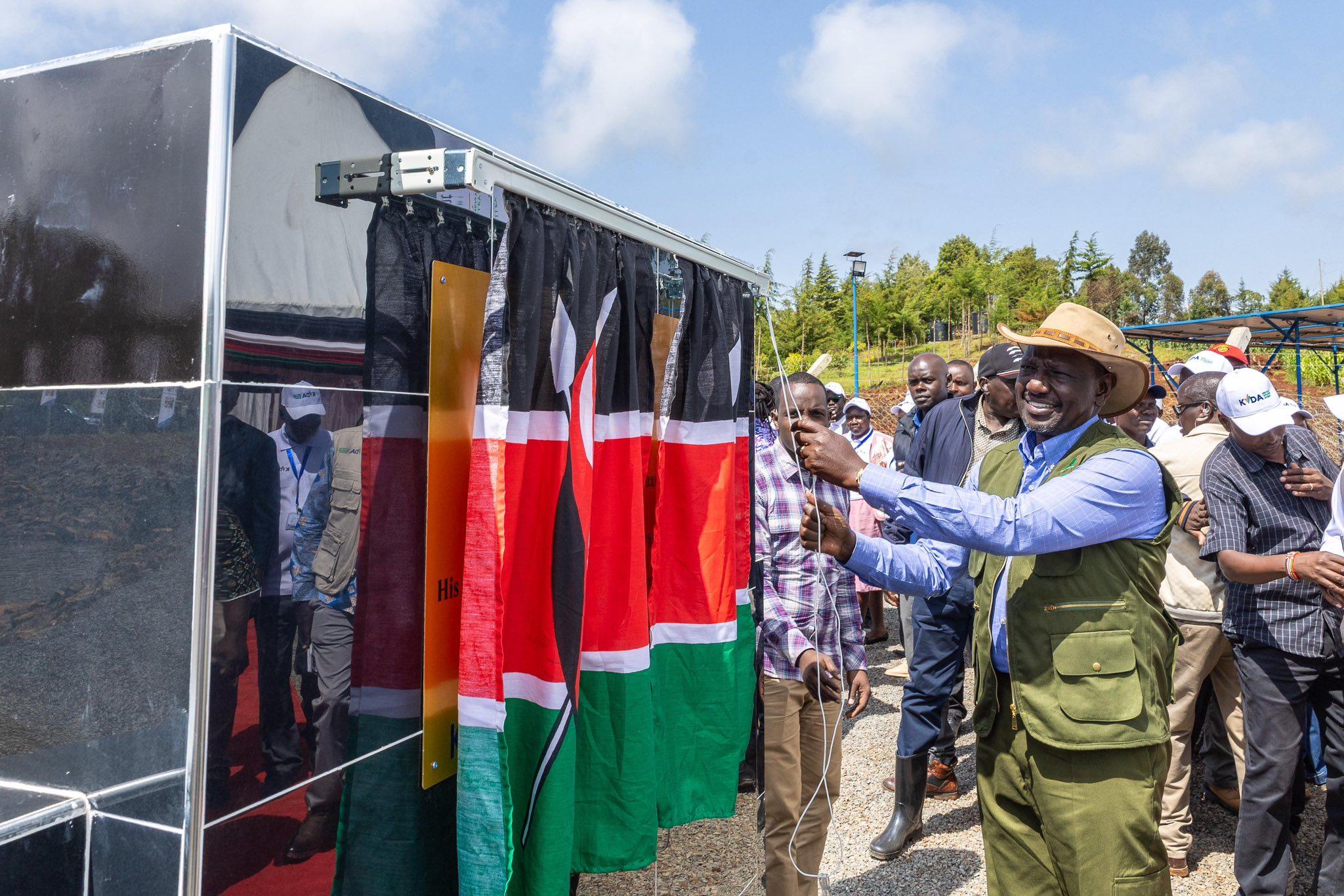
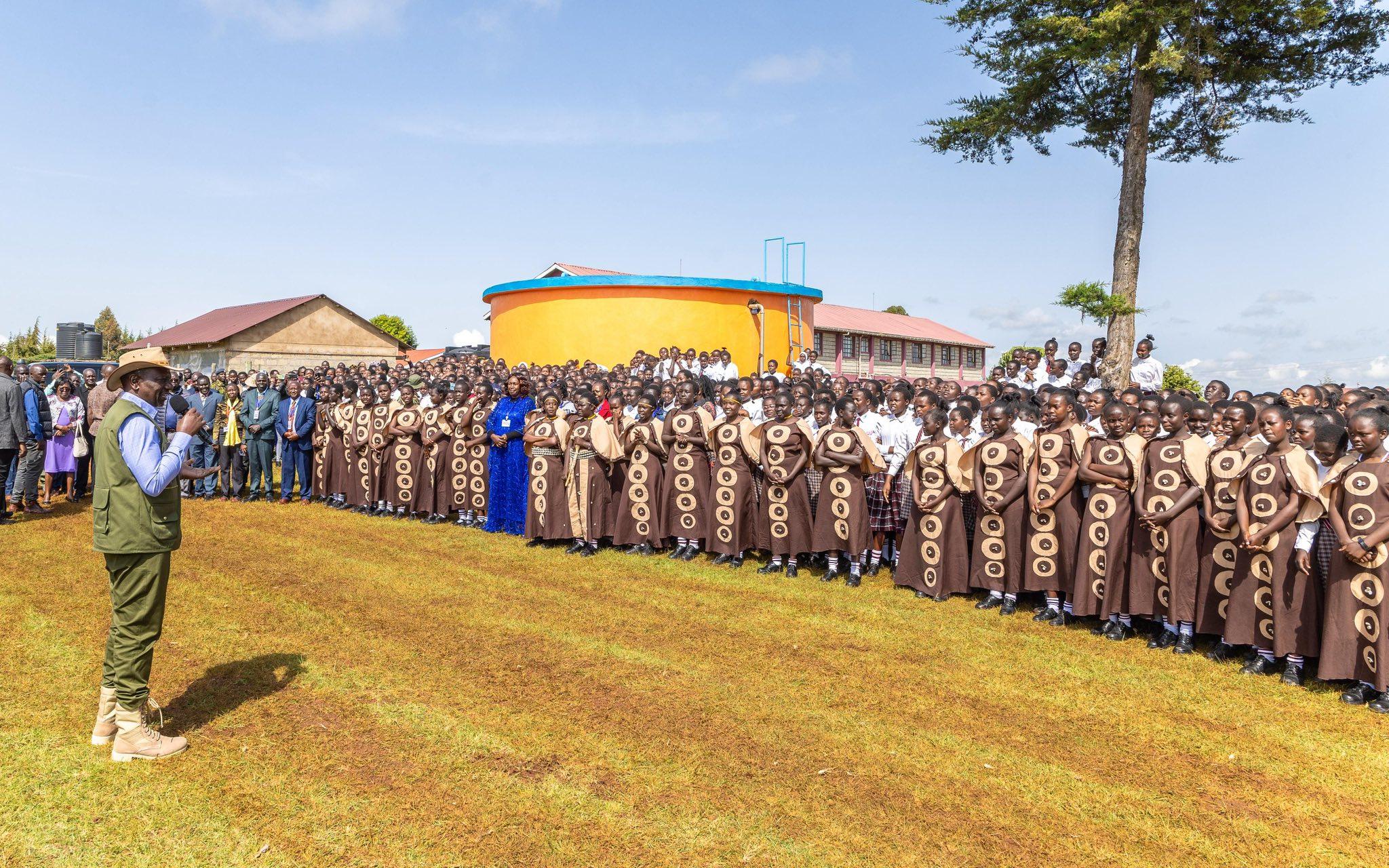
President William Ruto commissioned the Etio Dam in Kapteren, Keiyo North Constituency, Elgeyo Marakwet County, Kenya, marking a significant milestone in the country’s efforts to enhance food security, promote irrigation, and improve livelihoods in rural communities.
The completion of the dam, which was launched for rehabilitation and expansion a year earlier, is poised to transform the lives of over 8,000 households by providing a reliable water supply and enabling irrigation for more than 2,500 acres of farmland. This article delves into the significance of the Etio Dam project, its impact on Elgeyo Marakwet, and its broader implications for Kenya’s agricultural and economic development, drawing on recent posts on X and other sources.
Background: The Etio Dam and Kenya’s Development Agenda
The Etio Dam, located in the Kerio Valley, is a flagship project under the Kerio Valley Development Authority (KVDA), a parastatal established to promote sustainable development in Kenya’s arid and semi-arid regions. The dam’s rehabilitation and expansion, initiated in July 2024, as noted in a post by @WilliamsRuto on July 13, 2024, aim to address chronic water scarcity, boost agricultural productivity, and create economic opportunities in Elgeyo Marakwet County. The project aligns with President Ruto’s Bottom-Up Economic Transformation Agenda, which prioritizes empowering small-scale farmers, enhancing food security, and reducing poverty through targeted investments in infrastructure and agriculture.
Elgeyo Marakwet, a predominantly rural county in Kenya’s Rift Valley, is known for its agricultural potential but faces challenges such as erratic rainfall, limited irrigation infrastructure, and socio-economic marginalization. The Etio Dam, alongside other initiatives like the Yokot Dam and Simotwo Water Project, represents a strategic intervention to unlock the region’s potential and improve the quality of life for its residents. The completion of the dam, as highlighted in posts by @harsama_kello, @kipmurkomen, and @bakhita_esther on July 12, 2025, underscores the government’s commitment to timely delivery of development projects.
The Etio Dam Project: Scope and Objectives
The Etio Dam project involved the rehabilitation and expansion of an existing dam to increase its storage capacity and enhance its functionality for irrigation, domestic water supply, and livestock use. According to a post by @WilliamsRuto on July 12, 2025, the dam’s completion on schedule reflects the government’s efficiency in executing infrastructure projects. With a storage capacity sufficient to support irrigation across 2,500 acres, the dam is expected to benefit over 8,000 households by providing a reliable water source for farming, reducing dependence on rain-fed agriculture, and improving access to clean water for domestic use.
The project, implemented through the KVDA, includes infrastructure such as irrigation canals, water distribution systems, and community training programs to ensure sustainable use of the dam’s resources. The dam’s design prioritizes agroforestry and small-scale farming, enabling farmers to grow high-value crops like avocados, vegetables, and pyrethrum, as noted in a KBC Digital report from July 5, 2025. This shift from rain-fed to irrigation-based agriculture is expected to increase crop yields, improve food security, and create new income streams for local farmers.
Impact on Local Communities
The completion of the Etio Dam is a game-changer for the residents of Kapteren and surrounding areas in Keiyo North Constituency. For many years, communities in Elgeyo Marakwet relied on subsistence farming and informal livelihoods, often facing food insecurity due to unpredictable rainfall. The dam’s ability to irrigate over 2,500 acres will enable farmers to cultivate crops year-round, reducing the risks associated with drought and boosting agricultural productivity.
One beneficiary, Mrs. Leah Kiptarus from Kapteren village, shared her story in the KBC Digital report, highlighting how the dam has transformed her life. Previously engaged in brewing chang’aa (a local illicit brew) to support her family, Mrs. Kiptarus faced constant conflict with the law and financial instability. With access to irrigation water from the Etio Dam, she has transitioned to farming, growing vegetables and other crops, which has provided a stable income and improved her family’s well-being. Similarly, farmer Kipchirchir, quoted in the same report, has embraced agroforestry, cultivating 170 avocado trees and maintaining a nursery for fruit and indigenous seedlings, made possible by the dam’s water supply.
The dam’s impact extends beyond agriculture. By providing a reliable source of clean water, it addresses the challenge of water scarcity for domestic use, reducing the burden on women and children who previously traveled long distances to fetch water. Additionally, the dam supports livestock farming, a key livelihood in the region, by ensuring a consistent water supply for animals. The creation of over 2,000 direct jobs, as noted in the 2024 post by @WilliamsRuto, further underscores the dam’s role in stimulating economic activity and reducing unemployment in Elgeyo Marakwet.
Broader Implications for Food Security and Economic Development
The Etio Dam is a critical component of Kenya’s strategy to achieve food security and economic resilience in the face of climate change. By enabling irrigation in a region prone to drought, the dam reduces reliance on rain-fed agriculture, which is increasingly vulnerable to erratic weather patterns. This aligns with President Ruto’s broader vision of transforming Kenya’s agricultural sector, as evidenced by his administration’s investments in irrigation infrastructure, fertilizer subsidies, and market access programs.
The dam’s completion also complements other development initiatives in Elgeyo Marakwet, such as the Simotwo Water Project and the national reforestation drive under the 15 billion tree agenda, as mentioned in posts by @kipmurkomen on July 12, 2025. These projects collectively aim to enhance environmental sustainability, improve water management, and promote economic diversification. The focus on agroforestry, as practiced by farmers like Kipchirchir, supports Kenya’s climate change mitigation efforts by increasing tree cover and reducing soil erosion.
Economically, the dam is expected to stimulate local markets by increasing the supply of agricultural produce. President Ruto’s announcement on July 7, 2025, reported by allAfrica.com, of plans to build four additional fresh produce markets in Elgeyo Marakwet, alongside nine already under construction, will further enhance farmers’ access to markets, enabling them to sell their produce at competitive prices. This market-driven approach is central to the Bottom-Up Economic Transformation Agenda, which seeks to empower small-scale farmers and traders as key drivers of economic growth.
Challenges and Criticisms
While the Etio Dam’s completion is a significant achievement, it must be viewed in the context of broader challenges facing President Ruto’s administration. Recent posts on X and news reports highlight growing discontent over economic issues and governance concerns in Kenya. For instance, an Africanews report from July 6, 2025, notes calls for Ruto to address economic hardships and police brutality, with protesters demanding that he deliver on his promises to empower the working class. Similarly, a July 3, 2025, article from The Economist describes Ruto’s leadership as authoritarian, pointing to a spiral of violence linked to recent protests.
The Etio Dam project, while transformative, is not immune to criticism. Some residents may question the equitable distribution of its benefits, particularly if irrigation infrastructure and training programs do not reach all communities in Keiyo North. Additionally, the sustainability of the dam’s water supply depends on effective management and maintenance, which will require ongoing investment and community engagement. The KVDA’s role in overseeing the project will be critical to addressing these challenges and ensuring long-term success.
Furthermore, the dam’s completion comes amid controversies surrounding other Ruto-led initiatives, such as the $9 million State House chapel project, which has sparked outrage for its perceived extravagance, as reported by Africanews on July 11, 2025. Critics argue that such funds could be better allocated to projects like the Etio Dam, which directly benefit marginalized communities. Ruto’s administration must navigate these criticisms while maintaining public trust in its development agenda.
Political Context
The commissioning of the Etio Dam is politically significant for President Ruto, who has faced challenges consolidating support since his election in 2022. Elgeyo Marakwet, a key region in the Rift Valley, is a stronghold for Ruto’s United Democratic Alliance (UDA) party. The timely completion of the dam strengthens his administration’s narrative of delivering on campaign promises, particularly in rural areas where development projects are critical for political goodwill.
The involvement of key figures like Cabinet Secretary Beatrice Moe, who inspected preparatory works at the dam, as noted in a post by @CSBeatriceMoe on July 11, 2025, and Transport Cabinet Secretary Kipchumba Murkomen, highlights the government’s coordinated approach to development in the region. Ruto’s focus on Elgeyo Marakwet also counters criticisms of regional favoritism, demonstrating his commitment to inclusive development across Kenya.
Future Prospects
The success of the Etio Dam sets a precedent for similar projects in other parts of Kenya, particularly in arid and semi-arid regions. The government’s plans to rehabilitate and construct additional dams, such as the Yokot Dam, signal a long-term commitment to transforming agriculture and improving water access. However, sustaining these gains will require robust monitoring, community involvement, and investment in complementary infrastructure, such as roads and storage facilities, to ensure that farmers can access markets efficiently.
The dam’s impact on agroforestry and environmental conservation also positions Elgeyo Marakwet as a model for sustainable development. By integrating tree planting and irrigation, the project contributes to Kenya’s 15 billion tree agenda, which aims to combat climate change and restore degraded landscapes. Scaling up such initiatives could enhance Kenya’s resilience to climate shocks and position the country as a leader in sustainable agriculture in East Africa.
The completion of the Etio Dam in Kapteren, Elgeyo Marakwet, is a testament to President Ruto’s commitment to transforming rural livelihoods through strategic investments in water and agricultural infrastructure. By enabling irrigation for over 2,500 acres and benefiting more than 8,000 households, the dam addresses critical challenges of food insecurity, water scarcity, and poverty in Keiyo North Constituency. While challenges such as equitable benefit distribution and political controversies remain, the project’s success underscores the potential of targeted development to drive economic and social change. As Kenya continues to navigate its development journey, initiatives like the Etio Dam will play a pivotal role in shaping a more resilient and prosperous future.
Former Kiambu Governor Ferdinand Waititu has secured a major bail reprieve from the High Court, with Justice Winfrida Okwany reducing his bail from Sh53.5 million to Sh20 million cash pending appeal in his ongoing corruption case.
President Ruto and Governor Sakaja signed a cooperation agreement allocating funds for 50,000 new streetlights, water plants saving 50 million litres daily, 27 km Nairobi River sewer and ward road upgrades, with Ruto calling it a partnership to make the city livable while opposition senators warn of devolution threats.
A staff member at Moi Teaching and Referral Hospital allegedly stole Sh10 million by falsifying patient bills as paid in the eCitizen system while diverting the money to her personal account, prompting an ongoing police and hospital investigation.