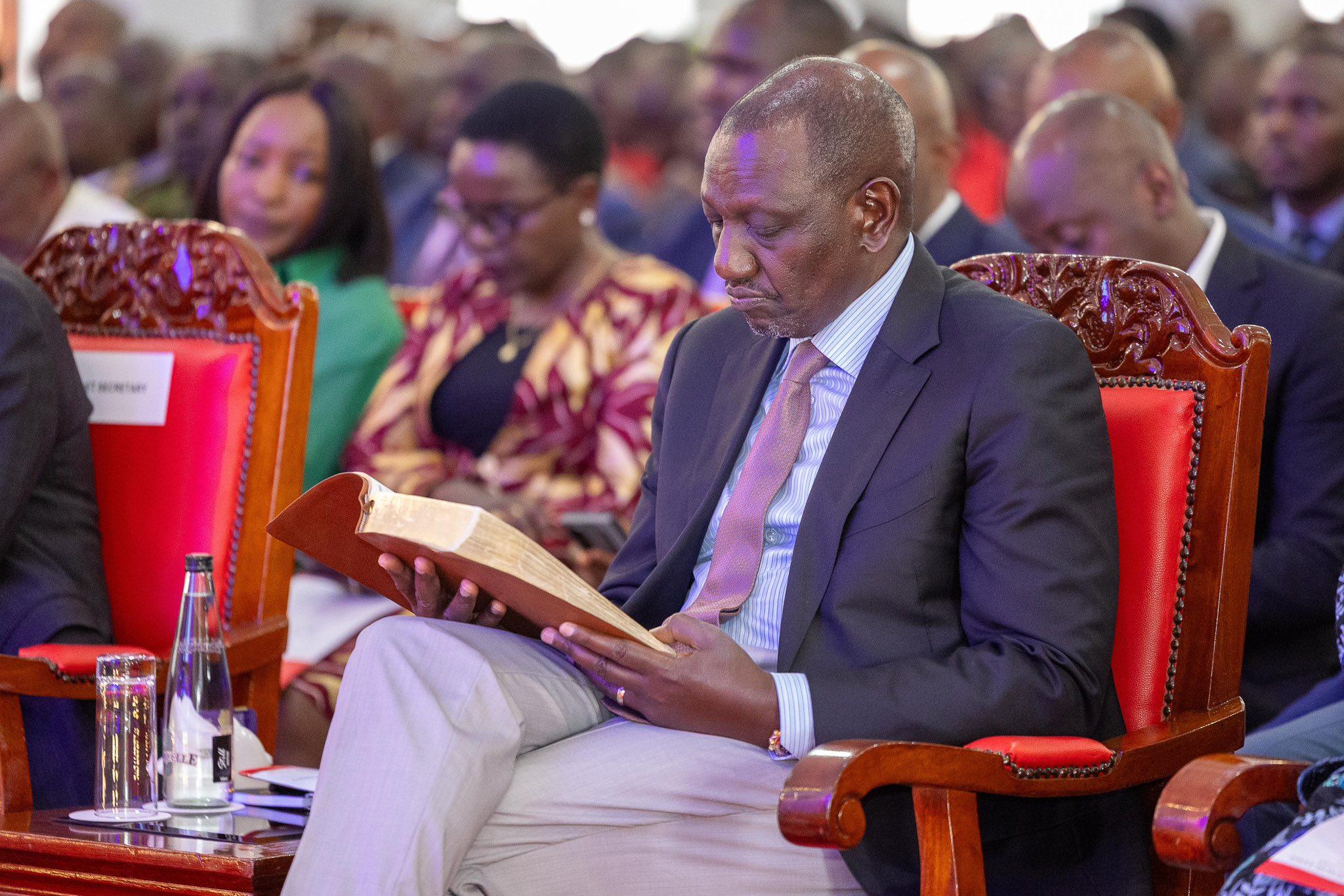
On Sunday, July 20, 2025, President William Ruto attended a significant religious event at the African Inland Church (AIC) Bomani in Machakos Town, Kenya, to witness the installation of Bishop Benjamin Kalanzo as assistant bishop of the AIC Machakos Diocese.
The ceremony, held at the historic AIC Bomani, a cornerstone of the region’s religious and cultural heritage, marked a pivotal moment for the church and the wider Machakos community. The event drew hundreds of congregants, local leaders, and political figures, including Machakos Governor Wavinya Ndeti, highlighting its importance both spiritually and socially.
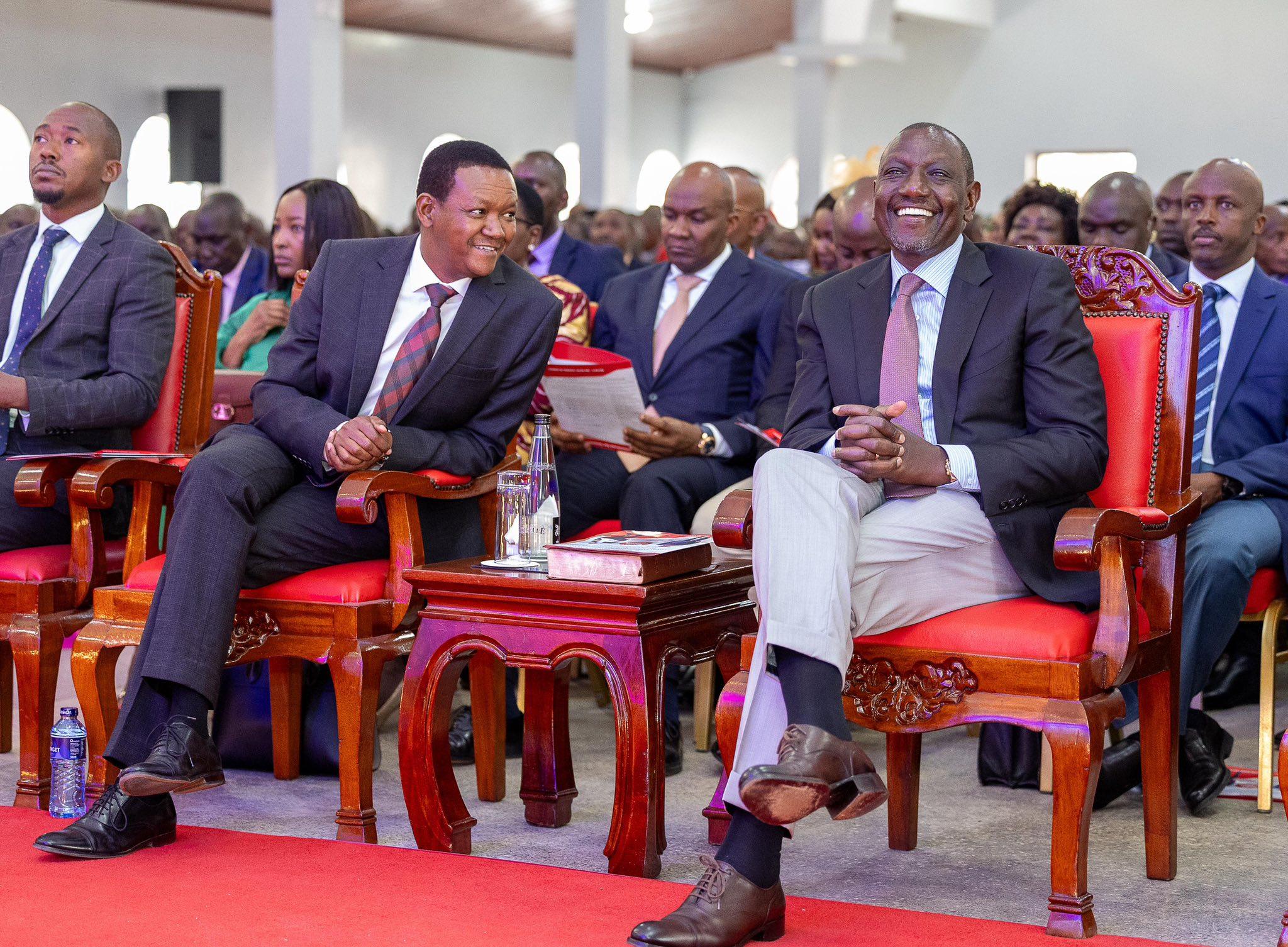
President Ruto’s presence, alongside his pledge of Ksh20 million toward the construction of a new church sanctuary, underscored his ongoing engagement with faith-based institutions, while also sparking discussions about the intersection of religion and politics in Kenya.
A Historic Ceremony at AIC Bomani
The installation of Bishop Benjamin Kalanzo as assistant bishop under Bishop Rev. Phillip Muia, who has led the AIC Machakos Diocese since 2021, was a landmark event for the church. The AIC Bomani, deeply rooted in Machakos’ history, has long been a center for faith-based education, charity initiatives, and community outreach, with a legacy shaped by leaders like the late Bishop Wellington Mulwa, who spearheaded the church’s expansion in the 1970s. Kalanzo’s appointment is expected to bolster the diocese’s pastoral and community work, supporting Bishop Muia in expanding the church’s mission in a region where the AIC has a significant presence.
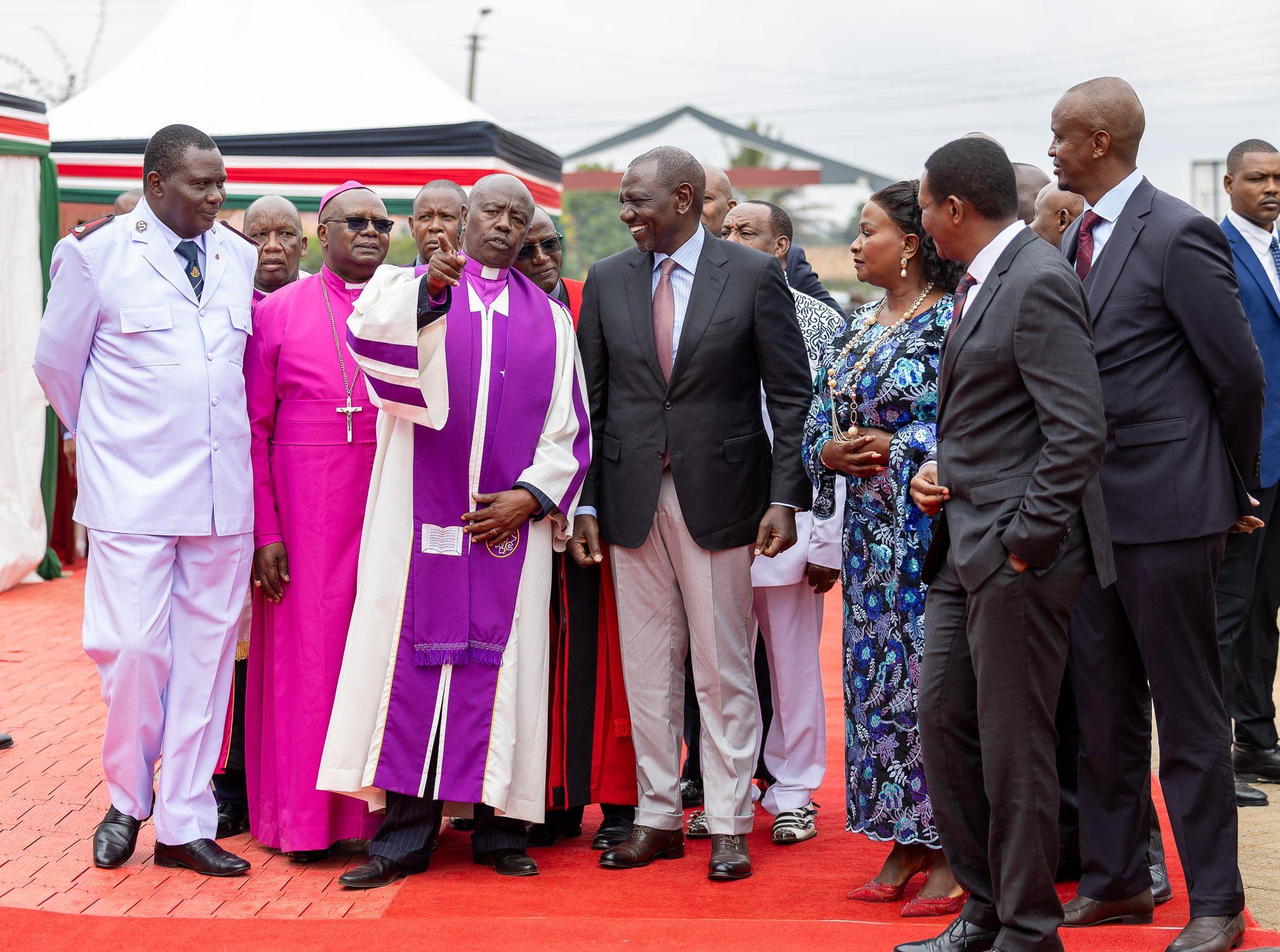
The ceremony was steeped in tradition, with vibrant choir performances and prayers that resonated with the hundreds of faithful in attendance. Posts on X captured the celebratory mood, with users like @WilliamsRuto sharing a biblical verse from Joshua 1:9, emphasizing strength and courage, and @PloSigei noting the event’s significance for the Machakos faith community. The installation not only marked a transition in church leadership but also served as a platform for broader discussions on faith, governance, and national development, themes that President Ruto addressed during his speech.
President Ruto’s Address: Ambition and Promises
During the ceremony, President Ruto delivered a speech that intertwined his administration’s agenda with spiritual encouragement. He reiterated his commitment to fulfilling the campaign promises made during his 2022 election, pushing back against critics who have accused him of overpromising. “I’ve been accused of overpromising. But let me tell Kenyans, it’s not about overpromising—it’s about raising our ambition,” Ruto declared, as reported by K24 Digital. He emphasized that his vision for Kenya, including initiatives like affordable housing and the Kazi Majuu program, which has facilitated overseas jobs for over 400,000 Kenyan youths, is grounded in ambition rather than political expediency.
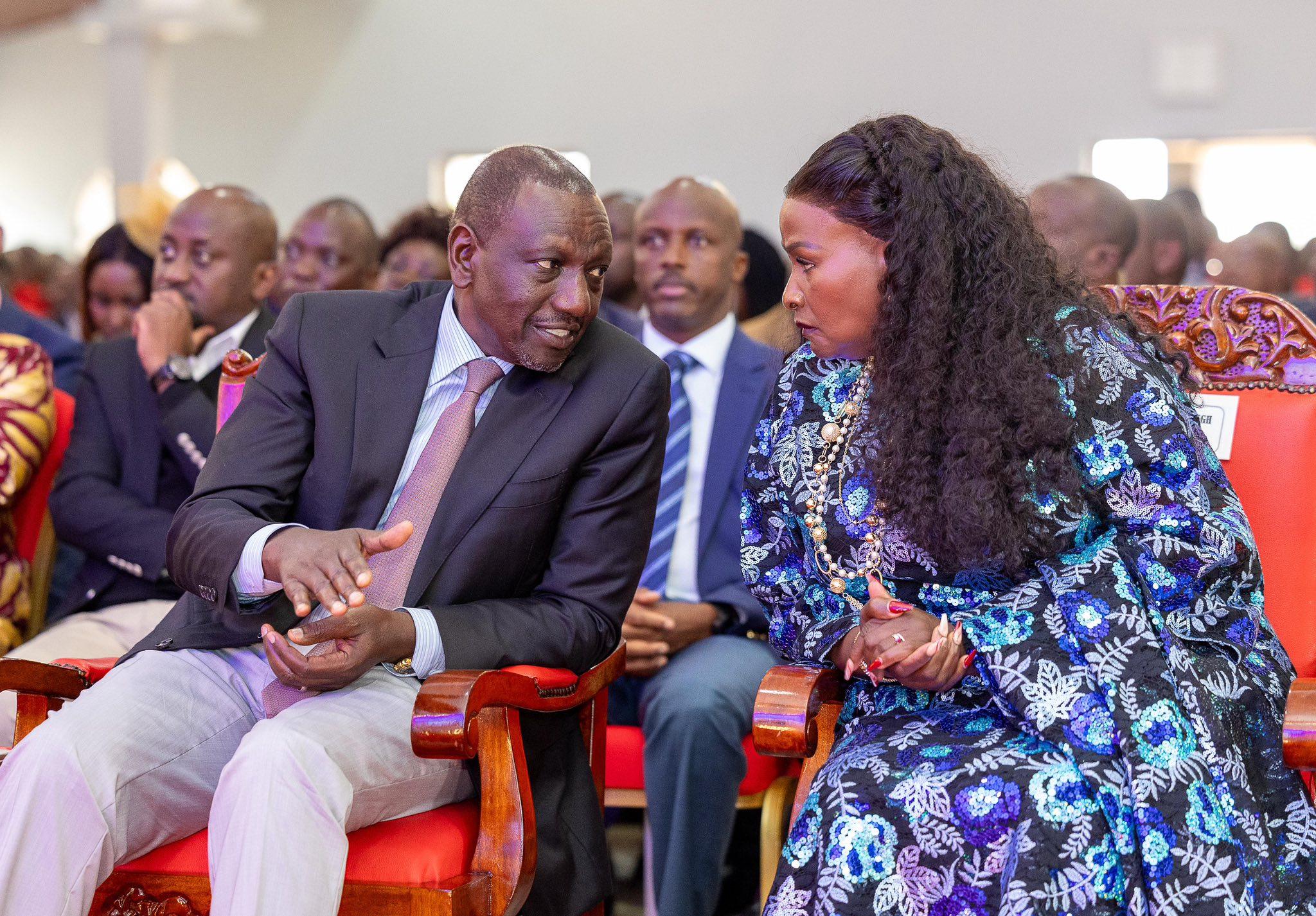
Ruto revealed that some individuals, including religious leaders, had urged him to scale back his pledges, citing their feasibility. “There is a bishop, as well as other people, who came and told me, ‘You know whatever you promised, you did so because of the elections. Why don’t you revise some of that so the government can deliver what is possible?’ But I told them no,” he said, according to Kenyans.co.ke. This stance reflects Ruto’s determination to pursue transformative policies, such as the affordable housing agenda, which he argued previous administrations under Daniel Moi, Mwai Kibaki, and Uhuru Kenyatta had failed to advance due to a lack of ambition.
The president’s remarks come at a time of growing public scrutiny over his administration’s ability to deliver on its pledges. Critics, including former Roots Party running mate Justina Wamae and Murang’a Senator Joe Nyutu, have accused Ruto of failing to provide clear strategies for implementation and sidelining allies, as noted in K24 Digital. Public discontent over unemployment, rising living costs, and perceived political theatrics has fueled skepticism, with some Kenyans questioning whether Ruto’s ambitious agenda is achievable before his first term ends in 2027.
A Generous Pledge and a Call to Faith
A highlight of the event was President Ruto’s announcement of a Ksh20 million donation toward the construction of a new sanctuary for AIC Bomani, part of a Ksh200 million project. The pledge, which covers 10% of the total budget, was met with applause from the congregation. Ruto humorously remarked on the church’s ambitious budget, saying, “The church must be made up of men and women of great faith,” and expressed confidence that the remaining funds would be raised through the congregation’s efforts. He also requested the church leadership to form a committee and provide an official account for the donation, ensuring transparency in the process.
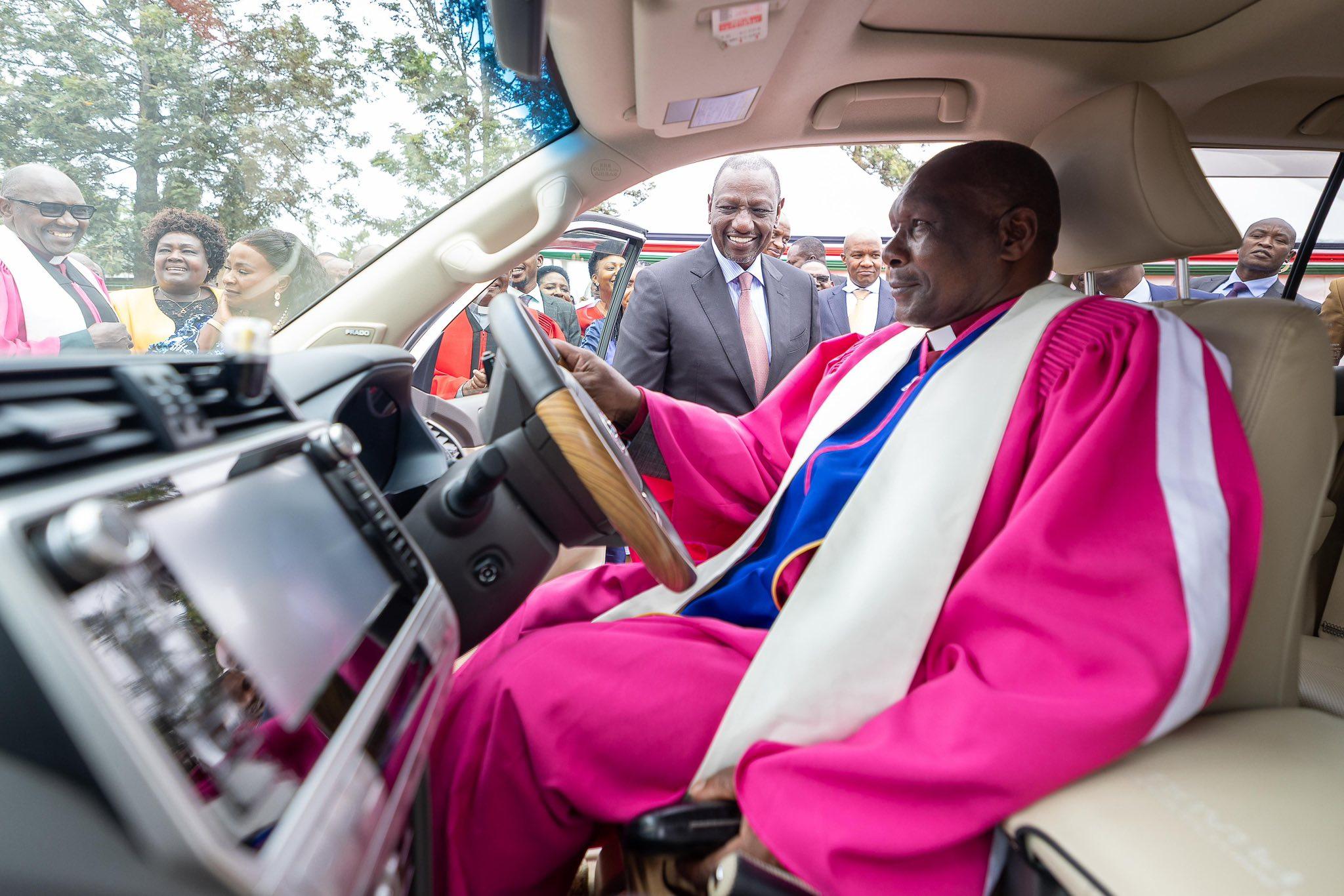
Ruto’s contribution aligns with his history of supporting faith-based initiatives, a practice that has both bolstered his public image and drawn criticism. During the event, he referenced his controversial plan to build a Ksh1.2 billion chapel at State House, Nairobi, which he insists will be funded from his personal resources. The project has sparked debate, with critics like Martha Karua, leader of the People’s Liberation Party, and the Atheists Society of Kenya arguing that it violates the constitutional principle of separation between church and state. Ruto, however, remained defiant, stating during the ceremony that he would not apologize for building a church and even took a light-hearted jab at Anglican Archbishop Jackson Ole Sapit, who had questioned the State House chapel project. “Hata kuna askofu mmoja aliyelalamika sana aliposikia tunajenga kanisa pale State House… Mimi si askofu kwa sasa, lakini nikimaliza hii kazi ya siasa, nitakuwa evangelist,” Ruto quipped, hinting at his future aspiration to become an evangelist after retiring from politics.
The Intersection of Faith and Politics
Ruto’s attendance at the AIC Bomani event and his broader engagement with religious institutions reflect his identity as Kenya’s first evangelical Christian president. Known for quoting scripture and displaying public piety, Ruto has cultivated an image as a devout leader, earning nicknames like “Deputy Jesus” and “Hustler.” However, this close association with the church has been a double-edged sword. While it has garnered support among Kenya’s predominantly Christian population (85% according to government statistics), it has also alienated some who view his actions as blurring the lines between church and state.
The controversy surrounding the State House chapel project exemplifies this tension. Critics, including Anglican Archbishop Jackson Ole Sapit and Catholic priest Joachim Omolo Ouko, argue that building a church on state property undermines Kenya’s secular constitution. “The State House is not the president’s property, it’s the people’s property,” Ouko told Religion News Service, questioning the necessity of the Ksh1.2 billion project when existing churches, like the Catholic Holy Family Basilica, cost significantly less. The Atheists Society of Kenya, led by Harrison Mumia, has threatened legal action, accusing Ruto of promoting Christian nationalism in a country with diverse religious communities, including 11% Muslims and smaller groups of Hindus, Buddhists, and traditional religion followers.
Ruto’s history of church donations has also faced scrutiny. In 2024, the Catholic Church rejected a $40,000 donation from Ruto, citing “ethical concerns and the need to safeguard the Church from being used for political purposes,” as reported by the BBC. Similarly, protests at Jesus Winner Ministry in Roysambu in March 2025 saw police intervention when congregants opposed Ruto’s donation, reflecting growing public sensitivity to the politicization of religious spaces. These incidents highlight a shift in the relationship between Ruto and some religious institutions, with churches increasingly distancing themselves from political affiliations to maintain their independence.
The Broader Context: Ruto’s Relationship with the Church
The installation of Bishop Kalanzo is not the first time Ruto has engaged with AIC Bomani. In 2021, as deputy president, he attended the installation of Bishop Phillip Muia, accompanied by a heroic welcome from the congregation, as reported by Opera News. His consistent presence at religious events underscores his strategy of leveraging faith-based platforms to connect with Kenyans, particularly in regions like Machakos, where the AIC has deep roots. However, this approach has drawn criticism from those who argue that it risks co-opting religious institutions for political gain.
The Catholic Church, in particular, has emerged as a vocal critic of Ruto’s administration. In November 2024, the Kenya Conference of Catholic Bishops accused the government of perpetuating a “culture of lies” and failing to address issues like corruption, over-taxation, and human rights violations. The bishops’ rejection of Ruto’s donation to Soweto Catholic Church and their condemnation of his governance reflect a broader push by religious leaders to reclaim their role as moral watchdogs, reminiscent of the 1990s when clerics challenged Daniel Moi’s regime.
Despite these tensions, Ruto has maintained support among some evangelical and Pentecostal leaders. In December 2024, he hosted leaders from these denominations at State House, reaffirming his commitment to partnering with religious institutions for national development. The Pentecostal Evangelistic Fellowship of Africa (PEFA), for instance, has resisted calls to reject political donations, arguing that such funds support meaningful projects.
President William Ruto’s attendance at the installation of Bishop Benjamin Kalanzo at AIC Bomani on July 20, 2025, was more than a religious event; it was a moment that encapsulated the complex interplay between faith, politics, and governance in Kenya. His pledge of Ksh20 million for the church’s new sanctuary and his defense of his ambitious agenda underscored his commitment to both spiritual and national development. However, the event also highlighted ongoing debates about the separation of church and state, particularly in light of his controversial State House chapel project. As Ruto navigates these challenges, his relationship with religious institutions will continue to shape his presidency, balancing the expectations of a devout populace with the demands of a secular constitution. The installation of Bishop Kalanzo, while a celebration of faith, serves as a microcosm of these broader tensions, reflecting the intricate dynamics of leadership in a diverse and evolving nation.