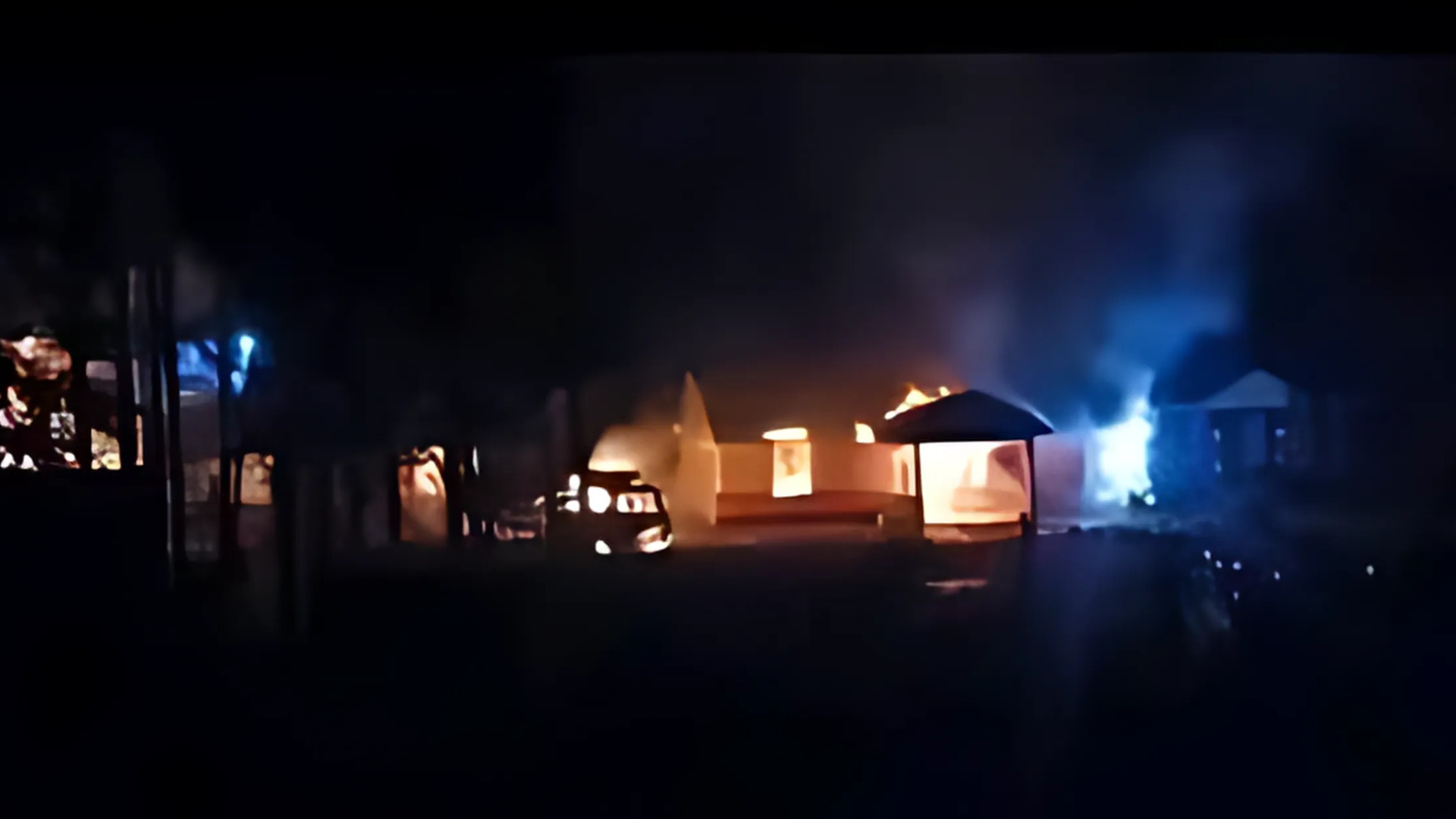
On the evening of June 26, 2025, Ndunyu Njeru, a quiet town in Nyandarua County’s Kinangop Constituency, erupted into chaos as enraged residents set ablaze the local police station. The violent outburst followed the alleged fatal shooting of a boda boda rider by a police officer during a protest sparked by the arrest of three suspected cattle thieves. The incident, which unfolded hours after Interior Cabinet Secretary Kipchumba Murkomen issued a controversial shoot-to-kill directive, has reignited debates about police brutality and community trust in law enforcement. The burning of the station, captured in videos showing flames engulfing the building as locals cheered, underscores the deep-seated frustrations in a region plagued by livestock theft and perceived impunity.
The unrest began earlier that day when news spread that three individuals, suspected of being notorious cattle rustlers, had been detained at Ndunyu Njeru Police Station. For months, residents had voiced concerns over rising livestock theft, a critical issue in Nyandarua, where farming and livestock rearing form the backbone of the local economy. Fearing the suspects might be released, as had allegedly happened in past cases, a crowd gathered outside the station, demanding justice. “We are tired of losing our cows while the police do nothing,” said Peter Kamau, a local farmer who joined the protest. “These thieves are known, yet they walk free. We came to make sure that doesn’t happen again.”
According to eyewitnesses, tensions escalated when police attempted to disperse the crowd, which had grown to several hundred people. Amid the chaos, a police officer reportedly fired into the crowd, fatally striking a 28-year-old boda boda rider identified as Joseph Mwangi. The shooting, described by residents as unprovoked, ignited fury. “He was just standing there, chanting with us, and then we heard a gunshot,” recounted Mary Wanjiru, a vegetable vendor who witnessed the incident. “Joseph fell, and blood was everywhere. That’s when people lost it.” Within minutes, the crowd surged toward the station, hurling stones and setting fire to the building. Videos circulating online showed flames consuming the station’s roof as residents sang and shouted, some declaring victory over what they called a corrupt system.
The timing of the incident, mere hours after Murkomen’s directive authorizing lethal force against anyone attempting to storm police stations, added fuel to the fire. The directive, issued in response to recent protests linked to the Finance Bill 2025, had already drawn criticism for encouraging excessive force. “This shoot-to-kill order is reckless,” said Jane Muthoni, a human rights activist in Nyeri. “It’s giving police a license to kill innocent people, and now we see the result in Ndunyu Njeru.” The Interior Ministry has not commented on the shooting, but Nyandarua County Police Commander John Otengo confirmed the station was destroyed and promised a thorough investigation. “We are looking into the circumstances of the incident,” Otengo said. “Those responsible for the arson will face the law.”
The destruction of Ndunyu Njeru Police Station has left the community grappling with both grief and anger. For many, the shooting of Mwangi, a popular figure known for his cheerful demeanor, was the breaking point in a long history of strained relations with the police. Residents accused officers of colluding with cattle rustlers, pointing to repeated instances where suspects were arrested only to be released without charges. “We’ve reported these thieves so many times,” said David Njoroge, a dairy farmer. “But they’re back on the streets in days. It’s like the police are protecting them.” Such sentiments were echoed in public forums, where locals demanded accountability and an end to what they described as systemic corruption.
The protests were not without precedent in Nyandarua. In 2023, a fire gutted police houses at the nearby Gichungo police post, an incident locals attributed to community frustration over rising theft. The Ndunyu Njeru incident, however, marks a more violent escalation, with the loss of life amplifying calls for justice. Boda boda riders, a tight-knit group in the area, led the charge, with some setting fire to police vehicles parked outside the station. “Joseph was one of us,” said James Kariuki, a fellow rider. “He was killed for standing up for what’s right. We couldn’t just stay silent.” The riders’ anger reflects a broader trend of clashes between boda boda operators and police, as seen in recent incidents in Nairobi and Nakuru, where riders have protested alleged brutality.
Local leaders have expressed mixed reactions. Kinangop MP Charles Njoroge, a vocal advocate for infrastructure development in the region, called for calm while acknowledging the community’s grievances. “The loss of life is tragic, and we must investigate thoroughly,” he said at a community meeting. “But burning a police station leaves us all vulnerable.” Others, like Nyandarua County Assembly member Esther Wambui, criticized the police response. “Shooting into a crowd is not crowd control; it’s murder,” she said, urging the Independent Policing Oversight Authority (IPOA) to intervene. IPOA has since announced it is investigating the shooting and has appealed for witnesses to come forward.
The incident has also drawn national attention, coming amid a wave of protests across Kenya. On June 25, demonstrations marking the 2024 Finance Bill protests saw clashes in Nairobi and Kitengela, with businesses looted and motorcycles set ablaze. The Ndunyu Njeru unrest, while rooted in local issues, reflects broader discontent with governance and law enforcement. Posts on X captured the public’s outrage, with users condemning the shooting and questioning Murkomen’s directive. “This is what happens when you tell police to shoot first,” one user wrote. “Ndunyu Njeru is burning because of injustice.” Others expressed solidarity with the residents, calling for systemic reforms to address police impunity.
The economic impact of cattle theft in Nyandarua cannot be overstated. The county, known for its dairy and potato farming, relies heavily on livestock for livelihoods. A single cow, valued at up to Ksh100,000, represents a significant investment for small-scale farmers. The failure to curb theft has led to losses estimated in the millions, eroding trust in local authorities. “We’ve lost five cows this year alone,” said Margaret Wanjiku, a farmer in Ndunyu Njeru. “The police tell us they’re investigating, but nothing changes. That’s why people took matters into their own hands.” The arrests of the three suspects, while initially welcomed, fueled fears they would be released, prompting the protest that turned deadly.
The destruction of the police station has raised concerns about security in the region. With the station’s armory reportedly spared, police have redeployed officers from neighboring posts to maintain order. However, residents worry about retaliation and a potential security vacuum. “We need protection, but not from police who shoot us,” said Kamau, the farmer. Community leaders have called for dialogue to rebuild trust, with elders proposing a meeting between residents, police, and county officials. “We cannot let this divide us,” said John Githinji, a local elder. “But the police must answer for Joseph’s death.”
The incident has also spotlighted the broader issue of police reform in Kenya. Recent cases, including the shooting of a boda boda rider in Nakuru in March 2025 and a similar incident in Nairobi in 2021, have fueled accusations of trigger-happy officers. The IPOA’s ongoing investigations into these cases have yet to yield convictions, frustrating activists. “We keep hearing about investigations, but where is the justice?” asked Muthoni. The Ndunyu Njeru shooting, occurring under Murkomen’s directive, risks further eroding public confidence in the government, especially as Kenya navigates economic challenges and political unrest.
As investigations continue, the community mourns Mwangi, whose funeral is set for next week. His family, supported by local boda boda associations, has demanded compensation and a transparent probe. “Joseph was our provider,” said his sister, Lucy Wanjiru. “We want the officer who did this to face the law.” Meanwhile, the suspects arrested for cattle theft remain in custody at a neighboring station, with police promising a thorough probe. The Senate, already grappling with high-profile cases like the impeachment of Isiolo Governor Abdi Guyo, may face pressure to address the Nyandarua incident, particularly Murkomen’s role in escalating tensions.
The burning of Ndunyu Njeru Police Station is a stark reminder of the fragile relationship between communities and law enforcement in Kenya. For residents, it was an act of defiance against perceived injustice, but it has left the town grappling with loss and uncertainty. As calls for accountability grow, the incident underscores the urgent need for reforms to address systemic issues, from police conduct to economic grievances, in a nation where trust in institutions hangs by a thread.