By Brenda Wereh11 Jul, 202529 mins read 2,230 views
0 comments 0 likes
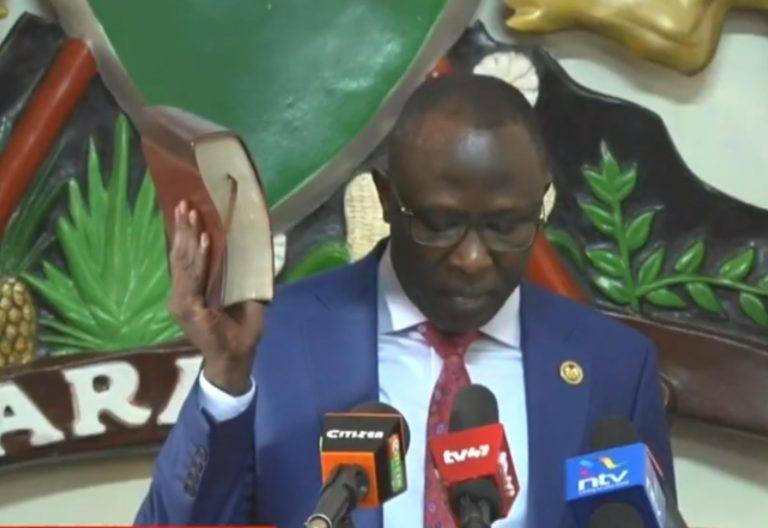
Erastus Edung Ethekon was sworn in as the new Chairperson of the Independent Electoral and Boundaries Commission at the Supreme Court, presided over by Chief Justice Martha Koome, marking a pivotal step toward Kenya’s 2027 elections.
On a crisp morning in Nairobi, the Supreme Court building stood as the backdrop for a historic moment in Kenya’s democratic journey on July 11, 2025. Erastus Edung Ethekon, a 48-year-old lawyer from Turkana County, took the oath of office as the new Chairperson of the Independent Electoral and Boundaries Commission (IEBC), succeeding the late Wafula Chebukati. The ceremony, presided over by Chief Justice Martha Koome, also saw six new commissioners—Ann Njeri Nderitu, Moses Alutalala Mukhwana, Mary Karen Sorobit, Hassan Noor Hassan, Francis Odhiambo Aduol, and Fahima Araphat Abdallah—sworn in, ending a two-year vacancy that had paralyzed the electoral body. The event, attended by dignitaries, including National Assembly Speaker Moses Wetangula and Senate Majority Leader Aaron Cheruiyot, marked a turning point for Kenya as it prepares for the 2027 General Election. “I solemnly swear to uphold the Constitution and serve Kenyans without fear or favor,” Ethekon declared, his voice steady as he pledged to restore public trust in the IEBC.
The swearing-in followed a tumultuous journey to reconstitute the IEBC, which had been without a full commission since January 2023, following the expiration of Chebukati’s term and the resignation of other commissioners. The absence of a functional electoral body halted critical functions like voter registration and by-elections, leaving constituencies like Banissa and Magarini unrepresented for over a year. Ethekon’s appointment, first announced by President William Ruto on May 8, 2025, faced legal challenges from activists who questioned the selection process’s transparency and regional balance. A High Court ruling on July 10, delivered by Justices Roselyne Aburili, John Chigiti, and Bahati Mwamuye, dismissed these concerns, clearing the way for the swearing-in. “The process was lawful, and the nominees are qualified,” Aburili stated, affirming the integrity of the selection led by the Dr. Nelson Makanda panel.
Ethekon, a seasoned legal professional with over two decades of experience, brings a robust background to the role. A former Turkana County Attorney and consultant at Northern Consulting Solutions, he holds advanced degrees, including a Master of Laws in Oil, Gas, and Energy Law from the University of Derby and a Master of Arts in Peace, Conflict, and Development Studies from Universidad Jaume I in Spain. During his vetting on March 25, he emphasized his commitment to impartiality. “My loyalty is to the Kenyan people and the Constitution,” he told the Justice and Legal Affairs Committee. His nomination, alongside the six commissioners, was approved by the National Assembly on June 4, despite initial objections from activists like Boniface Mwangi, who argued that the process favored politically connected individuals.
The ceremony was a moment of both celebration and reflection. Chief Justice Koome, administering the oath, urged the new team to uphold electoral integrity. “The IEBC is the cornerstone of our democracy,” she said. “Your mandate is to ensure every Kenyan’s voice is heard and respected.” The commissioners, representing diverse regions—Nyandarua, Kakamega, Uasin Gishu, Mandera, Kisumu, and Lamu—took their oaths with a shared resolve to rebuild public confidence. Ann Nderitu, former Registrar of Political Parties, spoke of her commitment to transparency. “We are here to serve, not to dictate,” she said, addressing concerns about her past role. The diversity of the team, including Fahima Abdallah from Lamu, was hailed as a step toward inclusivity, though some on X criticized the absence of a person with a disability, referencing the Persons with Disabilities Bill signed by Ruto in May.
The IEBC’s reconstitution comes at a critical time, with Kenya navigating economic and political turbulence. The 2027 elections loom large, and the commission faces immediate tasks, including voter registration, boundary delimitation, and by-elections in Baringo, Banissa, and Kasipul. “We have no time to waste,” Ethekon said in his first address post-swearing-in. “Kenyans expect free, fair, and credible elections, and we will deliver.” He outlined plans to combat misinformation, a growing challenge in recent elections, by collaborating with media outlets and enhancing voter education. Posts on X reflected cautious optimism, with one user stating, “Ethekon seems capable, but the real test is 2027.” Another wrote, “Let’s hope this team restores faith in our elections.”
The road to Ethekon’s appointment was fraught with legal hurdles. President Ruto’s initial gazettement on June 10 was nullified by the High Court for violating a conservatory order issued by Justice Lawrence Mugambi on May 29. Activists had challenged the nominations, citing a lack of public participation and alleged political bias. The court’s July 10 ruling clarified that while the gazettement was flawed, the nominees’ qualifications were valid, prompting Ruto to issue a fresh notice on July 10. “The President acted swiftly to correct the procedural error,” said Head of Public Service Felix Koskei, defending the re-gazettement. The resolution allowed the swearing-in to proceed, averting further delays in a process already stalled for over two years.
Public sentiment is mixed, shaped by Kenya’s recent unrest. The Saba Saba protests on July 7, which left 31 dead, and the killing of mask vendor Boniface Kariuki have intensified scrutiny of government institutions, including the IEBC. Ethekon acknowledged these challenges, calling for national unity. “Elections are not just about voting; they’re about trust,” he said. “We will work tirelessly to earn that trust.” His legal expertise, including his work at the United Nations Development Programme, is seen as an asset in navigating the complex electoral landscape. However, critics like opposition leader Kalonzo Musyoka have urged vigilance, warning against potential state interference. “The IEBC must be independent in deed, not just in name,” Musyoka said in a statement.
The commissioners face a daunting tasklist. Beyond by-elections, the IEBC must address delayed boundary reviews, critical for equitable representation. The commission’s deputy CEO, Obadia Keitany, recently told MPs that budget approvals and policy decisions were stalled without commissioners. Ethekon’s team is expected to prioritize these, with a focus on technology to enhance electoral efficiency. “We’ll leverage digital tools to ensure transparency,” said Commissioner Mukhwana, a former civic educator. The team’s diversity, including Sorobit’s experience in governance and Aduol’s academic background, is expected to strengthen the commission’s capacity.
The swearing-in drew a range of reactions. National Assembly Majority Leader Kimani Ichung’wah praised the new team, urging the judiciary to expedite related litigation to avoid further delays. “This is a fresh start for our democracy,” he said. However, activists like Okiya Omtatah expressed concerns about lingering political influences, pointing to Hassan Noor Hassan’s late inclusion in the shortlist. “The process must be beyond reproach,” Omtatah posted on X. The hashtag #NewIEBCTeam trended, with users debating Ethekon’s ability to steer the commission through a polarized political climate. “He’s got the credentials, but can he withstand pressure?” one user asked.
For ordinary Kenyans, the IEBC’s revival is a glimmer of hope amid economic woes and a 67 percent youth unemployment rate. In Kipkeikei, Trans Nzoia, trader Esther Wanjiku expressed optimism. “A functional IEBC means our votes will count in 2027,” she said. The commission’s immediate priorities include clearing a backlog of by-elections and preparing for boundary delimitation, tasks that require robust public engagement. Ethekon has promised to prioritize outreach, particularly in marginalized areas like Turkana, his home county. “Every Kenyan deserves a voice, from Lodwar to Lamu,” he said, echoing his commitment to inclusivity.
As the ceremony concluded, Chief Justice Koome handed Ethekon a copy of the Constitution, symbolizing his duty to uphold it. The new team’s six-year, non-renewable term places them at the helm of a critical institution tasked with safeguarding Kenya’s democracy. With the 2027 elections approaching, the stakes are high, and public expectations are even higher. “This is not just a job; it’s a calling,” Ethekon said, addressing his team. “We will honor the trust placed in us.” As Kenya watches, Ethekon and his commissioners step into a role that will define the nation’s democratic future, with the promise of transparency and fairness at its core.
Former Kiambu Governor Ferdinand Waititu has secured a major bail reprieve from the High Court, with Justice Winfrida Okwany reducing his bail from Sh53.5 million to Sh20 million cash pending appeal in his ongoing corruption case.
President Ruto and Governor Sakaja signed a cooperation agreement allocating funds for 50,000 new streetlights, water plants saving 50 million litres daily, 27 km Nairobi River sewer and ward road upgrades, with Ruto calling it a partnership to make the city livable while opposition senators warn of devolution threats.
A staff member at Moi Teaching and Referral Hospital allegedly stole Sh10 million by falsifying patient bills as paid in the eCitizen system while diverting the money to her personal account, prompting an ongoing police and hospital investigation.