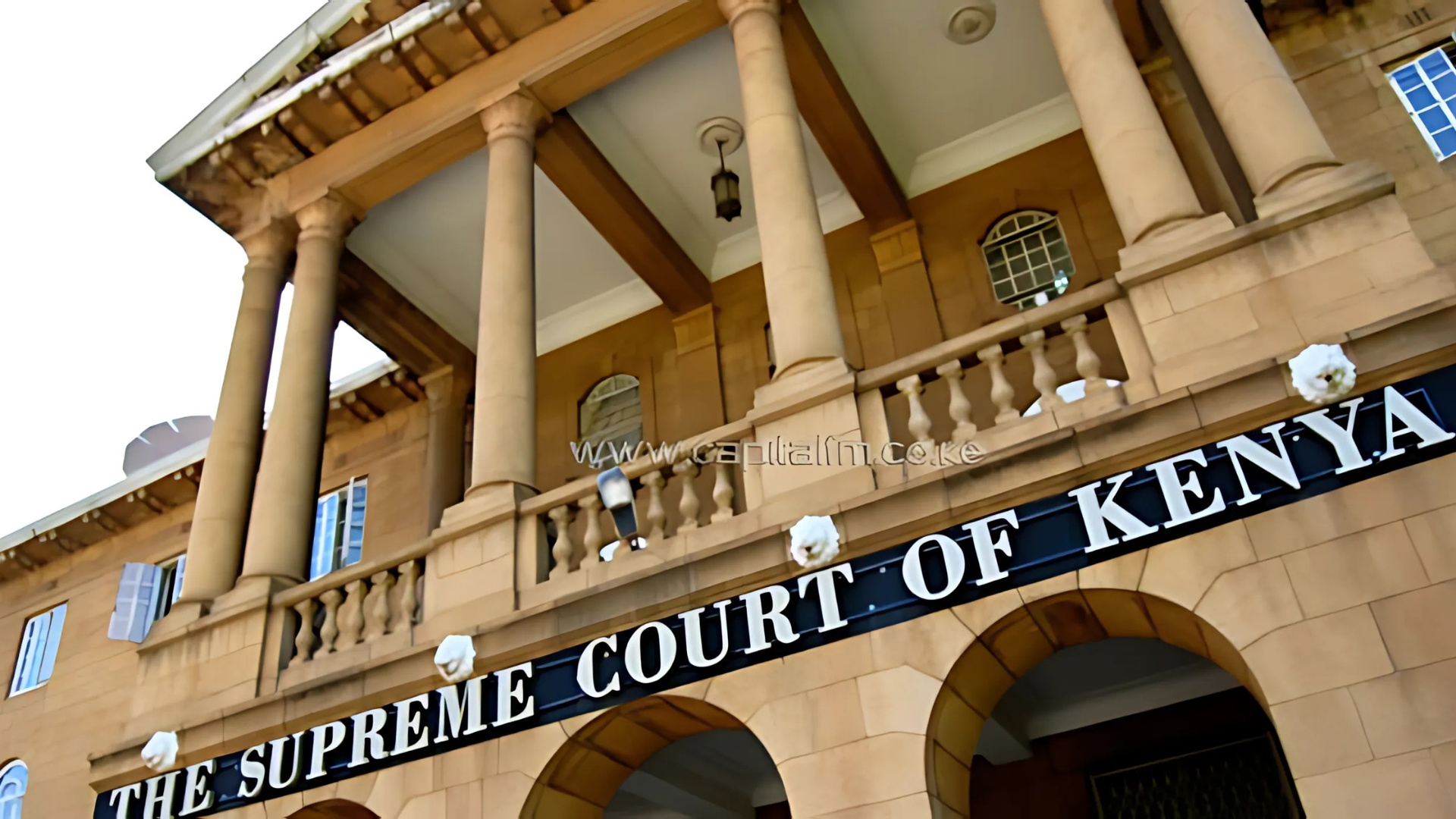
The Supreme Court of Kenya delivered a landmark ruling that solidified the authority of the Salaries and Remuneration Commission (SRC) as the ultimate arbiter of remuneration for all public officers, sending a clear message to state bodies and corporations across the nation. The unanimous decision, penned by Chief Justice Martha Koome, mandates that all government entities, from ministries to parastatals, must seek and adhere to SRC’s advice before implementing salary changes or entering into Collective Bargaining Agreements (CBAs). The ruling, which resolves years of legal battles over unchecked salary hikes, aims to curb financial indiscipline in Kenya’s public sector, where irregular pay increases have contributed to a ballooning wage bill amid a KSh11.36 trillion public debt. “The SRC’s mandate is constitutional and binding,” Chief Justice Koome declared in the ruling. “No public body can unilaterally alter remuneration without its approval.”
The case originated from a series of disputes, including a high-profile challenge involving the Kenya Film Classification Board (KFCB), where former CEO Ezekiel Mutua was ordered to repay KSh27.6 million for an unauthorized salary increase from KSh348,840 to KSh1,115,850 in 2019. The State Corporations Appeal Tribunal’s 2025 ruling against Mutua highlighted the SRC’s role, prompting a broader appeal to the Supreme Court to clarify its authority. The court’s decision reaffirms Article 230 of the Constitution, which establishes the SRC as the sole body responsible for setting and reviewing remuneration for public officers, including those in state corporations, constitutional commissions, and independent offices. “This ruling restores order to a chaotic system,” said a legal scholar in Nairobi. “It ensures fiscal discipline and fairness in public sector pay.”
The Supreme Court’s verdict addresses a long-standing issue: the proliferation of irregular salary adjustments by state bodies bypassing SRC guidelines. In recent years, entities like the KFCB, Kenya Ports Authority, and various county governments have faced scrutiny for approving hefty pay raises without SRC approval, often citing CBAs or board decisions. Such actions have strained Kenya’s public finances, with the wage bill consuming 47 percent of national revenue in the 2024-2025 fiscal year, far above the recommended 35 percent. “Public officers serve the people, and their remuneration must reflect economic realities,” Koome said, emphasizing the SRC’s role in aligning salaries with Kenya’s fiscal capacity. The ruling mandates that all CBAs, including those negotiated by unions like the Kenya National Union of Teachers (KNUT), must be submitted to the SRC for review before implementation.
The decision has far-reaching implications for Kenya’s 700,000 public sector workers, from teachers to health workers and parastatal executives. For instance, the Teachers Service Commission (TSC), which recently introduced automatic promotions for teachers, must now ensure that salary adjustments align with SRC guidelines. “We welcome the clarity this ruling provides,” said TSC CEO Nancy Macharia, responding to the verdict. “It ensures that our promotions and salary increments are sustainable and compliant.” The TSC’s policy, announced on July 9, 2025, ties promotions to performance evaluations, but any resulting pay hikes will now require SRC approval, preventing unilateral increases that could burden the exchequer.
Unions have expressed mixed reactions. KNUT Secretary-General Collins Oyuu acknowledged the need for fiscal oversight but warned that the ruling could delay CBA negotiations. “Teachers have waited years for fair pay,” Oyuu said. “The SRC must act swiftly to avoid frustrating workers.” The Kenya Union of Post-Primary Education Teachers (KUPPET) echoed this concern, citing past delays in SRC approvals that left 189,000 teachers stuck in lower job groups. “The SRC must balance discipline with workers’ rights,” said KUPPET’s Moses Nthurima. “We’ll engage to ensure our members aren’t shortchanged.” The unions plan to meet with SRC Chairperson Lyn Mengich to streamline the approval process for the 2021-2025 CBA, which affects over 400,000 teachers.
The ruling also impacts state corporations, which have been notorious for flouting SRC guidelines. The KFCB case, where the board approved Mutua’s salary hike despite ministerial objections, exposed systemic weaknesses in oversight. “The days of boards acting as mini-gods are over,” said a governance expert in Nairobi. “The SRC’s authority is now unquestionable.” The State Corporations Advisory Committee (SCAC) has been tasked with ensuring compliance, with sanctions for non-compliant entities, including potential dissolution of boards. “This is a wake-up call for parastatals,” said SCAC Chairperson Joseph Kinyua. “No one is above the law.”
The decision comes amid heightened public scrutiny of government spending, fueled by protests over economic mismanagement and a 67 percent youth unemployment rate. The Saba Saba protests on July 7, which resulted in 31 deaths, highlighted public frustration with governance, with demands for accountability extending to financial management. On X, Kenyans reacted to the ruling with cautious optimism, with one user posting, “Finally, a cap on runaway salaries. SRC must now deliver for taxpayers.” Another wrote, “This protects public funds, but will SRC be fair to workers?” The hashtag #SRCPayRuling trended, reflecting debates over balancing fiscal discipline with fair compensation.
The SRC’s mandate, established in 2011, aims to ensure equitable and sustainable remuneration across the public sector. However, its implementation has faced challenges, with agencies like the National Assembly and county assemblies previously resisting SRC directives on allowances like sitting fees. The Supreme Court’s ruling now binds even constitutional bodies, such as the Independent Electoral and Boundaries Commission, to SRC oversight. “This levels the playing field,” said Mengich, welcoming the verdict. “We’ll work with all stakeholders to ensure compliance while addressing workers’ needs.” The SRC has pledged to expedite reviews, targeting a 30-day turnaround for salary and CBA proposals.
Critics, however, warn of potential bureaucratic bottlenecks. County governments, which employ over 200,000 workers, have struggled with SRC’s stringent guidelines, particularly for allowances like car and housing benefits. “The SRC must be practical,” said Kisumu Deputy Governor Mathews Owili, whose county faced a 2024 strike over delayed salaries. “Excessive delays could spark unrest.” Governors have called for a stakeholder forum to harmonize salary structures, particularly for health workers, who have threatened strikes over unimplemented CBAs. The ruling also affects foreign workers in state bodies, following the recent scrapping of their tax exemptions, which must now align with SRC-approved scales.
The financial stakes are high. Kenya’s public wage bill, estimated at KSh1.1 trillion annually, has drawn scrutiny from the International Monetary Fund, which has urged reforms to reduce fiscal deficits. The SRC’s role in controlling salaries is seen as critical to achieving a 4.8 percent economic growth target for 2025. “Uncontrolled pay hikes fuel inequality and strain resources,” said an economist in Nairobi. “This ruling could save billions.” The government’s recent recovery of KSh27.6 million from Ezekiel Mutua underscores the urgency of enforcing SRC guidelines, with similar audits planned for other parastatals.
The ruling also has political implications as Kenya approaches the 2027 elections. The opposition, led by Rigathi Gachagua, has criticized Ruto’s administration for mismanaging public funds, citing cases like the KFCB scandal. “This ruling vindicates our call for accountability,” Gachagua said, linking it to their boycott of state-linked businesses. President Ruto, speaking at a development event, emphasized fiscal responsibility but avoided commenting directly on the ruling. “Our focus is on sustainable growth and fairness,” he said, highlighting initiatives like the ClimateWorx program. However, activists argue that the government must address broader issues, such as the 80-plus abductions reported since June 2024, to restore public trust.
For public officers, the ruling brings clarity but also challenges. Nurses, teachers, and civil servants now face a standardized process for pay adjustments, which could delay increments but ensure equity. “I’ve been stuck in the same job group for seven years,” said a teacher in Eldoret. “I hope SRC approves our promotions fairly.” The SRC has launched a digital portal to streamline submissions, aiming to reduce delays. “We’re committed to transparency and efficiency,” Mengich said, urging patience as the commission reviews thousands of pending proposals.
As Kenya navigates economic and political turbulence, the Supreme Court’s ruling marks a turning point in public sector governance. By affirming the SRC’s authority, it seeks to curb financial excesses and restore public confidence. Whether it will balance workers’ aspirations with fiscal discipline remains a test for the SRC and the government, as Kenyans watch closely for a fairer, more accountable public service.