In a bold move signaling her intent to reclaim her political influence, former Meru County Governor Kawira Mwangaza officially launched the Umoja Na Maendeleo Party (UMP) on July 19, 2025, at her Ntumburi ranch in Buuri Constituency, Meru County. The launch marked a significant step in Mwangaza’s political comeback following her impeachment in August 2024, after a tumultuous tenure as Meru’s first female governor.

The Umoja Na Maendeleo Party, with its slogan Utajiri Kwa Wote (Wealth for All), aims to champion constitutional respect, inclusivity, and grassroots development, particularly for marginalized groups such as women and persons with disabilities.
Background: Kawira Mwangaza’s Political Journey
Kawira Mwangaza’s political career has been nothing short of remarkable, marked by both trailblazing achievements and significant challenges. Elected in the 2022 General Election as an independent candidate, Mwangaza made history as the first woman to serve as Meru County’s governor, defeating political heavyweights like former Governor Kiraitu Murungi and Agriculture Cabinet Secretary Mithika Linturi. Garnering 209,158 votes, her victory was a testament to her grassroots appeal and ability to connect with the electorate on promises of inclusive governance and development.
However, Mwangaza’s tenure was fraught with conflict. Almost immediately after assuming office, she faced resistance from Members of the County Assembly (MCAs), who accused her of being a “lone ranger” and failing to consult them on key decisions. This tension culminated in three impeachment attempts, with the first two in December 2022 and November 2023 dismissed by the Senate due to insufficient evidence. The third attempt, in August 2024, proved successful, with 26 senators—primarily from the Kenya Kwanza coalition—voting to uphold charges of gross misconduct, abuse of office, and violations of the Constitution. The High Court, in a ruling on March 14, 2025, upheld the Senate’s decision, dismissing Mwangaza’s petition challenging her ouster on grounds of procedural unfairness.
Mwangaza’s impeachment was not without controversy. Critics, including Nominated Senator Gloria Orwoba, argued that the process was tainted by patriarchal biases and lacked substantive grounds, pointing to the male-dominated political landscape in Meru as a factor in her ouster. Political analyst Javas Bigambo emphasized that Mwangaza’s independent candidacy left her vulnerable, lacking the political machinery to shield her from MCA hostility. These challenges, coupled with her exit from the United Democratic Alliance (UDA) in April 2024, set the stage for her next political venture: the Umoja Na Maendeleo Party.
The Launch of Umoja Na Maendeleo Party
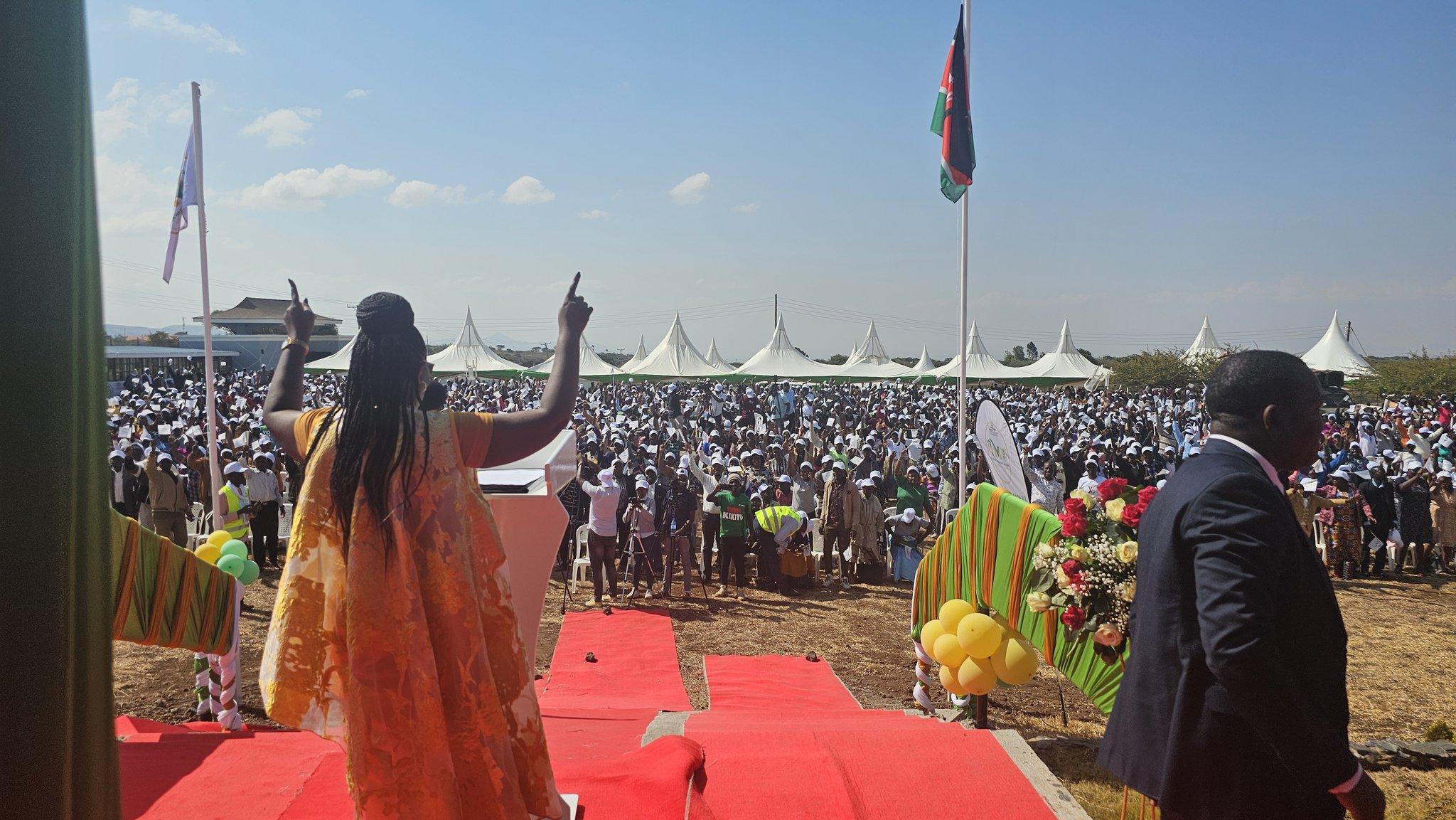
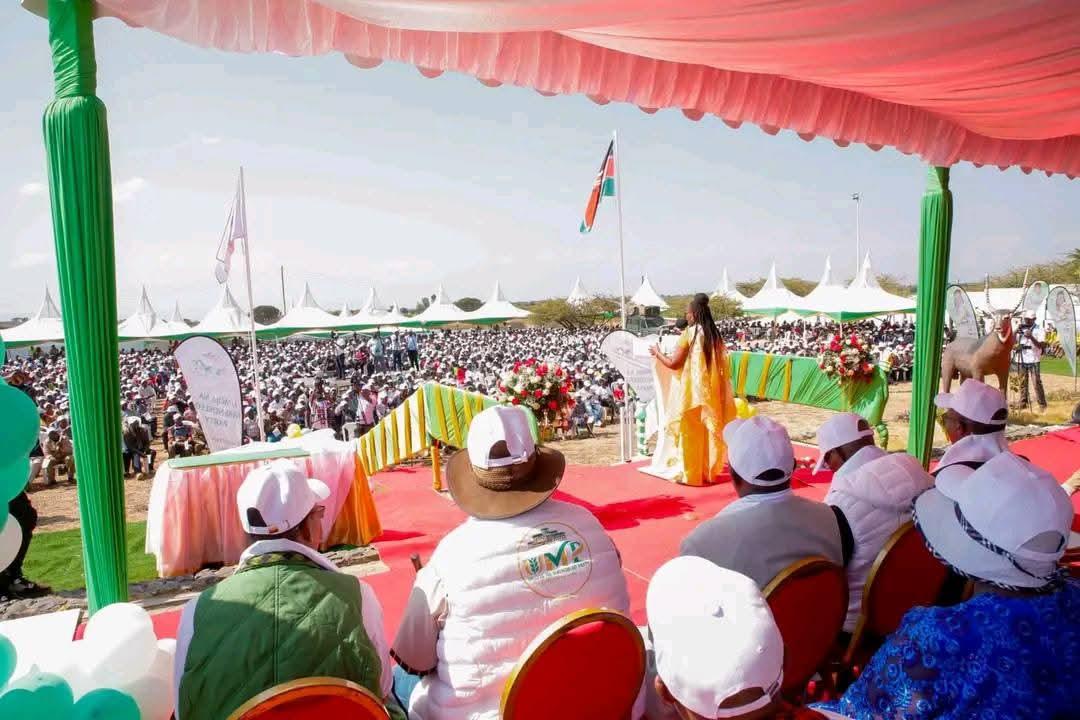
On July 19, 2025, Kawira Mwangaza unveiled the Umoja Na Maendeleo Party in a vibrant ceremony at her Ntumburi ranch. The event was marked by pomp and color, with hundreds of supporters donning the party’s gold, green, and white branded attire. Traditional dancers entertained delegates, and a red carpet stretched across the grounds, creating a festive atmosphere. The launch was not just a ceremonial event but a strategic move to reassert Mwangaza’s influence in Meru and beyond, as she seeks to rebuild her political base ahead of the 2027 General Election.
The formation of UMP was formalized earlier in July 2025, when Mwangaza was named party leader, succeeding Charles Wambora Mugambi. The Office of the Registrar of Political Parties (ORPP), through a gazette notice dated July 1, 2025, confirmed her appointment and allowed a seven-day window for objections, none of which materialized. The party also underwent significant leadership changes, with Victor Koome Mwangaza appointed as deputy party leader, Miriam Karwira Guantai as National Chairperson, and Monicah Njeri Kagumo as Treasurer, among others. The party relocated its headquarters from Embu to the Kamuketha Building in Meru, signaling a strategic focus on Mwangaza’s home county.
UMP’s vision, encapsulated in its slogan Utajiri Kwa Wote, emphasizes unity, economic empowerment, and constitutional fidelity. Mwangaza articulated three key pillars during the launch: upholding the Constitution, protecting vulnerable populations—particularly women and persons with disabilities—and combating corruption in leadership. She positioned UMP as a platform for aspiring leaders, especially those lacking the financial resources to mount expensive campaigns, promising fair nominations and an end to favoritism.
Strategic Plans and Electoral Ambitions
The launch of UMP was accompanied by a large-scale delegates’ recruitment drive, aimed at solidifying the party’s grassroots presence. Mwangaza announced that UMP would participate in upcoming by-elections across Kenya, fielding candidates for the Senate seat in Baringo County and parliamentary seats in Magarini (Kilifi), Banissa (Mandera), Ugunja (Siaya), Malava (Kakamega), Mbeere North (Embu), and Kasipul (Homa Bay). This move underscores UMP’s ambition to establish a national presence, extending beyond Meru to regions like the Rift Valley, Northeastern, and Western Kenya.
Mwangaza’s strategy also includes a focus on the 2027 General Election, where she has expressed confidence that UMP will secure multiple seats, including MPs, MCAs, Senators, Women Representatives, and Governors. Her rhetoric during the launch was defiant, as she vowed to reclaim her Meru governorship, framing her impeachment as an injustice orchestrated by political cartels and powerful leaders. She called for Meru voters to reject those who supported her ouster, positioning UMP as a vehicle for political and socio-economic freedom.
Renowned lawyer Mugambi Imanyara, speaking at the launch, attributed Mwangaza’s impeachment to her independent candidacy, arguing that a political party would have provided her with the necessary support to withstand MCA opposition. Imanyara’s remarks underscored the strategic importance of UMP, suggesting that it could serve as a protective shield for Mwangaza and her allies in future electoral battles.
Political Context and Challenges
The formation of UMP adds to the growing list of political parties in Meru, a region known for its competitive political landscape. Former Meru Governors Peter Munya and Kiraitu Murungi lead the Party of National Unity (PNU) and Devolution Empowerment Party (DEP), respectively, while Tigania East MP Mpuru Aburi heads the National Ordinary People’s Empowerment Union (NOPEU). This proliferation of parties reflects the fragmented nature of Meru politics, with each leader vying for regional dominance ahead of 2027.
Mwangaza’s impeachment has been a polarizing issue in Meru. Supporters view her as a victim of political vendettas, pointing to her gender and independent status as factors in her ouster. Critics, including Murungi, argue that her leadership style alienated key stakeholders, leading to her downfall. The charges against her—gross misconduct, abuse of office, and constitutional violations—included allegations of nepotism, illegal appointments, and mismanagement of county resources. While Mwangaza denied these claims, the Senate and High Court rulings affirmed the legality of her impeachment, leaving her to pursue an appeal at the Court of Appeal.
The launch of UMP also comes at a time of heightened political activity in Kenya, with the 2027 elections looming. Mwangaza’s decision to align with leaders from diverse regions, including the Kamba, Rift Valley, and Northeastern communities, suggests an attempt to build a broad-based coalition. However, her ability to navigate Kenya’s complex political landscape, dominated by established parties like UDA and the Orange Democratic Movement (ODM), remains a significant challenge.
Implications for Kenyan Politics
The launch of Umoja Na Maendeleo Party has broader implications for Kenyan politics, particularly in the context of gender and grassroots representation. Mwangaza’s emphasis on women’s rights and inclusivity resonates with ongoing debates about gender equity in leadership. Her experience as a female governor facing multiple impeachment attempts highlights the challenges women face in Kenya’s male-dominated political arena. Senator Gloria Orwoba’s defense of Mwangaza, decrying the Senate as a “house of the big boys,” underscores the systemic barriers that female leaders encounter.
UMP’s focus on grassroots empowerment and anti-corruption aligns with growing public demand for accountable leadership. By positioning herself as a champion of the marginalized, Mwangaza taps into a sentiment of disillusionment with traditional political elites. However, her success will depend on her ability to translate this rhetoric into tangible outcomes, particularly in a region like Meru, where political loyalties are fiercely contested.
The party’s participation in by-elections and its national ambitions signal a shift toward coalition-building, a common strategy in Kenyan politics. Mwangaza’s inclusion of leaders from outside Meru suggests an attempt to emulate the success of parties like UDA, which built broad coalitions to secure power in 2022. Yet, her history of conflict with MCAs and other leaders underscores the need for strategic alliances and effective conflict resolution to sustain UMP’s momentum.
Kawira Mwangaza’s launch of the Umoja Na Maendeleo Party marks a pivotal moment in her political career and in Meru’s political landscape. Following her impeachment, Mwangaza has emerged as a resilient figure, determined to reclaim her influence through a new political vehicle. UMP’s focus on constitutional respect, inclusivity, and grassroots development positions it as a potential force in Kenyan politics, particularly if it can capitalize on Mwangaza’s populist appeal and build a broad-based coalition.
As she prepares for by-elections and the 2027 General Election, Mwangaza faces significant challenges, including navigating Meru’s competitive political scene and overcoming the stigma of her impeachment. Her ability to rally supporters, secure strategic alliances, and deliver on her promises will determine UMP’s success. For now, the launch of Umoja Na Maendeleo Party represents a bold statement of defiance and ambition, signaling that Kawira Mwangaza is far from finished in Kenyan politics.