By Brenda Wereh14 Jul, 202529 mins read 2,300 views
0 comments 0 likes
Homa Bay Town MP Peter Kaluma stated that the Gen Z protest movement concluded in June 2024, accusing current demonstrators of being criminals, while praising regions like Nyanza and Rift Valley for protecting youth.
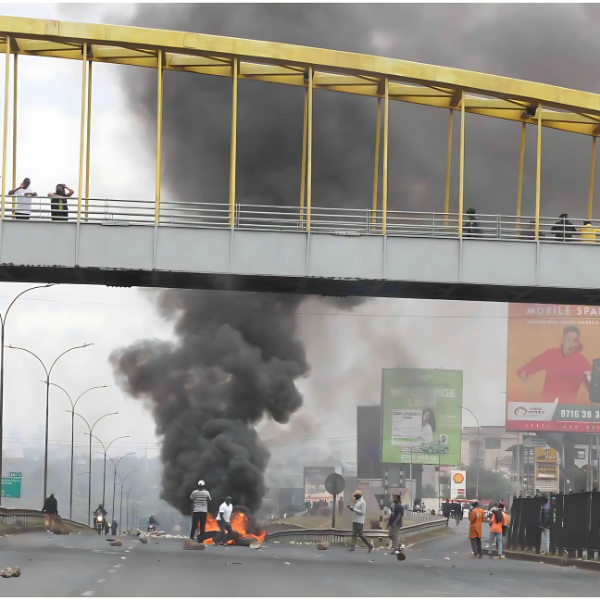
As the sun dipped below the horizon on Monday, July 14, 2025, Homa Bay Town MP Peter Kaluma stirred a lively debate across Kenya with a bold declaration delivered through a midday statement. The legislator asserted that the Gen Z protest movement, which captured national attention in 2024, effectively ended in June of that year, suggesting that those still taking to the streets are criminals exploiting the youth-led cause as a shield. Speaking from his constituency office, Kaluma painted a picture of a movement hijacked by lawlessness, urging communities to safeguard their children from being drawn into the chaos. “The Gen Z movement has run its course,” he said. “What we see now are individuals using the name to mask their criminal intent.”
Kaluma’s remarks come against the backdrop of ongoing unrest that has punctuated Kenya’s recent months, with demonstrations flaring up sporadically since the youth-driven protests of mid-2024. Those initial rallies, sparked by economic grievances and calls for governance reform, drew thousands of young people to the streets, particularly in urban centers. However, as the movement evolved, reports of looting, vandalism, arson, and clashes with police emerged, prompting a shift in public and political narratives. Kaluma, a vocal figure in national discourse, argued that the original spirit of the protests has been lost, replaced by actions he deems destructive. “These are not the voices of our youth anymore,” he added. “They are the actions of those seeking to disrupt.”
The MP singled out several regions for praise, commending residents of Nyanza, Western, Rift Valley, North Eastern, Coast, and Eastern Kenya for their efforts to discourage young people from joining the current demonstrations. He described their approach as a model of responsible parenting, emphasizing the importance of shielding children from harm. In villages along Lake Victoria and the fertile plains of Rift Valley, community leaders have been holding meetings to steer youth toward constructive dialogue rather than street protests. “Our people in these areas have shown wisdom,” Kaluma noted during a phone interview with local reporters. “They are protecting the future by keeping our children safe.”
In Nyanza, where Kaluma holds sway, parents have organized evening gatherings to discuss the risks of public unrest, drawing on cultural values that prioritize family unity. A mother from Homa Bay town, Grace Auma, echoed this sentiment as she prepared dinner for her teenage son. “We tell our children to stay home and study,” she said. “The streets are no place for them now.” Similar scenes unfolded in coastal towns like Mombasa, where fishermen and traders have urged young people to focus on their livelihoods. “We’ve seen enough trouble,” said a fishmonger in Likoni. “Let the authorities handle this.”
Kaluma’s praise extended to the collective responsibility he sees in these regions, contrasting it with his concerns about the Mt. Kenya region. He cautioned that the presence of Gen Z during demonstrations provides cover for criminals engaging in illegal activities, including looting shops, vandalizing property, and setting fires. Recent incidents in Nakuru and Nyeri, where businesses reported losses from break-ins during protests, have fueled his argument. “When our youth are out there, it becomes harder to separate the innocent from those with bad intentions,” he explained. “Mt. Kenya must step up to protect its children too.”
The legislator’s call to action for Mt. Kenya residents comes as the region, a political and economic powerhouse, has seen mixed responses to the protests. While some young people have joined rallies in towns like Thika and Embu, community elders have begun urging restraint, echoing Kaluma’s plea. A farmer from Nyandarua, James Mwangi, nodded in agreement as he tended his crops. “We don’t want our sons and daughters caught up in this mess,” he said. “But it’s hard when they feel ignored.” Kaluma’s statement suggests a need for unified parental guidance across all regions, warning that unchecked participation could escalate tensions.
The context of Kaluma’s remarks ties into the broader narrative of Kenya’s recent social movements. The Gen Z protests, which peaked in June 2024 with demands for economic relief and accountability, saw significant participation from urban youth, particularly in Nairobi and Kisumu. However, as months passed, the movement fragmented, with some demonstrations turning violent. Reports of arson attacks on police stations and clashes in Rift Valley have raised concerns, prompting leaders like Kaluma to redefine the movement’s trajectory. “It started with hope, but it’s been overtaken by chaos,” he said, reflecting on the shift.
Public reaction has been varied, with opinions splitting along regional and generational lines. In rural areas of Western Kenya, such as Kakamega, residents have welcomed Kaluma’s stance, seeing it as a call to preserve peace. “Our children are our future, not our fighters,” said a teacher in the region. Conversely, young activists in Nairobi’s CBD have challenged his narrative, arguing that the protests remain a legitimate expression of frustration. “We’re not criminals; we’re fighting for our rights,” said a 19-year-old student during a midday gathering. The divide highlights the challenge of balancing youth voices with community safety.
Kaluma’s comments also carry a political undertone, given his alignment with the current administration. As a member of a party that has joined the government coalition, he has often defended policies aimed at stability, a stance that shapes his view on the protests. He urged Mt. Kenya residents to follow the example set by other regions, suggesting that collective action could prevent further escalation. “Let’s not let our children be pawns in someone else’s game,” he said, addressing a crowd in Homa Bay. The appeal resonates with parents across the country, many of whom worry about the safety of their families amidst the unrest.
The impact of criminal activity during protests has been a focal point in recent weeks. In June 2025, incidents of looting in Mombasa’s markets and vandalism in Eldoret drew widespread condemnation, with police reporting injuries from arson attacks. Kaluma’s warning about these acts gaining cover from genuine protesters has prompted calls for better crowd management. Community leaders in North Eastern Kenya, such as Garissa, have already implemented curfews for minors, a measure Kaluma endorsed. “We need to protect our streets as much as our homes,” said a local elder.
Education has emerged as a key theme in Kaluma’s message, with him encouraging youth to channel their energy into learning rather than demonstrations. Schools in Coast and Eastern regions have reported higher attendance since community leaders began discouraging protest participation, a trend Kaluma hopes to see replicated. “Knowledge is the real power for our young people,” he said during a radio address. Teachers in Kisii have started after-school programs to engage students, offering a constructive alternative to street activity.
The legislator’s statement has sparked discussions on social platforms, where users debate the end of the Gen Z movement. Some praise his focus on child safety, while others criticize him for dismissing youth concerns. A trader in Nakuru, Samuel Njoroge, captured the ambivalence as he reopened his shop after a recent disturbance. “He’s right about the danger, but we can’t ignore why they’re out there,” he said. The conversation reflects a nation grappling with its direction, torn between order and the demand for change.
As evening fell on July 14, Kaluma met with local leaders in Homa Bay to plan community outreach, aiming to reinforce his message. The meeting included parents and religious figures, who pledged to monitor youth activities closely. “We’ll work together to keep our children safe,” said a pastor from the town. Across Kenya, the call for responsible parenting is gaining traction, with regions like Rift Valley organizing forums to address the issue. Kaluma’s vision, he insists, is for a united front to protect the nation’s youth from harm.
The road ahead remains uncertain, with protests still simmering in some areas. Kaluma’s appeal to Mt. Kenya could influence the region’s response, potentially reducing participation and exposing criminal elements. For now, the focus remains on dialogue and protection, as Kenya navigates the aftermath of a movement that once united its young people. “Our duty is clear,” Kaluma concluded. “We must safeguard our children for a better tomorrow.”
Former Kiambu Governor Ferdinand Waititu has secured a major bail reprieve from the High Court, with Justice Winfrida Okwany reducing his bail from Sh53.5 million to Sh20 million cash pending appeal in his ongoing corruption case.
President Ruto and Governor Sakaja signed a cooperation agreement allocating funds for 50,000 new streetlights, water plants saving 50 million litres daily, 27 km Nairobi River sewer and ward road upgrades, with Ruto calling it a partnership to make the city livable while opposition senators warn of devolution threats.
A staff member at Moi Teaching and Referral Hospital allegedly stole Sh10 million by falsifying patient bills as paid in the eCitizen system while diverting the money to her personal account, prompting an ongoing police and hospital investigation.