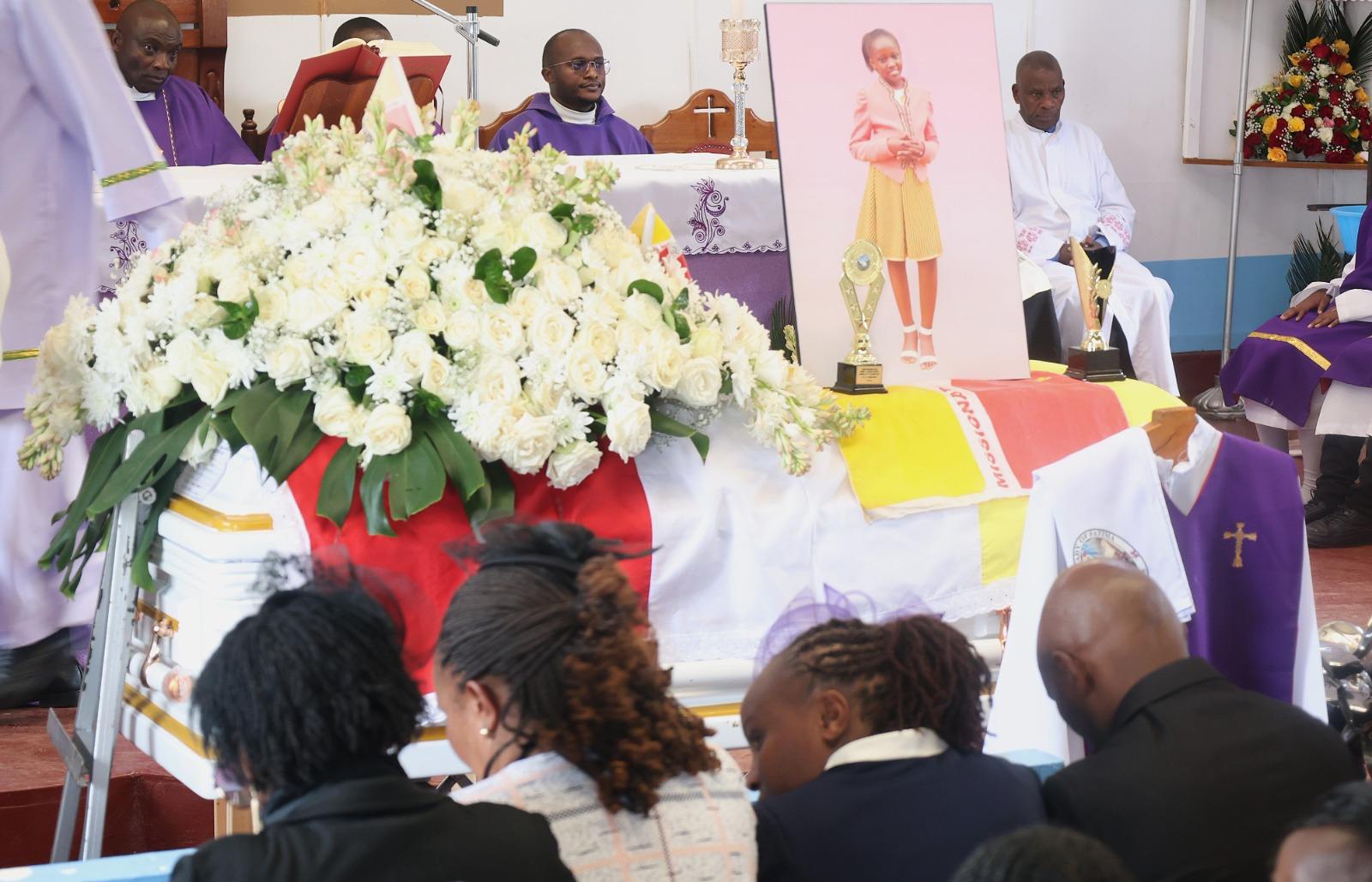
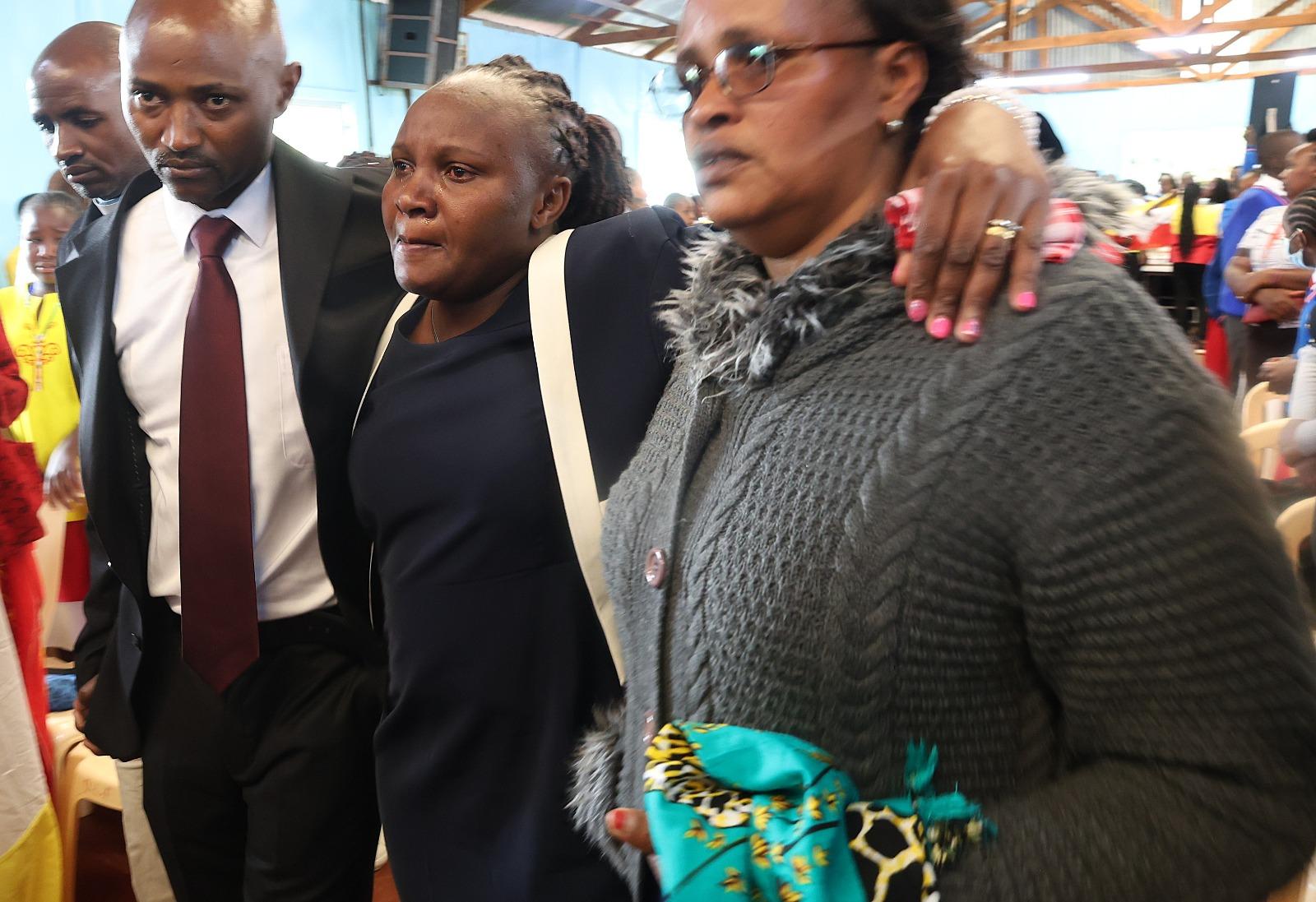
The quiet town of Ndumberi in Kiambu County was enveloped in grief as mourners gathered at Our Lady of Fatima Catholic Church for the requiem mass of 12-year-old Bridgit Njoki Wainaina, a Grade Seven pupil tragically killed by a stray bullet during the Saba Saba protests on July 7, 2025. Among those in attendance were prominent opposition leaders Wiper Party leader Kalonzo Musyoka, Democratic Action Party-Kenya (DAP-K) leader Eugene Wamalwa, and former Interior Cabinet Secretary Fred Matiang’i, whose presence underscored the national outrage over Njoki’s death and intensified calls for police accountability and justice. The somber ceremony, attended by family, friends, and other political figures, was a poignant reminder of the human cost of Kenya’s recent wave of anti-government protests and the broader struggle for governance reform. This article explores the circumstances surrounding Njoki’s death, the significance of the opposition leaders’ attendance, the public’s response, and the implications for Kenya’s political and social landscape.
The Tragic Death of Bridgit Njoki
Bridgit Njoki Wainaina was at home with her family in Ndumberi, Kiambu County, on the evening of July 7, 2025, when a stray bullet—allegedly fired by police during a clash with anti-government protesters—pierced the wall of their house and struck her in the head. According to her mother, Lucy Ngugi, the family was watching television around 6:20 p.m. when a loud bang startled them. “I saw blood on her hands and thought she had scratched herself,” Lucy recounted in a tearful interview with K24 Digital. “But when I looked closely, there was a hole in her head.” Despite being rushed to St. Bridget’s Hospital, Njoki was pronounced dead shortly after arrival, leaving her family and community devastated. A post-mortem report later confirmed that the cause of death was a gunshot wound to the head, sparking widespread condemnation and reigniting debates about police brutality in Kenya.
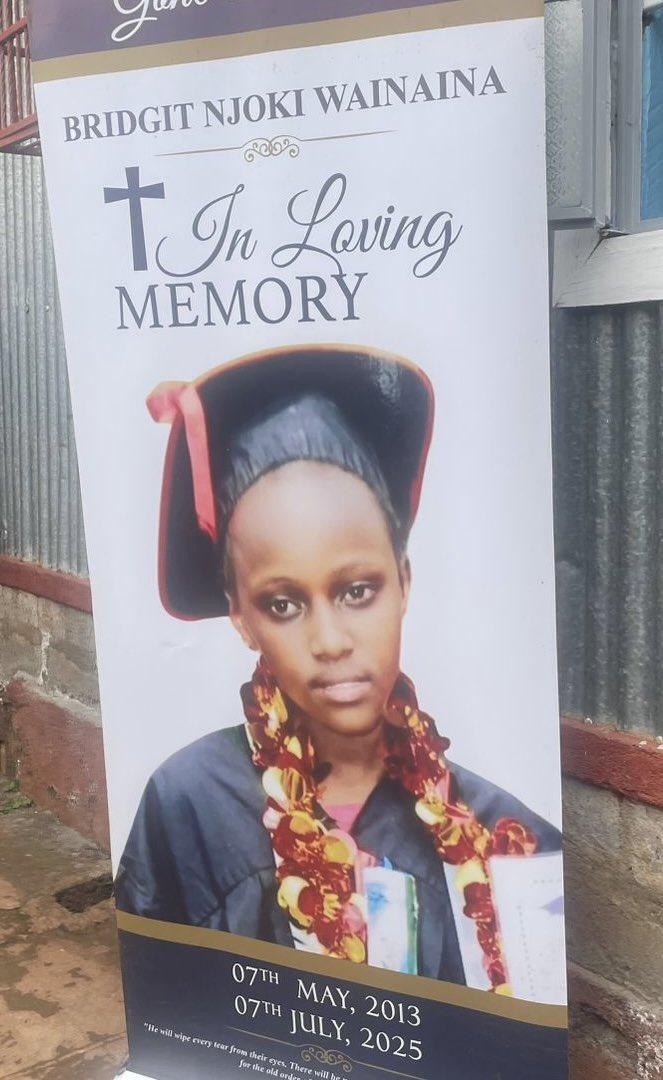
The Saba Saba protests, named after the historic July 7, 1990, pro-democracy demonstrations, were organized by civil society groups and Gen Z-led movements to protest governance failures, rising taxes, and alleged corruption under President William Ruto’s administration. The protests turned deadly in several parts of the country, with Njoki among multiple victims of excessive police force. Her death, occurring inside the supposed safety of her home, became a symbol of the indiscriminate violence faced by innocent Kenyans during these clashes, amplifying calls for accountability and reform.
The Requiem Mass: A Call for Justice
The requiem mass at Our Lady of Fatima Catholic Church was a deeply emotional event, marked by somber Catholic hymns and a white coffin placed beneath the podium, a stark reminder of the young life lost. Mourners, including Njoki’s family, friends, and community members, filled the church, joined by a notable contingent of opposition leaders. Kalonzo Musyoka, Eugene Wamalwa, Fred Matiang’i, former Kiambu MP Jude Njomo, DCP Deputy Party Leader Cleophas Malala, and Embakasi South MP Julius Mawathe were among those present, their attendance signaling solidarity with the family and a broader critique of the government’s handling of protests.
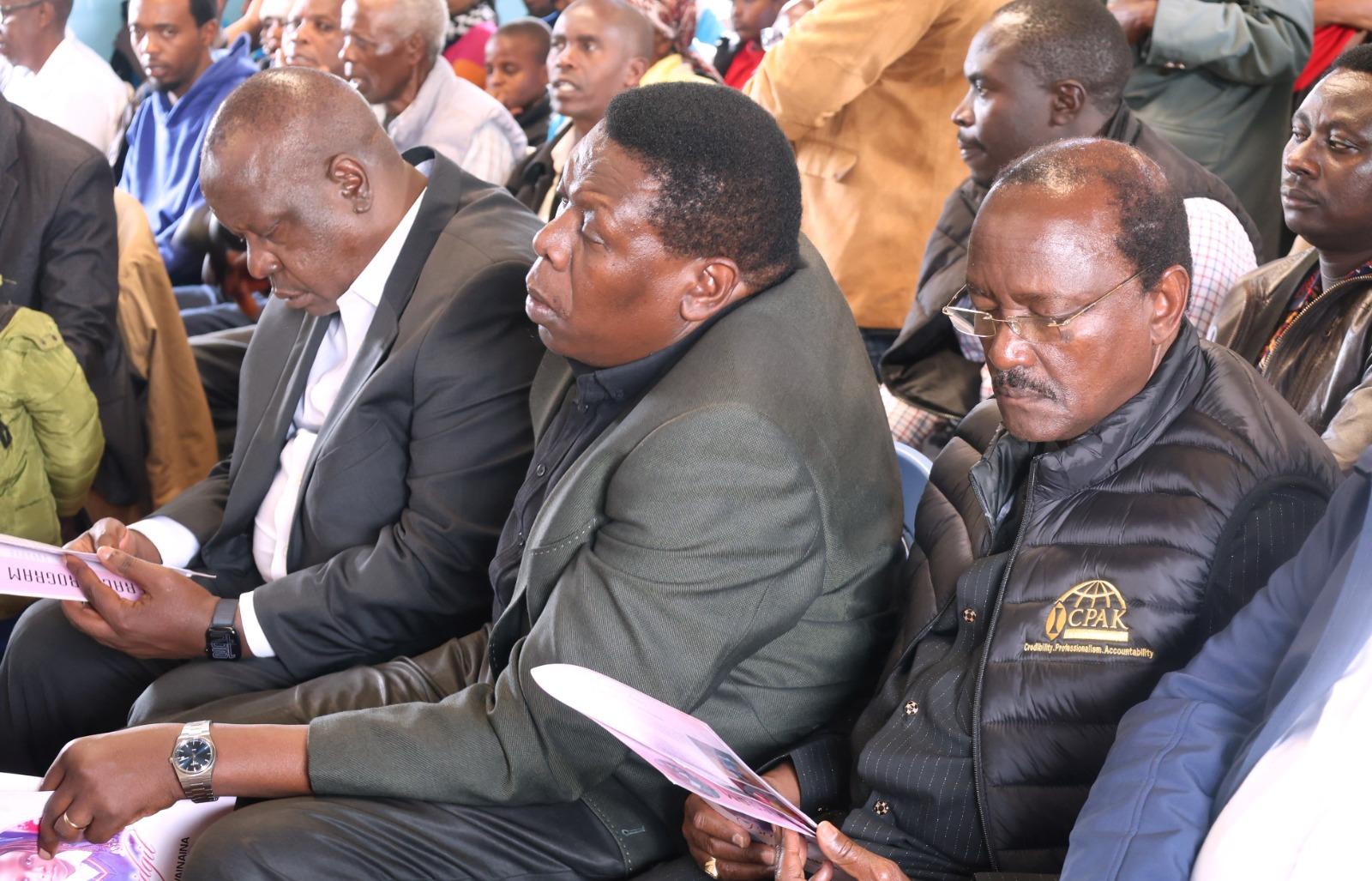
Kalonzo Musyoka, a senior counsel and former Vice President, has been a vocal critic of President Ruto’s administration, accusing it of fostering impunity and failing to deliver on campaign promises. During the mass, he reiterated his call for justice, describing Njoki’s death as a tragic consequence of rogue police actions. “We cannot allow our country to be driven into a ditch,” he said, echoing sentiments he expressed at a December 2024 event in Nakuru, where he criticized the government’s unfulfilled pledges and alleged corruption. Kalonzo’s presence at the mass, alongside his pledge to pursue justice, underscored his commitment to holding the government accountable, particularly in cases of human rights violations.
Eugene Wamalwa, a former Defence Cabinet Secretary and DAP-K leader, condemned the government’s use of force against protesters, linking Njoki’s death to a pattern of state-sponsored violence. In a statement at the mass, Wamalwa called for an end to impunity, stating, “We are here to condemn the killing of innocent Kenyans. Bridgit was a bright child with a future stolen by a system that has lost legitimacy.” His remarks align with his broader advocacy against abductions and police brutality, as seen in his response to the Kitengela abductions in September 2024, where he accused the Ruto administration of returning Kenya to “dark days” of repression.
Fred Matiang’i, a former Interior Cabinet Secretary under President Uhuru Kenyatta, brought a unique perspective to the gathering, given his past role overseeing Kenya’s security apparatus. His attendance was particularly significant, as he has faced government scrutiny since leaving office, including an alleged raid on his home in 2023. Matiang’i’s presence at the mass was a quiet but powerful statement of solidarity with Njoki’s family and a rebuke of the current administration’s security policies. His recent return to Kenyan politics, marked by a consultative meeting with opposition leaders in April 2025, signals his intent to challenge Ruto in the 2027 presidential election, making his appearance at the mass a strategic move to galvanize public support.
Political Context: Opposition Unity and Public Outrage
The attendance of these opposition leaders reflects a broader strategy within the Azimio la Umoja One Kenya Coalition to capitalize on public discontent with Ruto’s administration. The Saba Saba protests, driven by Gen Z and civil society, have exposed deep frustrations with economic hardships, corruption, and governance failures. Njoki’s death has become a rallying point for the opposition, which has sought to frame such tragedies as evidence of the Kenya Kwanza government’s disconnect from ordinary Kenyans. The presence of Kalonzo, Wamalwa, and Matiang’i at the requiem mass was not only a gesture of condolence but also a political statement aimed at mobilizing support ahead of the 2027 elections.
The opposition’s unity was evident in their coordinated presence, a continuation of efforts seen in recent months. In April 2025, Kalonzo, Wamalwa, Matiang’i, and other Azimio leaders, including Martha Karua and former Deputy President Rigathi Gachagua, held a consultative meeting in Nairobi to strategize against Ruto’s re-election bid. While discussions about a single opposition candidate remain premature, the leaders have emphasized the need for a united front to address issues like corruption, abductions, and police brutality. Wamalwa’s endorsement of Kalonzo as a leader of “good character” and Matiang’i’s growing political momentum suggest a competitive but collaborative opposition landscape.
Public outrage over Njoki’s death has been palpable, with social media platforms like X amplifying calls for justice under hashtags like #JusticeForBridgit and #RutoMustGo. Posts on X described the mass as a moment of national reflection, with users praising the opposition leaders for standing with the family while condemning the government’s silence on the incident. The Catholic Church, which has been critical of Ruto’s administration, played a significant role in the mass, reinforcing its stance against state violence. Kalonzo commended the church’s principled rejection of government donations, a point he raised in Nakuru in December 2024, further aligning the opposition with religious institutions.
Challenges and Calls for Accountability
Njoki’s death has intensified scrutiny of Kenya’s police force, which has faced accusations of excessive force during protests. The Independent Policing Oversight Authority (IPOA) has launched an investigation into the incident, but public trust in such probes remains low due to a history of impunity. The opposition leaders at the mass called for a transparent inquiry and accountability for the officers involved, with Kalonzo announcing plans to seek justice through international courts if local efforts fail. This echoes their response to the Kitengela abductions, where they vowed to escalate human rights violations to the International Criminal Court.
The government’s response has been muted, with no official statement from President Ruto or senior security officials regarding Njoki’s death as of July 15, 2025. This silence has fueled perceptions of indifference, further eroding public confidence in the administration. Murkomen’s recent inspection of security measures for CHAN 2025, emphasizing trained stewards over uniformed police in stadiums, suggests an attempt to improve crowd control protocols, but it does little to address broader concerns about police conduct during protests.
Broader Implications: A Nation at a Crossroads
Njoki’s death and the opposition’s response highlight Kenya’s deepening political and social divides. The Saba Saba protests, driven by economic grievances and governance failures, have exposed the fragility of Ruto’s “hustler nation” narrative. The opposition’s presence at the requiem mass signals their intent to leverage public anger to challenge Ruto’s legitimacy, particularly in regions like Kiambu, a traditional stronghold of the ruling coalition. The attendance of Matiang’i, a figure with strong credentials in public administration, adds weight to the opposition’s critique, positioning him as a potential contender in 2027.
The mass also underscores the role of civil society and religious institutions in shaping Kenya’s political discourse. The Catholic Church’s vocal stance against government excesses, combined with Gen Z’s activism, has created a powerful coalition demanding change. However, the opposition faces challenges in maintaining unity and presenting a cohesive alternative to Ruto’s administration. Kalonzo’s insistence on vigilance and Wamalwa’s call for leaders of integrity reflect a broader aspiration to restore trust in governance, but internal rivalries and differing ambitions could undermine their efforts.
The requiem mass for Bridgit Njoki Wainaina was more than a farewell to a young life lost; it was a moment of national reckoning. The attendance of Kalonzo Musyoka, Eugene Wamalwa, and Fred Matiang’i at Our Lady of Fatima Catholic Church in Ndumberi on July 15, 2025, highlighted the intersection of personal tragedy and political struggle in Kenya. Njoki’s death, caused by a stray police bullet during the Saba Saba protests, has galvanized calls for justice and reform, amplifying the opposition’s critique of President Ruto’s administration. As Kenya navigates economic challenges, social unrest, and the road to the 2027 elections, the memory of Bridgit Njoki serves as a stark reminder of the stakes involved. The opposition’s united front at the mass signals a renewed push for accountability, but their success will depend on their ability to translate grief and outrage into a compelling vision for a better Kenya.