By Brenda Wereh05 Jul, 202531 mins read 2,402 views
0 comments 0 likes
Nakuru activist Laban Omusundi petitioned the High Court to impose a two-term limit on MPs and MCAs, arguing that prolonged tenures undermine good governance and democracy, sparking a national debate on leadership renewal.
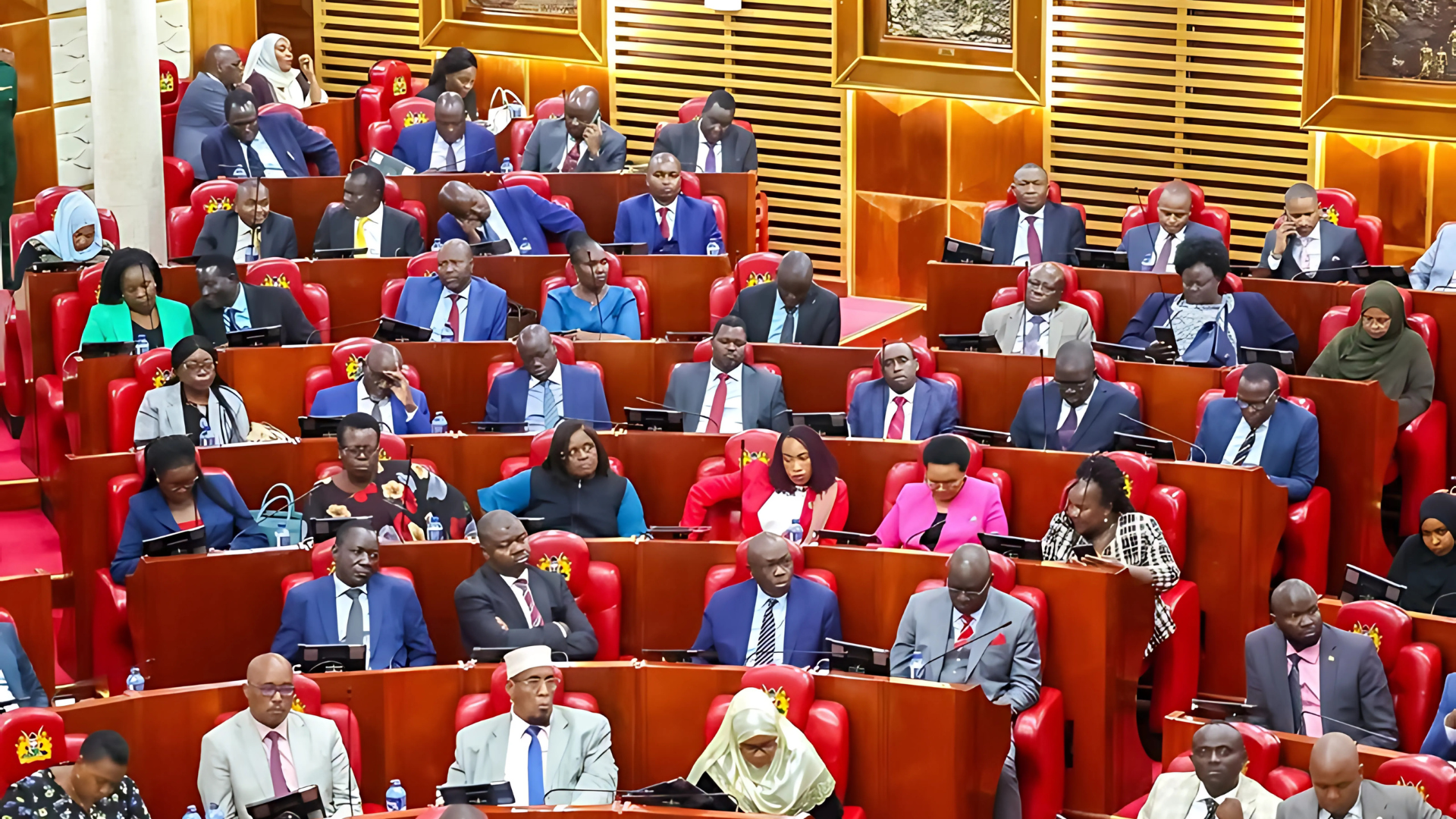
A significant legal challenge emerged in Kenya’s political landscape as Nakuru-based civil rights activist Laban Omusundi filed a petition at the High Court, seeking to impose a two-term limit on Members of Parliament and Members of County Assemblies. The petition argues that allowing elected officials to serve beyond two five-year terms violates the principles of good governance and democracy enshrined in Kenya’s 2010 Constitution. Coming amid heightened public scrutiny of leadership accountability, the case has ignited a nationwide debate, with supporters hailing it as a step toward political renewal and critics cautioning against disrupting established electoral norms. As the High Court prepares to hear the case, the outcome could reshape Kenya’s legislative framework and redefine the balance of power in its democratic institutions.
Mps
Omusundi, a vocal advocate for governance reforms, contends that the absence of term limits for MPs and MCAs fosters careerism, entrenches political patronage, and stifles opportunities for fresh leadership. “When leaders hold office indefinitely, they treat it as a birthright,” Omusundi said in a statement outside the Nakuru High Court. “This undermines the democratic values of accountability and equality we fought for in the 2010 Constitution.” His petition draws on Article 10, which outlines national values such as good governance, transparency, and inclusivity, and the African Charter on Democracy, Elections, and Governance, ratified by Kenya in 2012, which encourages periodic leadership renewal. The activist argues that the current system, where only the president, governors, and senators face two-term limits, creates an unequal class of elected officials, contrary to constitutional principles.
The petition seeks several landmark rulings from the High Court. It requests a declaration that serving more than two terms as an MP or MCA is unconstitutional, a directive to restrain the Independent Electoral and Boundaries Commission from allowing candidates who have served two terms to run again, and an order compelling the National Assembly to enact legislation formalizing the two-term limit. Additionally, Omusundi challenges the National Assembly’s failure to act on his earlier petition, filed on October 28, 2024, which he claims was ignored, violating his constitutional right to petition Parliament under Article 119. “The legislature’s inaction is a betrayal of public trust,” he said, emphasizing the need for judicial intervention to uphold democratic ideals.
The case has struck a chord with many Kenyans, particularly the youth, who see it as a response to growing frustration with entrenched political elites. “We need new voices in Parliament,” said Mercy Achieng, a university student in Nairobi who joined a small protest supporting the petition. “Some MPs have been in office since I was born, and they’re out of touch with our challenges.” Social media platforms like X have amplified the conversation, with the hashtag #TwoTermLimit trending alongside posts praising Omusundi’s courage. “This is about breaking the cycle of dynasties,” one user wrote. “MPs and MCAs shouldn’t be career politicians milking public resources.” Another posted, “Kenya’s democracy needs this reset to give women and youth a chance.”
The petition comes at a time of heightened political tension, following recent protests in Homa Bay over the death of blogger Albert Ojwang and public anger over issues like police brutality and the KSh 11.36 trillion national debt. Kenya’s fiscal challenges, with interest payments consuming a third of revenue, have intensified calls for accountable leadership. “When leaders stay too long, they prioritize personal gain over public service,” said Jane Mwangi, a governance analyst based in Eldoret. “Term limits would force MPs and MCAs to focus on delivering results within a defined period.” Mwangi pointed to the success of term limits for presidents and governors, noting that they have encouraged competitive elections and fresh ideas in those offices.
Opponents of the petition, however, argue that term limits could disrupt institutional memory and destabilize legislative processes. “Experience matters in lawmaking,” said John Kiptoo, a long-serving MCA in Uasin Gishu. “Forcing out seasoned leaders could weaken Parliament’s ability to oversee the executive.” Some critics also question the timing of the petition, given the economic and social challenges facing Kenya. “We’re grappling with debt and unemployment,” said a Nakuru-based politician, speaking anonymously. “This feels like a distraction from more pressing issues.” On X, some users echoed this sentiment, with one writing, “Term limits sound good, but we need jobs and healthcare first. Let’s not destabilize what’s working.”
The legal basis for Omusundi’s petition is rooted in Kenya’s constitutional framework and international commitments. The African Charter on Democracy, cited in the petition, emphasizes the importance of leadership rotation to prevent power monopolization. Omusundi argues that prolonged tenures weaken parliamentary oversight, as long-serving MPs and MCAs often develop cozy relationships with the executive, reducing accountability. “When leaders know they can’t stay forever, they work harder to leave a legacy,” he said, referencing the example of presidents, whose two-term limit has ensured regular transitions of power since the 2010 Constitution was enacted.
The petition also highlights disparities in Kenya’s electoral system. While the president and governors are limited to two terms under Articles 142 and 180, MPs and MCAs face no such restrictions, allowing some to serve for decades. For instance, Kitutu Chache North MP Jimmy Angwenyi, who has been in office since 1994, exemplifies the careerism Omusundi seeks to curb. “It’s unfair that some leaders face term limits while others don’t,” said Omusundi, arguing that this creates an uneven playing field. His petition seeks to align all elected offices with the same standard, promoting fairness and opening opportunities for marginalized groups, including youth and women, who face barriers in challenging entrenched incumbents.
The High Court’s decision could have far-reaching implications for Kenya’s political landscape, particularly with the 2027 general election approaching. If the court rules in Omusundi’s favor, over half of the current MPs, many of whom have served multiple terms, could be ineligible to run, reshaping Parliament and county assemblies. “This would be a game-changer,” said David Bwakali, a political commentator in Nairobi. “It could invigorate democracy by bringing in new talent, but it might also spark resistance from powerful incumbents.” The petition’s call for legislative action also places pressure on the National Assembly, which has been criticized for slow progress on constitutional reforms.
Public participation, a cornerstone of Kenya’s 2010 Constitution, is central to the debate. Omusundi’s petition argues that term limits would enhance voter choice by ensuring regular opportunities to evaluate leadership. “Voters deserve the chance to bring in new ideas every ten years,” he said, advocating for a system that encourages mental political participation. The petition has drawn support from civil society groups like the Grassroot Civilian Oversight Initiative, which Omusundi coordinates. “We’re fighting for a democracy that serves the people, not just a few,” said a spokesperson for the group, urging Kenyans to engage in the public participation process as the case progresses.
The judiciary’s role in this matter is particularly significant, given its history of shaping Kenya’s democratic framework. In 2017, the Supreme Court’s nullification of the presidential election set a precedent for judicial intervention in electoral matters, and Omusundi’s petition invokes similar principles of constitutional fidelity. “The courts have a duty to protect our democracy,” said Faith Odhiambo, president of the Law Society of Kenya, commenting on the case. “If the law allows some leaders to cling to power indefinitely, it’s a flaw that needs correction.” However, the judiciary must navigate carefully, as a ruling against term limits could be seen as endorsing the status quo, while a ruling in favor could face accusations of judicial overreach.
The petition has also reignited discussions about broader electoral reforms. In 2024, a controversial proposal by Nandi Senator Samson Cherargei to extend all elected terms to seven years faced significant backlash, with critics like Busia Senator Okiya Omtatah arguing that it undermined democratic principles. Omusundi’s petition, by contrast, has been praised for its focus on fairness rather than extending power. “This isn’t about personal agendas,” said a supporter on X. “It’s about ensuring our leaders serve the public, not themselves.” As the case heads to court, it promises to test Kenya’s commitment to its constitutional values and the will of its people to shape their democratic future.
Former Kiambu Governor Ferdinand Waititu has secured a major bail reprieve from the High Court, with Justice Winfrida Okwany reducing his bail from Sh53.5 million to Sh20 million cash pending appeal in his ongoing corruption case.
President Ruto and Governor Sakaja signed a cooperation agreement allocating funds for 50,000 new streetlights, water plants saving 50 million litres daily, 27 km Nairobi River sewer and ward road upgrades, with Ruto calling it a partnership to make the city livable while opposition senators warn of devolution threats.
A staff member at Moi Teaching and Referral Hospital allegedly stole Sh10 million by falsifying patient bills as paid in the eCitizen system while diverting the money to her personal account, prompting an ongoing police and hospital investigation.