By Brenda Wereh24 Jul, 202540 mins read 2,392 views
0 comments 0 likes
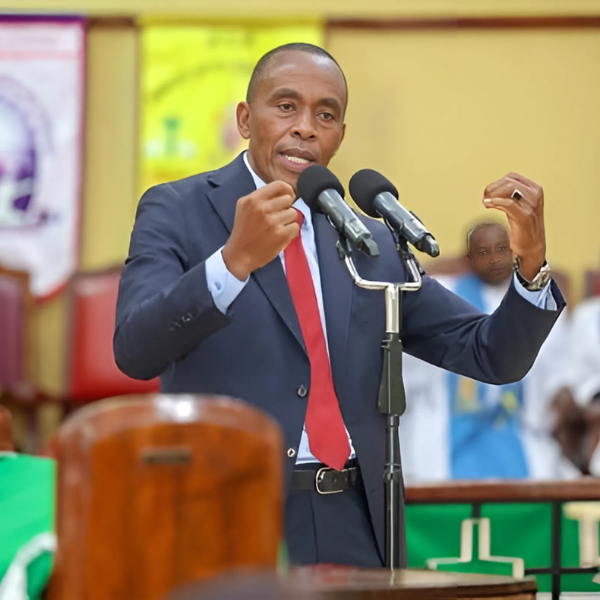
The High Court has issued orders stopping the arrest and prosecution of Kiambu Governor Kimani Wamatangi in connection with alleged corruption and abuse of office.
In a dramatic turn of events, the High Court of Kenya has issued an order halting the arrest and prosecution of Kiambu Governor Kimani Wamatangi, who faces allegations of corruption involving over Ksh1.5 billion. The court's decision, made in July 2025, has sparked widespread debate about the intersection of politics, justice, and anti-corruption efforts in Kenya.
Kiambu County, one of Kenya’s wealthiest and most politically significant regions, has long been plagued by allegations of corruption. Governor Kimani Wamatangi, whose full name is Paul Kimani Njoroge, was arrested on April 15, 2025, by the Ethics and Anti-Corruption Commission (EACC) following raids on his home and county offices. The operation targeted Wamatangi and nine senior county officials, who were accused of embezzlement, conflict of interest, and procurement irregularities amounting to Ksh1.5 billion. During the raid, EACC detectives seized Ksh12 million and USD 13,000 (approximately Ksh1.7 million) in cash from Wamatangi’s residence, which the agency claimed were proceeds of corruption.
The allegations center on several issues, including the irregular awarding of a Ksh230 million contract for an Enterprise Resource Planning (ERP) system to Filtronic International Limited, a company allegedly linked to county officials. Additionally, concerns were raised about the county’s shift from an automated to a manual payment system, which Kiambu Senator Karungo Wa Thang’wa claimed enabled ghost workers and the theft of Ksh390 million. These accusations built on earlier audit queries from the 2022/2023 Auditor General’s report, which flagged financial mismanagement in the county.
Wamatangi, who was released after questioning on April 15, 2025, has consistently denied the allegations, describing them as a politically motivated witch hunt orchestrated by his rivals. He argued that the EACC’s actions were an attempt to tarnish his reputation and destabilize his administration.
The High Court’s Intervention
On July 22, 2025, Wamatangi filed a case in the High Court seeking to block the EACC from arresting or prosecuting him over the graft allegations. In his petition, the governor argued that the claims were baseless and that he was not directly involved in the procurement processes under investigation. He further alleged that the EACC had overstepped its mandate by arresting him despite court orders that were limited to investigating the ERP tender. Wamatangi claimed that the agency’s actions were driven by political malice, aimed at undermining his leadership.
The High Court, in a ruling issued on July 23, 2025, granted conservatory orders barring the EACC, the Directorate of Criminal Investigations (DCI), and the Director of Public Prosecutions (DPP) from arresting or prosecuting Wamatangi pending the hearing and determination of his petition. The court also issued an injunction preventing Wamatangi’s deputy, Rosemary Njeri Kirika, from being sworn in as governor, addressing concerns raised by a Kiambu voter, Joseph Kimani, who claimed that the investigations were part of a scheme to oust Wamatangi and install his deputy.
The court’s decision was based on Wamatangi’s argument that the EACC had abused its investigative powers. He contended that the agency obtained search warrants under false pretenses, using the name “Paul Njoroge” to obscure his identity, and that the raids on his home and offices exceeded the scope of the court’s orders. The governor further alleged that he had not been formally summoned by the EACC prior to his arrest, which he described as a violation of due process.
Allegations and Investigations
The EACC’s probe into Wamatangi’s administration focuses on several key issues:
Procurement Irregularities: The EACC alleges that county officials, including Wamatangi, engaged in irregular procurement processes, particularly in the awarding of a Ksh230 million contract for an ERP system to Filtronic International Limited. The agency claims that the contract involved conflicts of interest, with some officials having ties to the company.
Fictitious Payments: Investigators have accused the county of making payments totaling Ksh1.5 billion for fictitious supplies and services. These payments are said to have been facilitated through shell companies and proxies, a tactic previously used in Kiambu during the tenure of former Governor Ferdinand Waititu, who is currently serving a prison sentence for a Ksh588 million graft case.
Cash Seizure: The recovery of Ksh12 million and USD 13,000 from Wamatangi’s residence has been a focal point of the investigation. The EACC claims that these funds are proceeds of corruption, though Wamatangi has challenged the agency to provide evidence linking the money to illegal activities.
Manual Payment System: The county’s decision to abandon an automated payment system in favor of a manual one has raised suspicions. Senator Thang’wa alleged that this shift enabled the creation of ghost workers, resulting in the loss of Ksh390 million. The EACC is investigating whether this was a deliberate move to facilitate embezzlement.
In addition to these allegations, the EACC has summoned the directors of the Kenya National Highways Authority (KeNHA), Kenya Rural Roads Authority (KeRRA), and Kenya Urban Roads Authority (KURA) to provide statements as part of the probe. The agency has also frozen the bank accounts of five companies believed to be involved in the irregular dealings.
Wamatangi’s Defense
Governor Wamatangi has maintained that the allegations against him are politically motivated. In a statement following his release on April 15, 2025, he claimed that unnamed national leaders were orchestrating a smear campaign to force him out of office. He argued that the EACC’s actions were not about justice but rather an attempt to destabilize his administration. “The people who elected us are not the police or the EACC,” Wamatangi said, accusing a senior government official of vowing to ruin his reputation by the end of his term.
Wamatangi’s supporters have echoed his claims, staging protests outside the EACC headquarters and his residence during his arrest. They accused President William Ruto’s administration of targeting the governor for political reasons, with some chanting anti-government slogans. The governor has also pointed to his efforts to combat corruption in Kiambu, noting that he inherited a county burdened with a Ksh7 billion debt and systemic graft. He claims to have taken steps to close loopholes, such as streamlining revenue collection and clearing salary arrears for county workers.
In his court filings, Wamatangi argued that the county’s previous revenue system, managed by Strathmore Research and Consultancy Centre Limited, was riddled with leakages. He stated that his administration’s move to procure a new system was transparent and that no bidders raised concerns during the process. He further noted that a lawsuit by Strathmore seeking Ksh700 million was struck out by the courts, suggesting that the current allegations are a continuation of efforts by vested interests to frustrate his reforms.
Public and Political Reactions
The case has elicited strong reactions from various quarters. A group of activists under the Mbunge Mashinani umbrella has dismissed Wamatangi’s claims of a political witch hunt, arguing that the EACC’s actions were prompted by legitimate concerns raised in the Auditor General’s report. Michael Mburu, the group’s executive director, stated that the activists had petitioned the EACC to investigate financial mismanagement in Kiambu after the County Assembly failed to address their concerns.
Conversely, Wamatangi’s supporters view the investigations as an attempt to undermine a governor who has made strides in improving Kiambu’s governance. They point to his efforts to contain a cholera outbreak and address the county’s financial challenges as evidence of his commitment to public service. The protests outside the EACC headquarters and Wamatangi’s residence underscore the deep divisions within Kiambu’s political landscape.
The case has also reignited debates about the politicization of anti-corruption efforts in Kenya. Critics argue that state agencies like the EACC and DCI are sometimes used to settle political scores, while supporters of the investigations insist that they are necessary to curb rampant corruption in county governments. Kiambu’s history, marked by the conviction of former Governor Ferdinand Waititu, adds weight to calls for accountability, but it also fuels suspicions of selective targeting.
Broader Implications
The High Court’s decision to block Wamatangi’s arrest raises important questions about the balance between anti-corruption efforts and the protection of individual rights. While the EACC’s mandate to investigate and prosecute graft is critical to promoting accountability, Wamatangi’s case highlights the potential for abuse of power by investigative agencies. The governor’s allegations of political intimidation resonate with a broader narrative in Kenya, where public officials often claim to be victims of politically motivated prosecutions.
The case also underscores the challenges of rooting out corruption in devolved governments. County governments, which control significant budgets, have become hotspots for financial mismanagement, with Kiambu being a prominent example. The EACC’s ongoing investigations, including the summoning of KeNHA, KeRRA, and KURA directors, suggest that the probe may uncover a wider network of corruption involving multiple institutions.
For Kiambu residents, the outcome of Wamatangi’s case will have far-reaching consequences. If the governor is cleared, it could bolster his administration’s credibility and allow him to continue his reforms. However, if the EACC uncovers evidence of wrongdoing, it could lead to prosecutions and further erode public trust in county governance.
The High Court’s decision to halt the arrest and prosecution of Governor Kimani Wamatangi marks a significant moment in Kenya’s ongoing battle against corruption. While the court’s ruling provides temporary relief for the embattled governor, it does not resolve the underlying allegations of graft, which continue to cast a shadow over his administration. As the legal battle unfolds, the case will likely serve as a litmus test for the independence of Kenya’s anti-corruption institutions and the resilience of its judicial system.
For now, Wamatangi remains defiant, rallying his supporters and framing himself as a victim of political persecution. Whether this narrative will hold up in court or crumble under the weight of evidence remains to be seen. What is clear, however, is that the saga in Kiambu County is far from over, and its outcome will shape the future of governance in one of Kenya’s most prominent regions.
Former Kiambu Governor Ferdinand Waititu has secured a major bail reprieve from the High Court, with Justice Winfrida Okwany reducing his bail from Sh53.5 million to Sh20 million cash pending appeal in his ongoing corruption case.
President Ruto and Governor Sakaja signed a cooperation agreement allocating funds for 50,000 new streetlights, water plants saving 50 million litres daily, 27 km Nairobi River sewer and ward road upgrades, with Ruto calling it a partnership to make the city livable while opposition senators warn of devolution threats.
A staff member at Moi Teaching and Referral Hospital allegedly stole Sh10 million by falsifying patient bills as paid in the eCitizen system while diverting the money to her personal account, prompting an ongoing police and hospital investigation.