The Football Kenya Federation announced on Monday, July 21, 2025, that the Harambee Stars have withdrawn from the CECAFA four-nation tournament scheduled to begin in Tanzania, marking a sudden shift in the national football team’s preparations. The decision, disclosed in a statement released at 2:00 PM East Africa Time, followed a technical assessment by the team’s coaching staff, who determined that the prevailing conditions were unsuitable for effective participation. With the African Nations Championship (CHAN) 2024 looming, the federation has redirected the team’s full attention to ensuring optimal readiness for the continental competition, which Kenya will co-host alongside Uganda and Tanzania starting August 2. Outside a sports bar in Nairobi, a group of fans gathered, their voices rising with a mix of surprise and support. “It’s disappointing, but if it’s for CHAN, we understand,” said a man sipping tea, his eyes fixed on a television replaying the announcement.
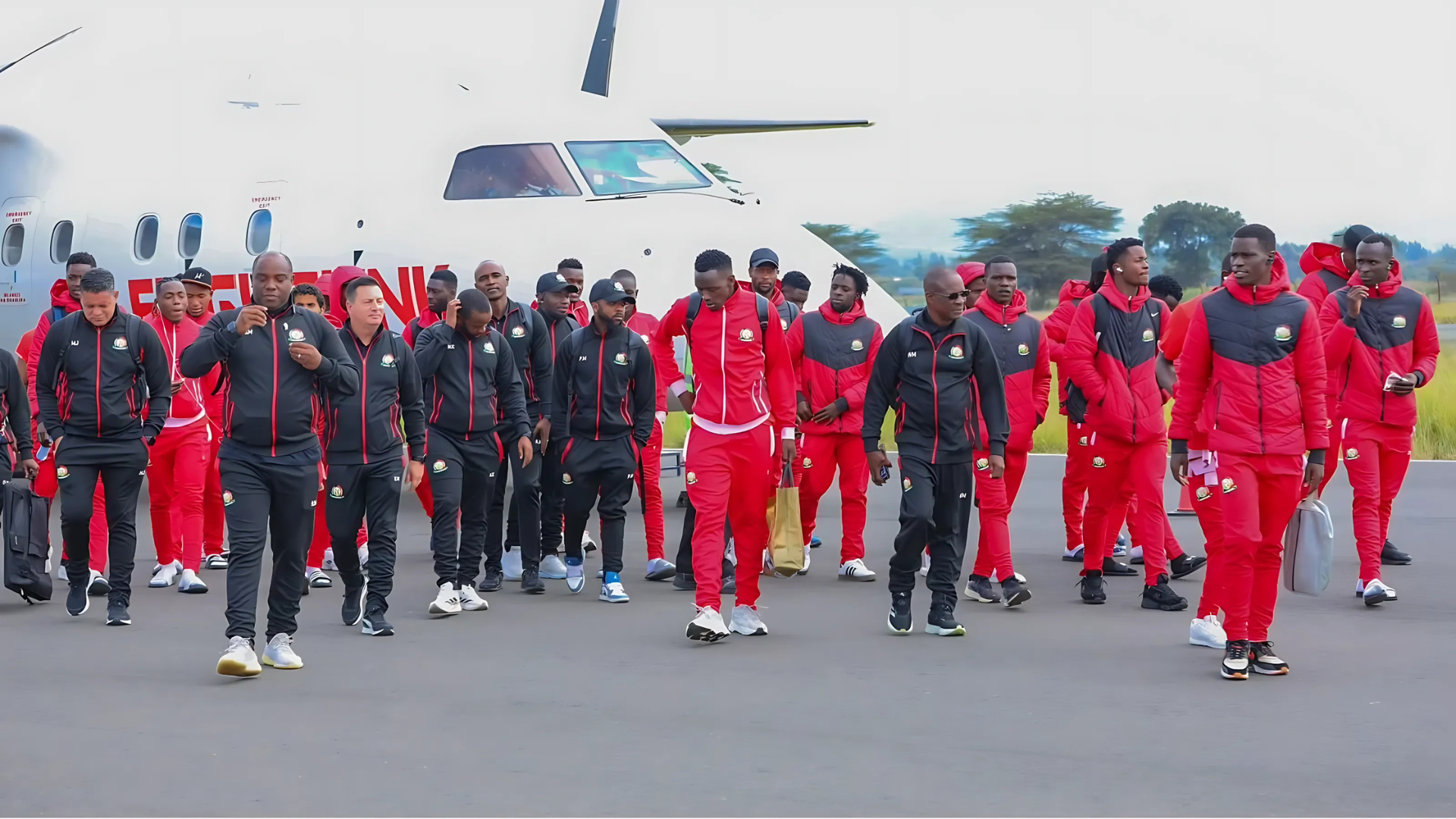
The withdrawal came as a shock to many, given that the Harambee Stars had arrived in Arusha, Tanzania, on Saturday, July 19, ahead of the tournament’s opening match against Tanzania on Monday afternoon at Karatu Stadium. The team, led by head coach Benni McCarthy, had been anticipated to use the event as a warm-up to gauge their form against regional rivals Uganda, Tanzania, and guest nation Senegal. However, after assessing the training facilities and logistical arrangements, McCarthy and his technical bench concluded that the environment posed risks to the players’ preparation. “The conditions here don’t meet the standards we need to perform at our best,” McCarthy told a small group of journalists at Arusha Airport before the team’s departure back to Kenya, his tone firm yet measured.
The FKF statement outlined that the decision was made to prioritize the long-term goals of the national team, particularly the CHAN 2024 tournament, where Kenya aims to make a strong impression on home soil. The federation emphasized its commitment to providing the best possible environment for the players, a stance that resonated with some supporters. “If the pitch or setup isn’t right, it’s smart to pull out,” said a woman selling newspapers near a bus stop in Kisumu, her stand crowded with curious onlookers. The move, however, left the CECAFA organizers scrambling to adjust, with the tournament’s competitive balance now uncertain following the late withdrawal.
Details of the unsuitable conditions remained sparse, though reports from the team hinted at issues with the training pitch at Black Rhino Academy and the remote location of Karatu Stadium, which lacked adequate supporting infrastructure. Players had shared images of the uneven surface on social media before the decision, sparking online debates about the readiness of the venue. A midfielder from the squad, speaking anonymously, noted, “We couldn’t risk injuries on that ground; CHAN is too important.” The FKF plans to resume training in Nairobi under improved conditions, with sessions scheduled to begin Tuesday at the Kasarani Annex, a facility recently refurbished to meet international standards.
The timing of the withdrawal, just hours before the opening match, underscored the urgency of the coaching staff’s concerns. The Harambee Stars had been drawn to face Tanzania first, followed by Senegal on Thursday and Uganda on Sunday, all part of a round-robin format designed to test their readiness for CHAN. McCarthy, who took over as coach earlier this year, has been vocal about the need for structured preparation, a philosophy that guided the decision. “We’re here to win, not to compromise our health or performance,” he added, addressing the team as they boarded the return flight. The South African coach’s approach has won praise from some quarters, with a youth organizer in Nakuru commenting, “He’s putting the players first, and that’s what we need.”
The impact on the CECAFA tournament was immediate, with organizers facing logistical challenges to maintain the event’s integrity. Senegal, the reigning CHAN champions, and Uganda remained committed, but the sudden exit of Kenya, a co-host of the upcoming CHAN, raised questions about regional coordination. A local official in Arusha, overseeing preparations, expressed frustration. “We had hoped for a strong competition, but we’ll adapt,” he said, consulting with staff as they reviewed schedules. The FKF’s statement assured that the team would return to Kenya with full focus on CHAN, where they are grouped with DR Congo, Morocco, Zambia, and Angola in a challenging Group A.
Back in Kenya, reactions varied across the country. In Eldoret, a barber trimming a customer’s hair welcomed the decision. “Better to prepare well at home than risk it there,” he said, the hum of his clippers blending with radio updates. In Mombasa, a fisherman mending nets took a different view. “We needed those games to see what we’ve got,” he remarked, his hands steady as waves crashed nearby. The split opinions reflected the high stakes of CHAN 2024, Kenya’s debut in the tournament, which reserves spots for players from domestic leagues. Fans see it as a chance to showcase local talent, with the national team carrying the hopes of a football-hungry nation.
The coaching staff’s assessment included input from medical and logistical teams, who flagged potential risks to player welfare. The Kasarani Annex, with its improved drainage and lighting, offers a stark contrast to the reported conditions in Karatu. A physiotherapist traveling with the team noted, “We can’t afford strains or fatigue before such a big tournament.” The FKF plans to intensify training, focusing on tactics and fitness, with friendly matches potentially arranged to replace the lost competitive exposure. A community leader in Thika, organizing a watch party for CHAN, supported the move. “Let’s get them ready for August,” he told a group gathered at a local field.
The withdrawal also highlighted broader challenges in regional football administration. Posts found on X suggested dissatisfaction with the tournament’s organization, with some users questioning the suitability of Karatu as a venue. A shopkeeper in Nairobi, scrolling through updates, echoed the sentiment. “If the setup wasn’t ready, why schedule it?” she asked, serving customers as the news spread. The FKF’s decision to prioritize CHAN over the CECAFA event signaled a strategic shift, with the federation aiming to avoid distractions ahead of the co-hosted tournament. A veteran coach in Kisii, watching from a training ground, approved. “CHAN is our priority; this makes sense,” he said, overseeing a youth session.
Players, many of whom had anticipated the Tanzania trip as a morale booster, adjusted to the change with mixed feelings. A striker from the squad, speaking after landing in Nairobi, expressed determination. “We’ll make up for it at home; CHAN is where we shine,” he said, joining teammates for a late meal. The 25-man squad, including late call-ups like goalkeeper Bryne Omondi, will now focus on acclimating to the Kasarani environment. McCarthy plans to use the next two weeks to refine strategies, with the team’s opening CHAN match against DR Congo set for August 3 at the same venue.
The decision’s ripple effects reached beyond the pitch, with sponsors and fans reassessing their expectations. A vendor in Garissa, selling team jerseys, noted a dip in pre-tournament sales. “I thought the Tanzania games would boost interest,” he said, folding shirts as children played nearby. The FKF, however, sees the move as a long-term investment, with President Hussein Mohammed hinting at alternative preparations. “We’ll ensure they’re at their peak for CHAN,” he told a radio station, his voice steady amid the day’s developments. The federation’s commitment to pride and performance underscored its stance.
Across Kenya, communities tuned in as the story unfolded. In Turkana, a herder listening to a transistor radio remarked, “They should focus on winning at home.” In Nakuru, a student at a cyber cafe scrolled through updates, saying, “I hope this works out for CHAN.” The withdrawal, though abrupt, aligned with a narrative of protecting the team’s integrity, a theme McCarthy has emphasized since his appointment. A father in Kitui, watching his son kick a ball, added, “Let’s see them shine in August.” The nation’s eyes now turn to the Kasarani Annex, where the Harambee Stars will forge their path to CHAN 2024.
As evening fell, the team settled into Nairobi, their return flight landing just before dusk. Coaches reviewed footage from the aborted trip, while players rested ahead of the next day’s session. A taxi driver in Mombasa, hearing the news on the radio, reflected, “This could be a turning point if they get it right.” The FKF’s focus on CHAN, just 12 days away, framed the withdrawal as a calculated step, its success to be measured by the team’s performance in the coming weeks. The quiet hum of the city carried the weight of anticipation, with Kenya awaiting its moment on the continental stage.