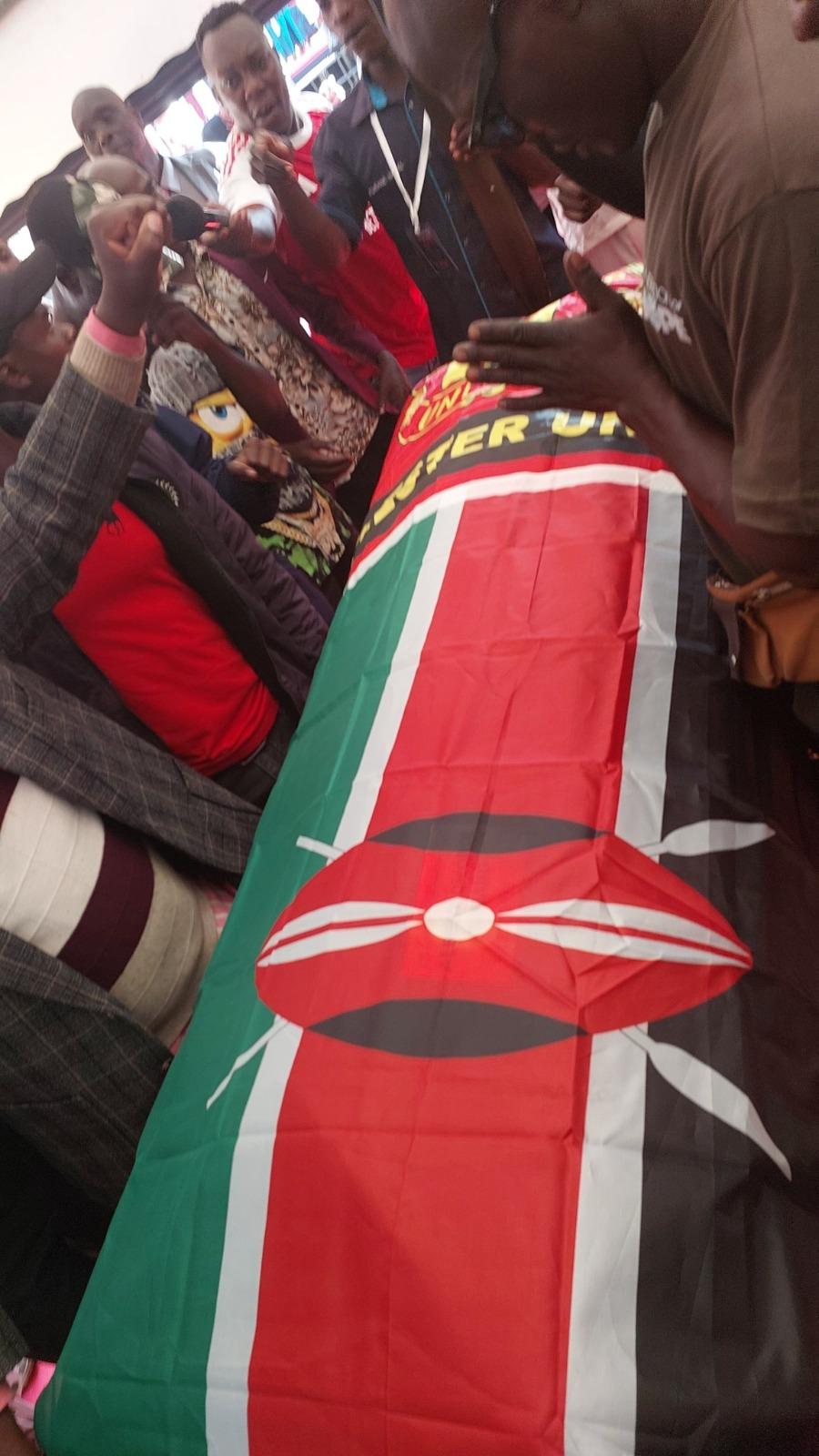
The rural village of Kokwanyo in Homa Bay County became a focal point of grief and defiance as thousands gathered to bid an emotional farewell to Albert Omondi Ojwang, a 31-year-old blogger and teacher whose death in police custody sparked national outrage. The slain activist, known for his fearless online commentary, was laid to rest in a somber ceremony marked by tears, tributes, and calls for justice. Ojwang’s tragic death on June 8, 2025, after his arrest for allegedly defaming a senior police official, has ignited a firestorm of protests and demands for accountability, with his funeral serving as both a moment of mourning and a rallying cry for reform. As family, friends, and supporters gathered, the air was thick with sorrow and resolve, reflecting the profound impact of a young man whose voice resonated far beyond his humble roots.
Albert Ojwang, a beloved son, husband, father, and educator, was remembered as a beacon of hope in his community. Born in Kakoth village, he rose from modest beginnings to become a Bachelor of Education graduate from Pwani University, teaching Christian Religious Education and history at Kituma Secondary School in Voi, Taita Taveta County. His passion for social justice found expression on platforms like X, where he critiqued governance and championed the voiceless. “Albert was more than a blogger; he was our conscience,” said David Bwakali, a former colleague, during the requiem mass held at Ridgeways Baptist Church in Nairobi on July 2. “He spoke truth to power, and they silenced him for it.” Ojwang’s arrest on June 7, while having lunch with his family, set off a chain of events that culminated in his death at Nairobi’s Central Police Station, a tragedy that has galvanized Kenya’s youth and human rights advocates.
The journey of Ojwang’s body back to Homa Bay was fraught with emotion and tension. On July 3, his remains arrived at Kisumu International Airport, where his father, Meshack Ojwang Opiyo, was seen weeping alone in a hearse, overcome by the reality of his only son’s loss. “I thought he was safe,” Meshack said, recalling the assurances given by police officers who arrested Albert. “They took him from our home, and now he’s gone forever.” An elderly woman, believed to be a family member, held Meshack’s hand in a poignant moment captured on video, as mourners wailed around the casket. The procession to Homa Bay was disrupted when angry youths, led by students from Mawego National Polytechnic, stormed Mawego Police Station, where Albert was briefly detained before his transfer to Nairobi. The crowd, chanting “Justice for Albert,” set parts of the station ablaze, destroying furniture and files in a raw display of frustration over police brutality.
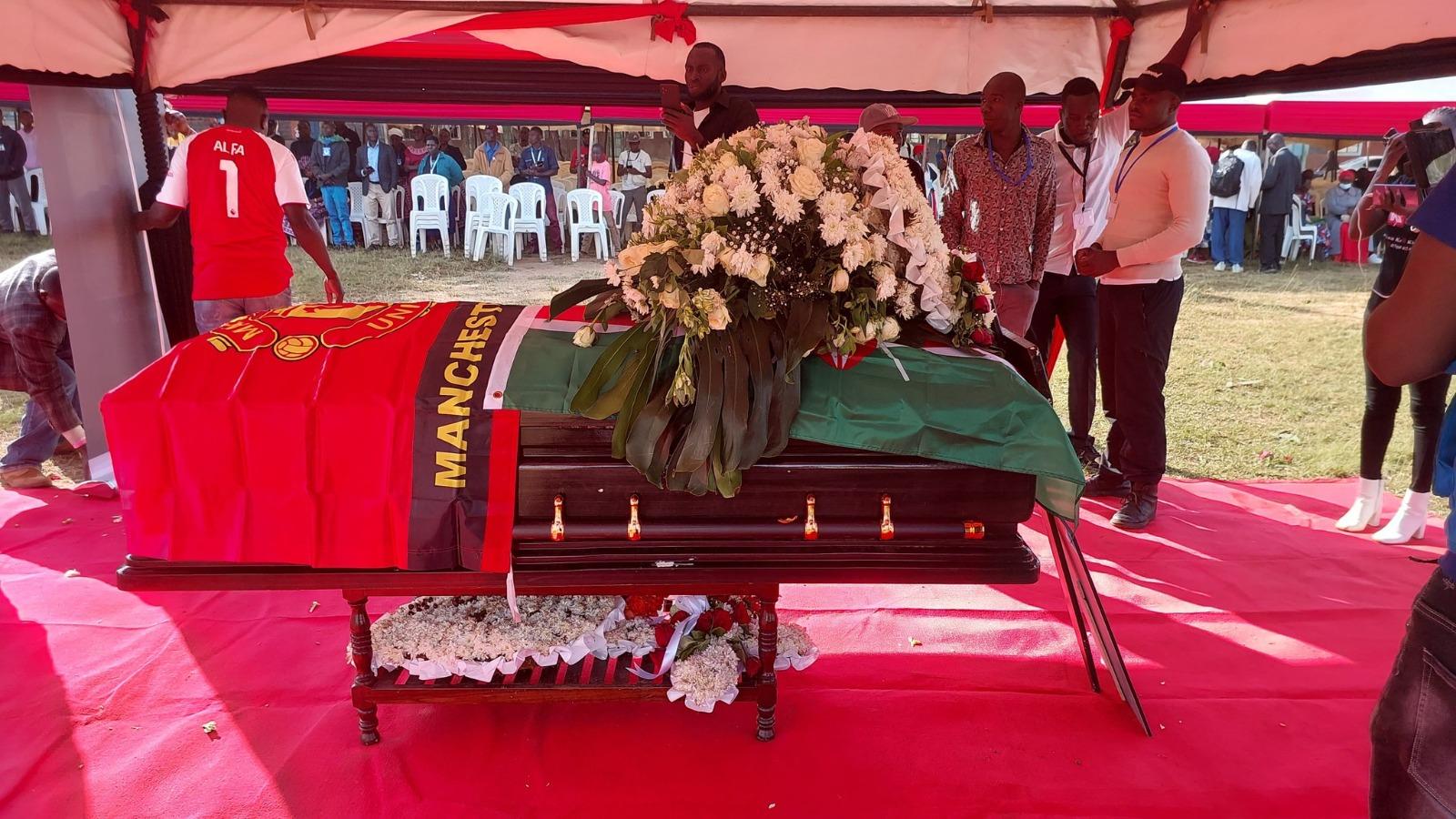
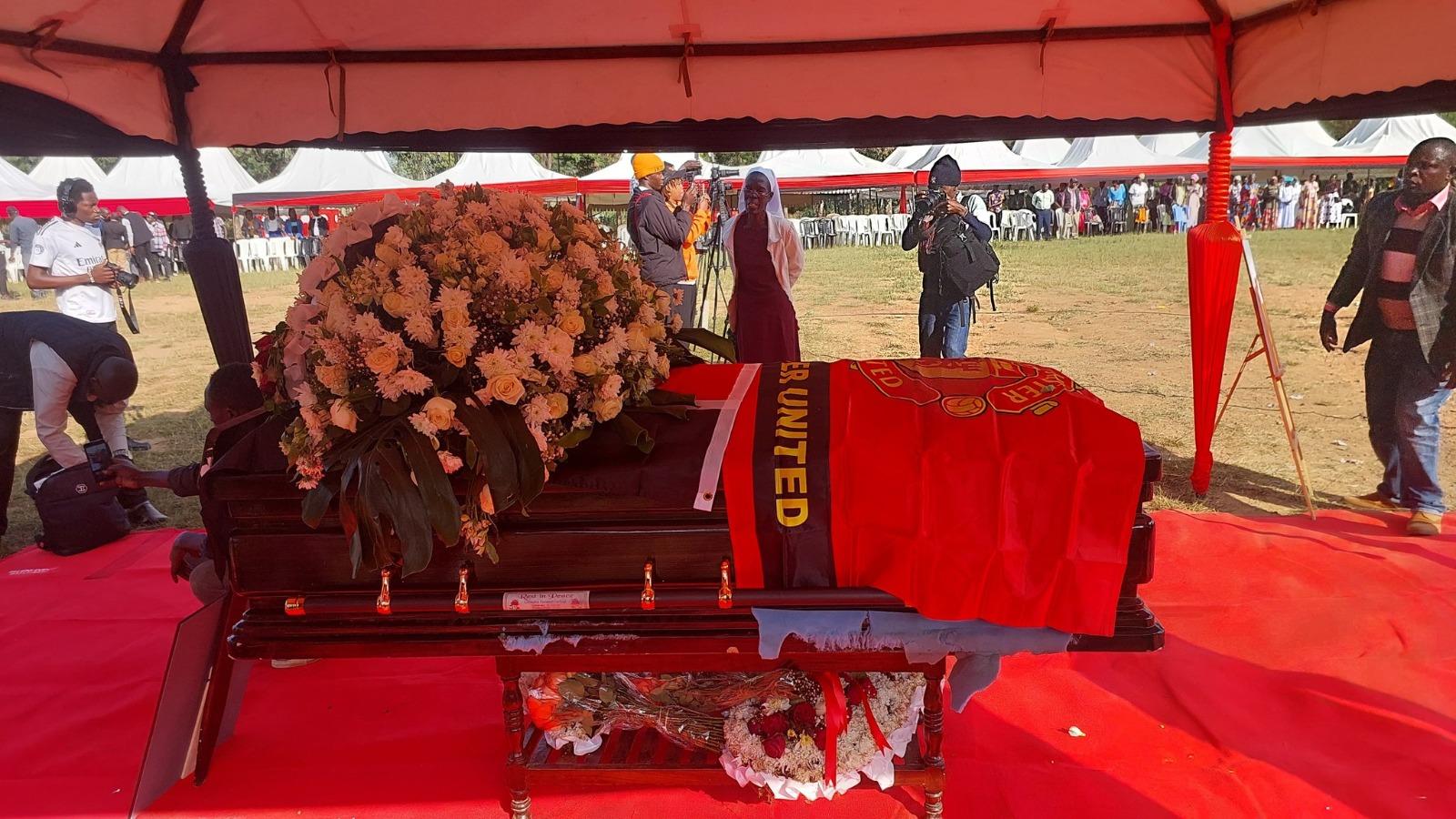
The funeral itself, held at the family’s compound in Kokwanyo, drew a diverse crowd, including local leaders, activists, and ordinary Kenyans who traveled from across the country. Homa Bay Governor Gladys Wanga, who had overseen the construction of a modern two-bedroom house for the family, spoke at the ceremony. “Albert dreamed of building a home for his parents, and today, though he is not here, that dream lives on,” she said, gesturing to the newly completed structure with its peach exterior and red roof. “But his greater dream was justice, and we will not rest until it is served.” The house, funded by donations including KSh 2 million from President William Ruto and KSh 1 million from Raila Odinga, symbolized the community’s effort to honor Ojwang’s legacy, even as his family grappled with grief.
Ojwang’s widow, Nevnina Onyango, delivered a heart-wrenching tribute, recounting their love story that began in Kisumu in 2021. “He was my best friend, my confidant,” she said, her voice breaking as she addressed the crowd. “He promised to see me soon when we last spoke, but they took him from us.” Nevnina, now raising their three-year-old son, George, alone, vowed to keep Albert’s memory alive. “Our son will know his father was a hero,” she added. The couple had been formalizing their marriage according to Luo traditions, refurbishing a “simba” at the family homestead, a project left unfinished by Albert’s death. The sight of the half-built structure next to the new house underscored the abrupt end to his aspirations.
The autopsy report, which revealed blunt force trauma, neck compression, and multiple bruises, fueled the anger at the funeral. “My son was tortured and murdered,” said Eucabeth Adhiambo Ojwang, Albert’s mother, her words punctuated by sobs. “I told him to haunt his killers, and I believe he will.” The findings, corroborated by five pathologists, contradicted initial police claims that Albert had died by suicide after hitting his head against a cell wall. The Independent Policing Oversight Authority’s investigation further revealed tampering with CCTV footage at Central Police Station, deepening public distrust. “This was no accident,” said Faith Odhiambo, president of the Law Society of Kenya, who attended the funeral. “Albert was targeted for his courage, and we will fight until every officer involved is held accountable.”
The ceremony was not without controversy. Homa Bay Town MP Peter Kaluma had warned politicians against using the funeral for political gain, insisting it remain a moment of mourning. “This is about Albert and his family, not agendas,” he said, addressing rumors of potential disruptions. Despite his warning, the presence of dignitaries like Wanga and messages from national leaders underscored the political weight of Ojwang’s death. President Ruto, in a statement read by a representative, called the incident “heartbreaking and unacceptable,” promising a transparent investigation. However, Meshack dismissed the arrests of junior officers, insisting that senior officials, including Deputy Inspector General Eliud Lagat, who had filed the defamation complaint, should face scrutiny. “They took my son because he spoke out,” he said. “No amount of money can replace him.”
Social media platforms, particularly X, amplified the call for justice, with hashtags like #JusticeForAlbertOjwang and #OccupyStatehouse2025 trending. “Albert’s death is a wake-up call,” posted a user from Nairobi. “Our youth are being silenced for speaking truth.” Another wrote, “Baba Albert’s tears break my heart. This government must answer.” Comedian Eric Omondi, who launched the #MwalimuFriday campaign to honor Ojwang, attended the funeral and shared memories of visiting Kituma Secondary School, where Albert coached rugby and inspired students. “He was a teacher in every sense,” Omondi said. “His students loved him, and his loss is a blow to education.”
The funeral also highlighted the community’s resilience. Students from Kituma Secondary School performed an emotional tribute, singing hymns Albert had taught them. “He believed in us,” said a Form Four student, clutching a rugby trophy Albert’s team had won. The outpouring of support, including KSh 5 million in donations for the family, reflected Albert’s impact. “Kenyans gave even one shilling to show they cared,” said family lawyer Julius Juma, addressing mourners. However, the family faced challenges, with an uncle, Polycarp Odhiambo, revealing attempts to swindle funeral funds, prompting Meshack to change his phone number.
As the casket was lowered into the ground, wails echoed across the compound, mingling with gospel songs led by Meshack, who found solace in singing. “God will fight for us,” he said, his voice steady despite his grief. The ceremony ended with a pledge from activists to continue the fight for justice, with protests planned in Nairobi and other cities. “Albert’s voice will not be silenced,” said a member of the Digital Content Creators Association of Kenya. “He stood for the youth, and we will stand for him.” As Homa Bay bid farewell to its son, the nation watched, united in sorrow and a shared demand for accountability in a case that has become a symbol of resistance against oppression.