By Brenda Wereh24 Jul, 202539 mins read 2,271 views
0 comments 0 likes
Defence CS Aden Duale has launched a digital health system in Nakuru County, distributing 1,140 smart devices and empowering over 3,300 community health promoters.
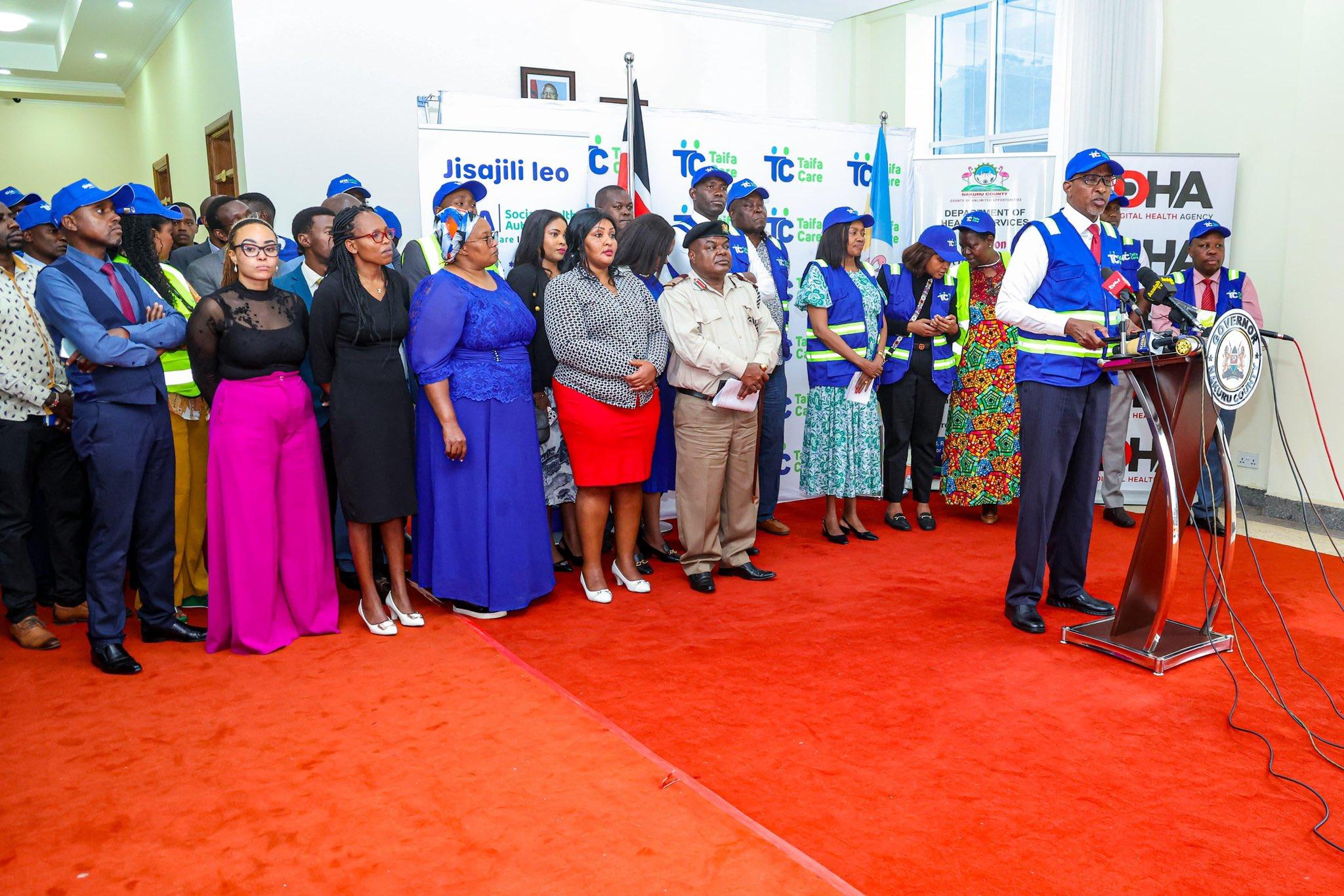
Health Cabinet Secretary (CS) Aden Duale, alongside Nakuru County Governor Susan Kihika, launched the Taifa Care Digitization Activation in Nakuru County, marking a significant milestone in Kenya’s journey toward Universal Health Coverage (UHC).
The event, held at the Nakuru County Referral and Teaching Hospital, saw the delivery of 1,140 digital devices to support the Health Information Exchange (HIE) platform, aimed at empowering Kenyans with ownership and control over their health data. Additionally, the initiative has equipped and trained 3,306 Community Health Promoters (CHPs) to strengthen grassroots healthcare delivery.
The Taifa Care program, under the Social Health Authority (SHA), is a cornerstone of Kenya’s digital health transformation agenda. Launched to replace the defunct National Hospital Insurance Fund (NHIF), Taifa Care aims to create a people-centered, equitable, and transparent healthcare system. The Health Information Exchange (HIE) platform, a key component of this initiative, is designed to digitize patient records, enhance data portability, and improve service delivery across Kenya’s 47 counties. By enabling real-time data sharing between healthcare facilities, county governments, and national authorities, the HIE seeks to eliminate inefficiencies, reduce fraud, and ensure accountability.
During the Nakuru event, CS Duale handed over 1,140 digital devices, including tablets and smartphones, to facilitate the implementation of the HIE platform. These devices enable health workers to access and update patient records, track health interventions, and monitor service delivery in real time. The system also allows patients to access their health records, SHA eligibility, and payment status from anywhere, empowering them to take control of their health journey. Duale emphasized that the digitization effort aligns with President William Ruto’s Bottom-Up Economic Transformation Agenda, which prioritizes accessible and affordable healthcare for all Kenyans.
Nakuru County, one of the top performers in SHA adoption, has registered over 840,000 residents, representing a significant portion of its population. This achievement was lauded by Duale, who commended the county’s healthcare workers for their commitment to UHC. The event also highlighted Nakuru’s role as a model for other counties, with plans to replicate the digitization model nationwide.
Empowering 3,306 Community Health Promoters
A critical aspect of the Nakuru digitization launch was the recognition of 3,306 Community Health Promoters (CHPs) who have been trained, equipped, and deployed across the county. These CHPs, integrated into the Ministry of Health’s service delivery model, play a pivotal role in delivering last-mile healthcare services. Equipped with digital tools, they conduct household visits, provide health education, monitor community health trends, and link residents to primary care facilities. Their work is essential to achieving UHC at the grassroots level, ensuring that no household is left behind.
CS Duale praised the CHPs as the backbone of Kenya’s primary healthcare system, noting that their digital training enhances their ability to collect and report data accurately. The devices provided to CHPs enable real-time reporting, which improves decision-making and resource allocation. For instance, CHPs can track maternal and child health interventions, monitor non-communicable diseases, and identify outbreaks early, thereby strengthening preventive care. The training of these health workers also includes modules on ethics and transparency, aligning with the Ministry’s zero-tolerance policy on malpractice.
Nakuru Governor Susan Kihika, who co-hosted the event, highlighted the county’s commitment to supporting CHPs through stipends and resources. She noted that the digitization initiative complements Nakuru’s investments in healthcare infrastructure, such as the planned upgrade of the Nakuru Regional Cancer Centre into a referral facility serving 24 counties. This synergy between digital tools and physical infrastructure underscores Nakuru’s leadership in healthcare innovation.
Regulatory Oversight and Accountability
The launch of the digital health system in Nakuru was accompanied by a strong emphasis on regulatory oversight and accountability. CS Duale reiterated the Ministry’s commitment to eliminating unlicensed and substandard health facilities, a campaign supported by the Kenya Medical Practitioners and Dentists Council (KMPDC). Since the rollout of the Comprehensive Integrated Health Information System, over 728 non-compliant facilities have been closed, and 301 have been downgraded nationwide. The HIE platform enhances this effort by enabling real-time monitoring of facility operations and practitioner credentials, ensuring that only qualified professionals provide care.
Duale issued a stern warning against unethical practices, such as the sharing of preauthorization codes and over-admitting patients beyond bed capacity. The Ministry has implemented a bed capacity access rule to uphold patient dignity and prevent overcrowding, with violators facing legal consequences. The Kenya National Union of Nurses (KNUN) has backed these reforms, with Secretary-General Seth Panyako praising Duale’s crackdown on illegal facilities and fraudulent billing practices. Panyako emphasized the need for increased recruitment of health workers to meet the demands of a digitized system, a call that aligns with the Ministry’s recent posting of 6,484 healthcare interns effective July 1, 2025.
The digitization effort also includes a track-and-trace system for medicines, designed to eliminate the circulation of counterfeit drugs and prevent the diversion of publicly financed commodities. By monitoring every drug’s journey from manufacturer to patient, the system ensures transparency in the supply chain. The Kenya Medical Supplies Authority (KEMSA) has been recapitalized with a KSh 10 billion revolving credit facility to guarantee uninterrupted access to essential medicines, further supporting the digitization agenda.
Nakuru’s Healthcare Transformation
Nakuru County’s healthcare system is undergoing a transformative overhaul, with the digitization initiative complementing other investments. During the event, CS Duale announced plans to upgrade the Nakuru Regional Cancer Centre into a major referral facility under the National Equipment Services Programme (NESP). The upgrade will provide advanced medical equipment, including CT scans, dialysis machines, and mammography units, to sub-county hospitals like Molo and Bahati. This move aims to enhance access to cancer care and other critical services in underserved regions, serving 24 counties.
The Nakuru County Referral and Teaching Hospital, a key facility in the region, was a focal point of Duale’s visit. He toured critical units, including the Chemotherapy Unit and the Renal Unit, to assess their operations and engage with healthcare providers and patients. These interactions informed policy adjustments and highlighted the importance of frontline health workers’ feedback in shaping national health strategies. Nakuru’s success in registering over 840,000 residents under SHA, with 200,000 undergoing means testing, positions it as a leader in UHC implementation. Means testing ensures fair contributions based on income, making healthcare accessible to vulnerable populations.
Broader Implications for Kenya’s Healthcare System
The Nakuru digitization launch is part of a nationwide campaign to integrate all health systems under the Digital Health Agency, as mandated by the Digital Health Act. CS Duale has emphasized that digitization will eliminate fragmentation, enable telemedicine, and enhance service delivery. By June 2025, over 24 million Kenyans had enrolled in Taifa Care, with 5.48 million undergoing means testing. The program has supported over 550,000 mothers through maternal health coverage and paid KSh 6.82 billion in claims, demonstrating its impact.
The initiative aligns with Kenya’s broader health sector reforms, including the recapitalization of KEMSA and investments of KSh 13 billion in primary healthcare and KSh 8 billion in emergency, chronic, and critical illness care. These investments aim to build a sustainable, people-first healthcare system. Duale’s engagements with development partners and county governors, such as the high-level meeting with the Council of Governors on June 11, 2025, underscore the collaborative approach needed to achieve UHC.
Challenges and Criticisms
Despite its promise, the digitization initiative faces challenges. The transition from NHIF to SHA has raised concerns among healthcare workers, particularly former NHIF staff, who feared job losses. Duale has assured that staff will be retained or redeployed under existing terms, with recruitment processes guided by transparency and merit. Additionally, public skepticism persists, with some X posts questioning the system’s readiness and potential for misuse. Critics argue that the success of digitization depends on robust infrastructure, reliable internet connectivity, and continuous training for health workers, particularly in rural areas.
The Kenya National Union of Nurses has called for increased recruitment to address staffing shortages, a critical issue as the digitized system increases the workload for CHPs and other health workers. Ensuring the sustainability of funding for digital devices and maintenance also remains a concern, given Kenya’s fiscal constraints.
The launch of the Taifa Care Digitization Activation in Nakuru County on July 23, 2025, represents a transformative step in Kenya’s healthcare journey. By delivering 1,140 digital devices and empowering 3,306 Community Health Promoters, CS Aden Duale and Nakuru Governor Susan Kihika have set a precedent for integrating technology into healthcare delivery. The Health Information Exchange platform, coupled with robust regulatory oversight and infrastructure investments, positions Nakuru as a model for UHC implementation. While challenges like staffing shortages and public skepticism remain, the initiative’s focus on transparency, accountability, and grassroots engagement offers hope for a more inclusive and efficient healthcare system. As Kenya continues its nationwide digitization campaign, Nakuru’s success could inspire other counties to embrace digital health solutions, bringing the country closer to achieving Universal Health Coverage.
Former Kiambu Governor Ferdinand Waititu has secured a major bail reprieve from the High Court, with Justice Winfrida Okwany reducing his bail from Sh53.5 million to Sh20 million cash pending appeal in his ongoing corruption case.
President Ruto and Governor Sakaja signed a cooperation agreement allocating funds for 50,000 new streetlights, water plants saving 50 million litres daily, 27 km Nairobi River sewer and ward road upgrades, with Ruto calling it a partnership to make the city livable while opposition senators warn of devolution threats.
A staff member at Moi Teaching and Referral Hospital allegedly stole Sh10 million by falsifying patient bills as paid in the eCitizen system while diverting the money to her personal account, prompting an ongoing police and hospital investigation.