Renowned Kenyan human rights activist Boniface Mwangi was arrested at his home in Lukenya, Machakos County, in a dramatic operation by the Directorate of Criminal Investigations (DCI). The arrest, which occurred just a day after Mwangi filed a petition at the East African Court of Justice (EACJ) against the governments of Tanzania, Kenya, and Uganda for alleged human rights violations, has sparked widespread outrage and debate.
Authorities have cited "terrorism and arson" as the reasons for his detention, linking him to the violent anti-government protests that rocked Nairobi and other Kenyan towns on June 25, 2025.
The Arrest: A Sudden Raid
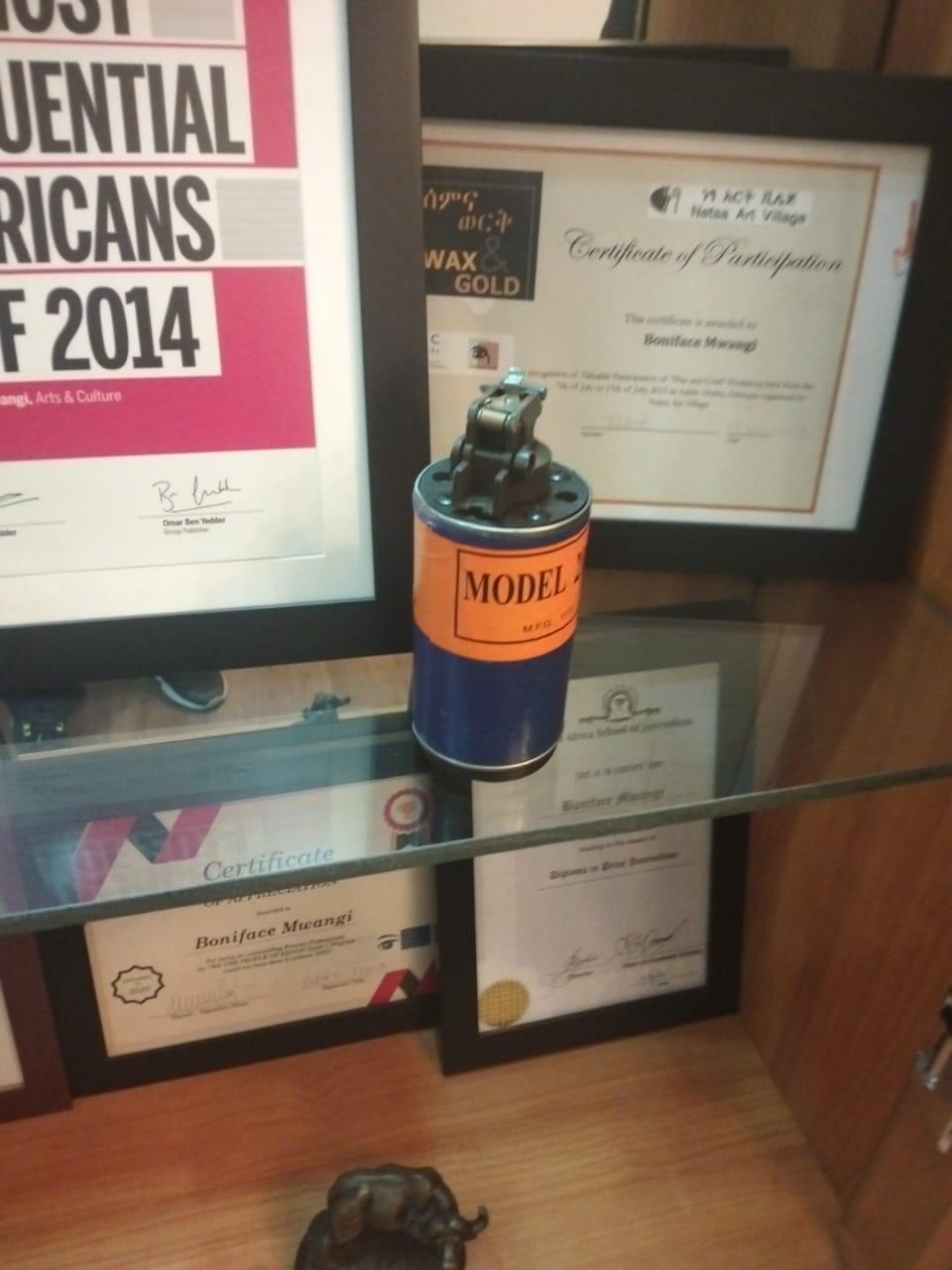
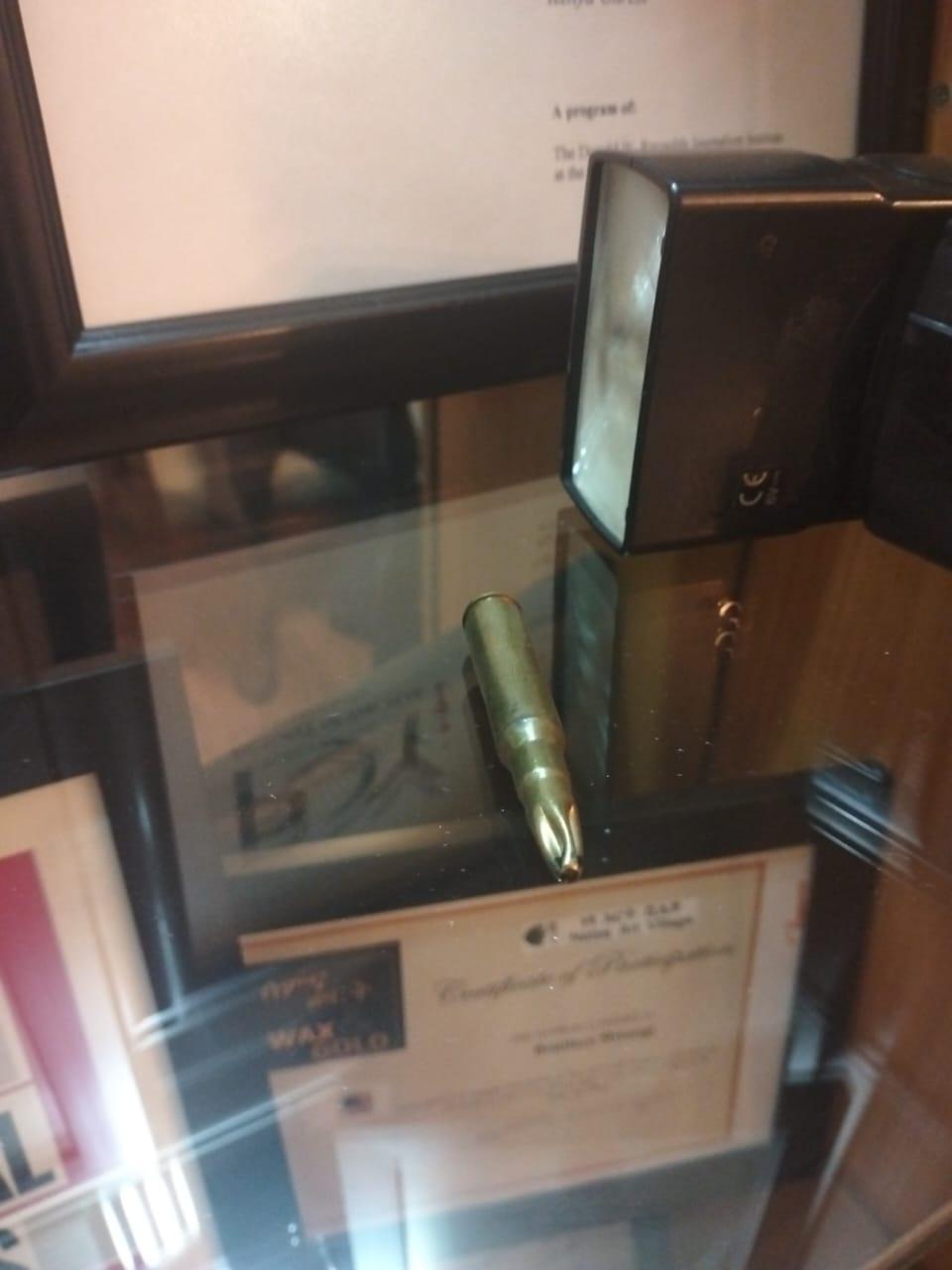
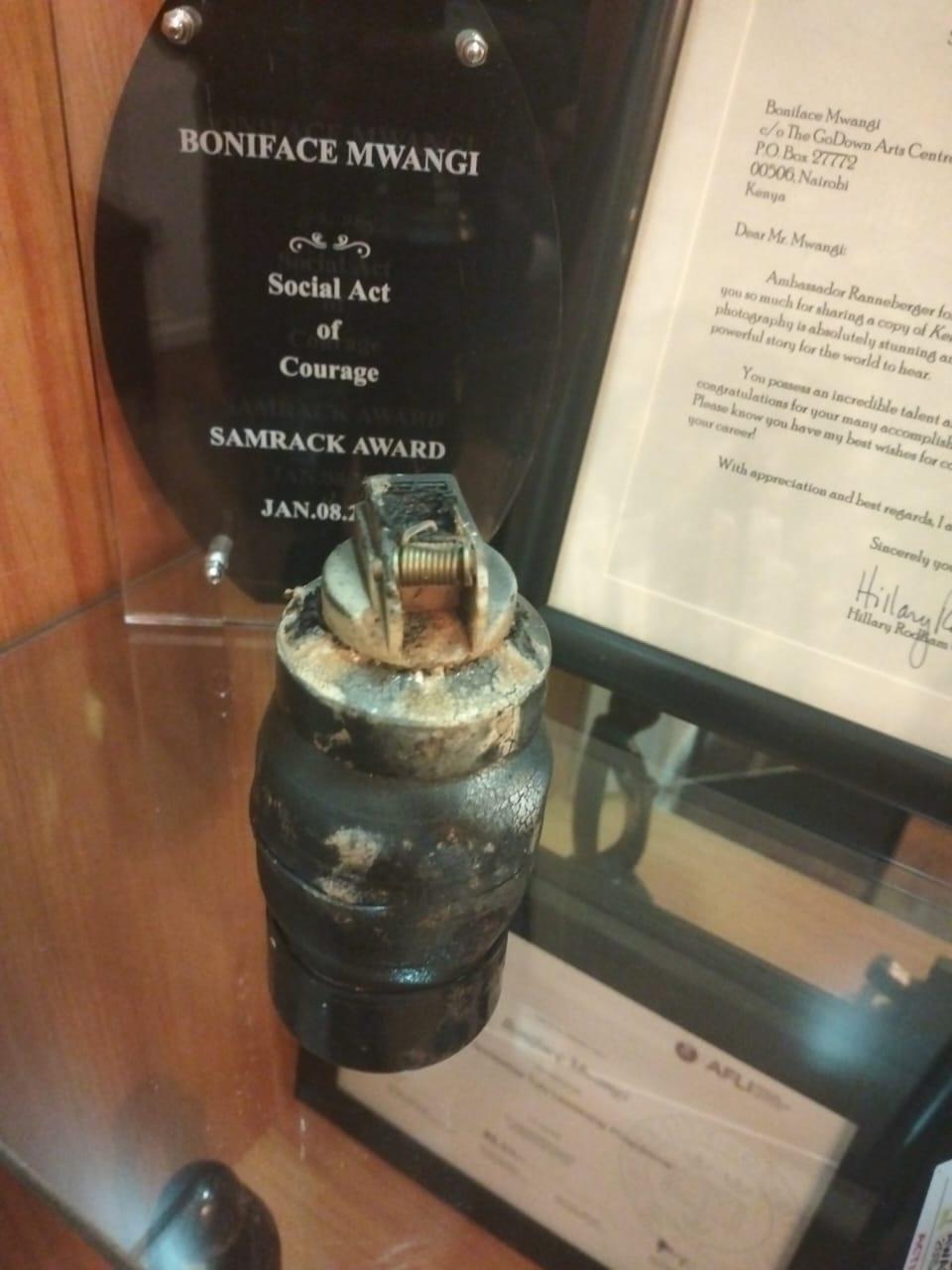
The arrest took place on the evening of July 19, when DCI officers descended on Mwangi’s residence, Courage Base, in Lukenya. According to his wife, Njeri Mwangi, police arrived without prior notice, confiscated electronic devices, and accused Mwangi of terrorism and arson. “The police have come to our home in Courage Base and are taking my husband, talking of terrorism and arson! They’ve taken his gadgets and said they are taking him to DCI Headquarters. I can’t breathe,” Njeri posted on X at 5:19 PM. The operation extended to a raid on Mwangi’s Mageuzi Hub offices in Hurlingham, Nairobi, where detectives seized nine external hard drives, two laptops, cheque books, company seals, a tear gas canister, and a 7.62mm blank round.
The DCI’s search warrant, issued by the Milimani Magistrate’s Court on July 17, authorized the seizure of documents and electronic devices to investigate charges of incitement to violence, money laundering, arson, robbery with violence, and damage to property. Authorities allege that Mwangi played a role in coordinating and financing the June 25 protests, which resulted in at least 19 deaths and significant property damage across Kenya. Mwangi was detained at the DCI headquarters on Kiambu Road and was scheduled to be arraigned on July 21, 2025.
Boniface Mwangi: A Profile of Defiance
Boniface Mwangi, a celebrated photojournalist and activist, has been a prominent figure in Kenya’s civil society for over a decade. Known for his fearless criticism of government excesses, corruption, and human rights abuses, Mwangi has faced arrests, threats, and violence throughout his career. His activism gained international attention through campaigns like Pawa254, which mobilizes youth for social change, and his vocal opposition to policies like the controversial Finance Bill 2024. Mwangi’s recent detention in Tanzania in May 2025, where he alleged sexual torture and assault by authorities, further elevated his profile as a pan-African advocate for justice.
The timing of his arrest—days after his EACJ petition and amid a government crackdown on protest organizers—has led many to view it as politically motivated. Mwangi’s lawyer, James Kamau, noted that the DCI provided no clear justification for the arrest during the raid, while fellow activist Hussein Khalid, Executive Director of Vocal Africa, condemned it as an attempt to silence dissent.
The June 25 Protests and Alleged Terror Links
The June 25, 2025, protests, driven by Kenya’s Gen Z movement, were a response to economic grievances and perceived government overreach, including the Social Health Authority rollout and rising public debt. The demonstrations turned deadly, with human rights groups estimating at least 50 deaths in clashes with security forces. The DCI claims Mwangi facilitated these protests, citing the recovery of a tear gas canister and a blank round as evidence of his involvement in acts deemed terroristic under Kenya’s Prevention of Terrorism Act.
Critics argue that the charges are exaggerated and lack substantiation. The items seized—a single blank round and a tear gas canister—are commonly associated with protest environments and do not necessarily indicate terrorism. Senior Counsel Paul Muite questioned the timing and legality of the arrest, asking, “The day the DCI finds convenient to arrest is on a Saturday? Any warrant for the search? Arrest? Ignoring the Constitution? Orders from above?” Martha Karua, leader of the People’s Liberation Party, condemned the arrest as part of a broader campaign to intimidate human rights defenders, stating, “You openly walk with militias but arrest law-abiding citizens? We know you have instructions from the rogue regime.”
Political Context: A Crackdown on Dissent
Mwangi’s arrest occurs against the backdrop of heightened political tensions in Kenya. President William Ruto’s administration, elected in 2022 on a “Hustler Nation” platform, has faced growing public discontent over economic policies and allegations of extrajudicial actions. The impeachment of Deputy President Rigathi Gachagua in October 2024, followed by his formation of the Democracy for Citizens Party (DCP), has intensified opposition activity. Mwangi, a vocal critic of Ruto, has been linked to Gachagua’s allies, including Geoffrey Mwangi, who was also questioned over protest-related activities in Nakuru.
The government’s response to the June 25 protests has been marked by a sweeping crackdown, with over 1,000 arrests, mostly of youth. Human rights groups, including Amnesty International, have condemned the use of excessive force and the targeting of activists. Mwangi’s arrest, coming shortly after his Tanzania ordeal and his EACJ petition, suggests a pattern of repression aimed at silencing prominent critics. His petition, filed with Ugandan activist Agather Atuhaire on July 18, accuses the Tanzanian, Kenyan, and Ugandan governments of complicity in their abduction, torture, and unlawful deportation in May 2025. The petition seeks Ksh130 million in compensation for each activist and formal apologies, escalating regional tensions.
Regional and International Reactions
Mwangi’s arrest has drawn significant attention, both domestically and internationally. In Kenya, activists and opposition leaders have rallied to his defense. Hussein Khalid, who has worked closely with Mwangi, stated, “I have known Boniface Mwangi for many years. I can say without a shred of doubt that he is neither a terrorist nor an arsonist.” Posts on X reflect public outrage, with users like @Nanjala1 highlighting the lack of transparency in the arrest process as a cause for alarm.
Internationally, the U.S. Department of State’s Bureau of African Affairs, which previously expressed concern over Mwangi’s treatment in Tanzania, is likely to monitor the situation closely, given Atuhaire’s recognition as a 2024 International Women of Courage Awardee. The EACJ case has also drawn attention to the broader issue of state repression in East Africa, with Mwangi framing his activism as a pan-African fight against impunity.
Mwangi’s History of Persecution
This is not Mwangi’s first brush with authorities. In October 2024, he was detained for calling for an anti-government protest during the Standard Chartered Marathon in Nairobi, using hashtags like #RutoMustGo. His wife reported that masked individuals forcibly removed him from their home, a tactic echoed in the July 2025 arrest. Mwangi’s detention in Tanzania in May 2025, where he alleged sexual torture and physical assault, marked a significant escalation in his persecution. At a June 2 press conference in Nairobi, Mwangi tearfully recounted being sodomized and beaten, stating, “Nothing in my life prepared me for this. I’ve been shot before, my house has been bombed, but I’ve never felt such kind of pain.”
The Tanzania incident, which also involved Atuhaire, prompted condemnation from rights groups and the U.S., though Tanzanian authorities dismissed the allegations as “hearsay.” Mwangi’s decision to speak publicly about the ordeal, despite the stigma, was driven by a desire to seek justice and highlight the plight of others facing similar abuses.
Implications for Kenya’s Civil Society
Mwangi’s arrest raises serious concerns about the shrinking space for dissent in Kenya. The charges of terrorism and arson, which carry severe penalties under the Prevention of Terrorism Act, could set a precedent for criminalizing activism. The seizure of electronic devices and the raid on Mageuzi Hub suggest a broader effort to disrupt Mwangi’s operations and intimidate his network.
The timing of the arrest, following the EACJ petition, suggests a retaliatory motive. Mwangi’s lawyer, James Kamau, noted the lack of clarity in the charges, while activists argue that the government is using vague allegations to silence critics. The crackdown on protest organizers, including the arrests of over 1,000 youth, indicates a broader strategy to suppress the Gen Z movement, which has challenged Ruto’s legitimacy through hashtags like #RutoMustGo.
Looking Ahead
As Mwangi awaits arraignment, his case is likely to galvanize Kenya’s civil society and opposition. The DCP, led by Gachagua, has already condemned the arrest, with allies like Martha Karua framing it as part of a “rogue regime’s” campaign to silence dissent. The outcome of Mwangi’s case could influence the trajectory of Kenya’s protest movement and the opposition’s strategy ahead of the 2027 election.
Mwangi’s resilience, demonstrated through his recovery from the Tanzania ordeal and his continued activism, suggests he will remain a central figure in Kenya’s fight for justice. His EACJ petition, combined with international scrutiny, may pressure the Kenyan government to address allegations of state repression. However, the risk of further persecution remains high, given Mwangi’s history and the government’s aggressive response to dissent.
In conclusion, Boniface Mwangi’s arrest on July 19, 2025, marks a critical moment in Kenya’s ongoing struggle for democratic space. The charges of terrorism and arson, linked to the June 25 protests, reflect a broader effort to criminalize activism and suppress opposition. As Mwangi and his allies fight for justice, both in Kenyan courts and regional forums, his case underscores the challenges facing human rights defenders in East Africa. The coming days will be pivotal in determining whether Mwangi’s arrest galvanizes resistance or further chills dissent in a nation at a political crossroads.